An amazing discovery reveals that bumblebee queens in hibernation can survive submerged for a week. This phenomenon, where their metabolism shifts to an anaerobic state, is a perfect case study for scientific visualization. Through interactive 3D models, we could represent this incredible physiological adaptation, making a hidden and complex biological process tangible for research and outreach.
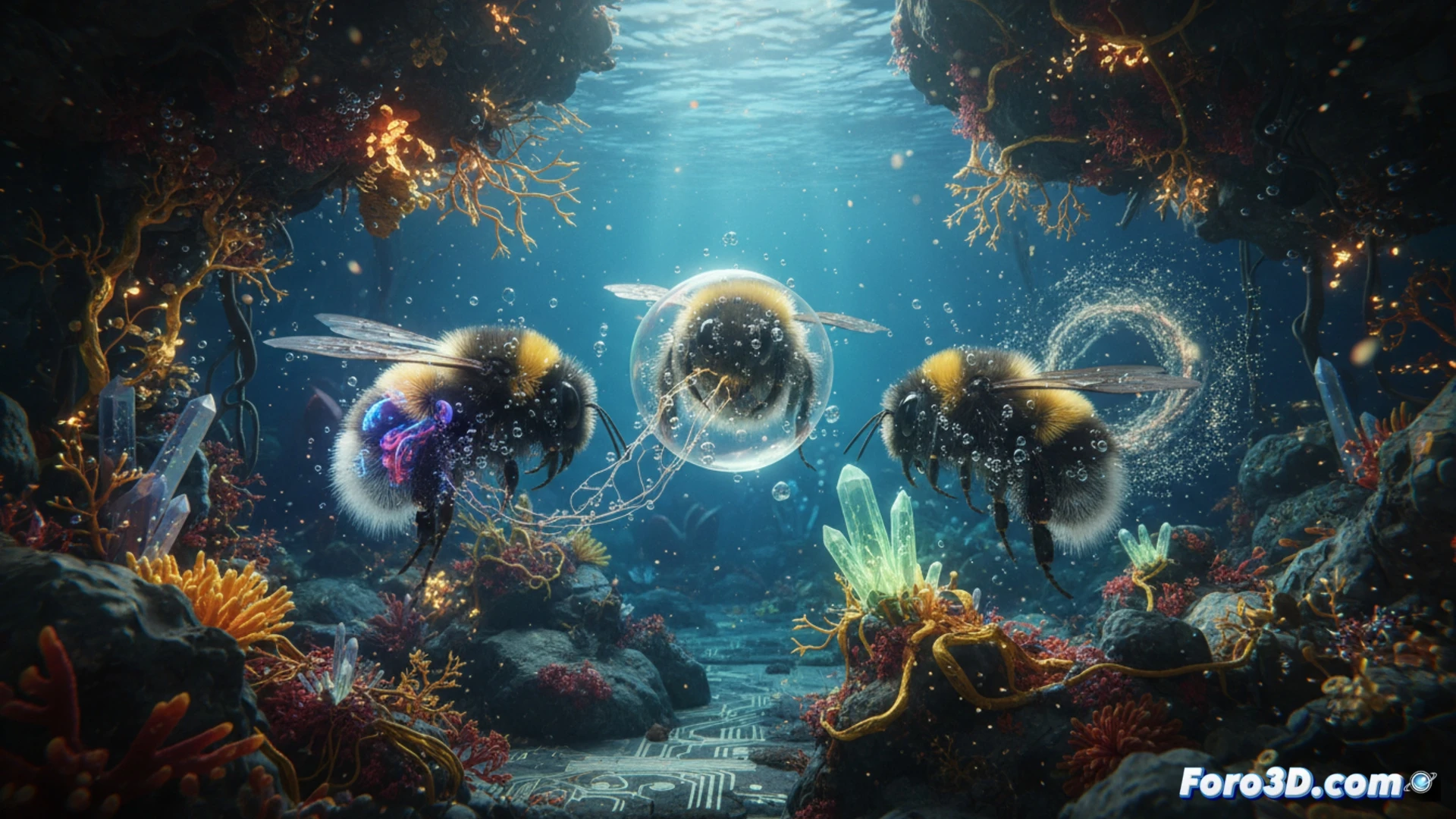
Modeling Aquatic Hibernation and Anaerobic Metabolism 🐝
3D visualization can break down this finding into comprehensible components. A detailed anatomical model would show the metabolic slowdown. A dynamic simulation would illustrate the shift to the anaerobic pathway, visualizing lactic acid accumulation as an internal heat map. The hypothesis of the trapped air bubble in the microscopic body texture could be modeled. Additionally, 3D graphs of experimental data, such as water oxygen consumption, would enrich the analysis.
From Basic Science to Conservation in Three Dimensions 🌍
This case transcends physiology. The climatic threat of flooding underground hibernacula can be mapped in 3D, overlaying rainfall and groundwater level data. Thus, visualization connects the individual survival mechanism with its ecosystem vulnerability. Representing this complete cycle in an interactive 3D environment enhances understanding and communicates the urgency of protecting these pollinators from an integral scientific perspective.
How can we visually represent in 3D the complex physiological processes and microstructural changes that allow a bumblebee to survive submerged during its hibernation?
(P.S.: if your manta ray animation doesn't excite, you can always add Channel 2 documentary music)