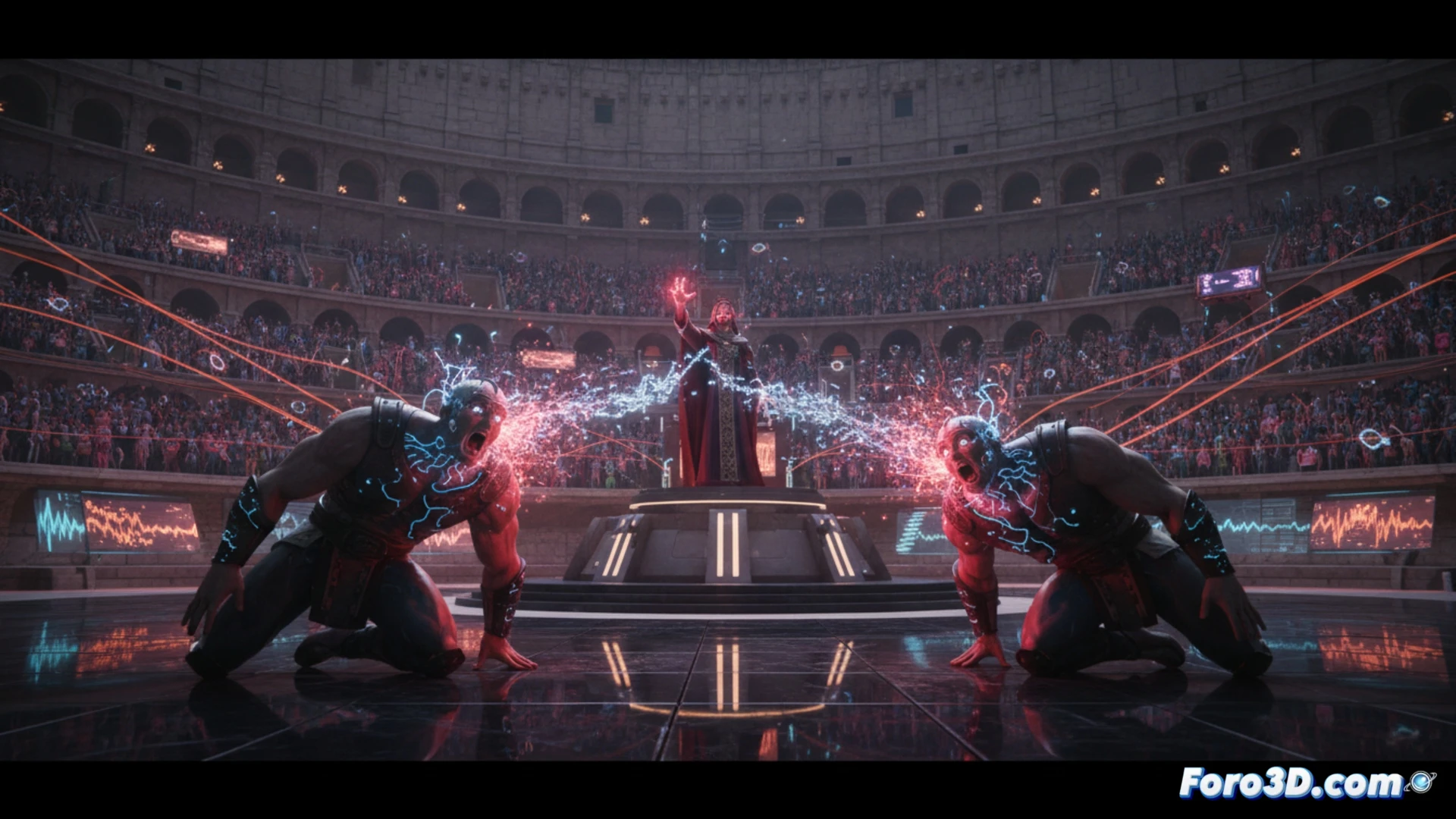
The script Bread and Neural Circus transports the brutality of the Roman Coliseum to a near future. In this speculative fiction, the gladiators are convicts connected to a neural network, and the audience, through implants, experiences their pain and agony in real time. The work culminates with an emperor-hacker executing a sudden death command that fries the fighters' brains, to the ecstasy of the crowd. It is a powerful allegory about dehumanizing entertainment and technological control.
3D Technology as a Tool for Denunciation 🤖
This narrative is not just an idea; it is a visual project that requires digital art and 3D for its representation. The recreation of the Coliseum, a World Heritage Site, contrasts with the futuristic elements of implants and neural damage effects, creating a powerful hybrid aesthetic. 3D modeling and VFX tools are essential for visualizing the neural network interface and the impact of the lethal command, transforming abstract concepts of control and surveillance into striking images. Thus, digital software becomes the brush for this sociopolitical critique.
Reflection: Mirror or Prophecy? ⚠️
Bread and Neural Circus functions as a distorted mirror of our present. The work criticizes passivity toward others' suffering, the voracious consumption of extreme content, and the slow erosion of empathy in the digital age. By using technology as both medium and message, the project is inscribed in digital activism, employing speculative narrative to warn about the dangers of a world where sensory experience can be hacked and humanity, disconnected.
Do you think technology helps to make causes visible or does it dehumanize them?