The company Nectome has developed a protocol that allows preserving indefinitely the complete neuronal architecture of a mammal's brain after death. The process, tested on pigs, combines chemical fixation and vitrification to prevent cellular degradation. This advancement, presented as a service for terminally ill people, seeks to lay the foundations for a future recovery of consciousness. The validation of this technique and its ultimate goal critically depend on 3D visualization and analysis technologies.
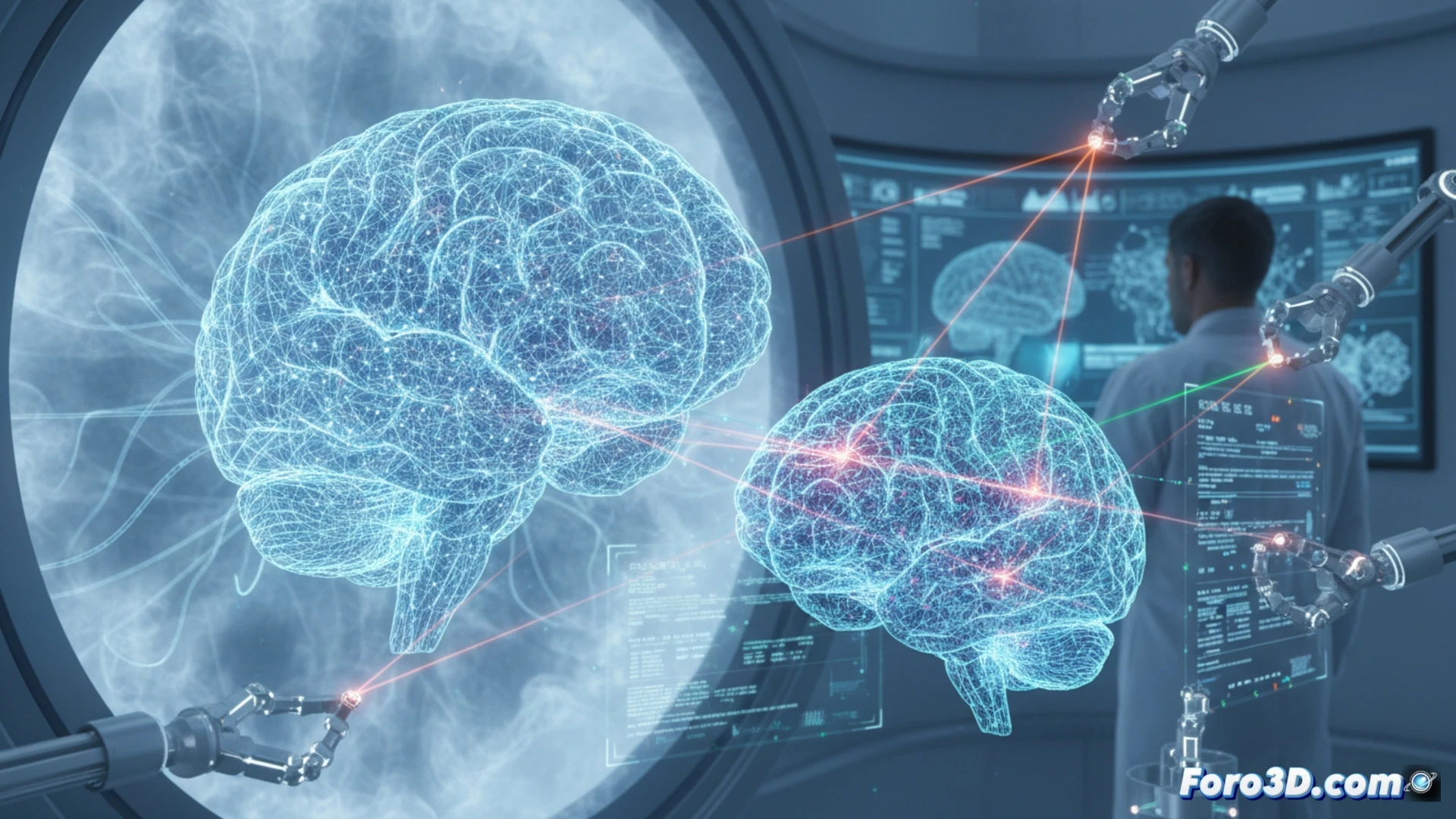
From vitrification to digital reconstruction: validating the connectome 🧠
The success of the method is judged by the ultrastructural integrity of the neuronal tissue. Here, 3D modeling is indispensable. Through serial electron microscopy and tomography techniques, massive three-dimensional reconstructions of preserved synapses and axons can be generated. This process of segmentation and 3D rendering allows mapping the real connectivity of the vitrified brain, creating a digital connectome. Thus, it is validated whether the preservation is good enough for future attempts at mind reading. Projects like the Human Brain Project demonstrate that without these 3D tools, it would be impossible to analyze the preserved neuronal complexity.
A 3D model as the basis of consciousness? 🤔
The ultimate goal of reviving a mind poses a fascinating question for bioprinting and 3D simulation. If one day the information from a preserved brain could be translated into a functional computational model, it would require a 3D simulation platform that emulates neuronal dynamics. The current preservation would be the first step to obtain the anatomical source file, whose executable would be a simulated consciousness in a 3D virtual environment or in a printed biological substrate. The technique brings the possibility closer, but materialization depends on parallel advances in neuroinformatics and 3D modeling.
Would you print this model in resin or filament?