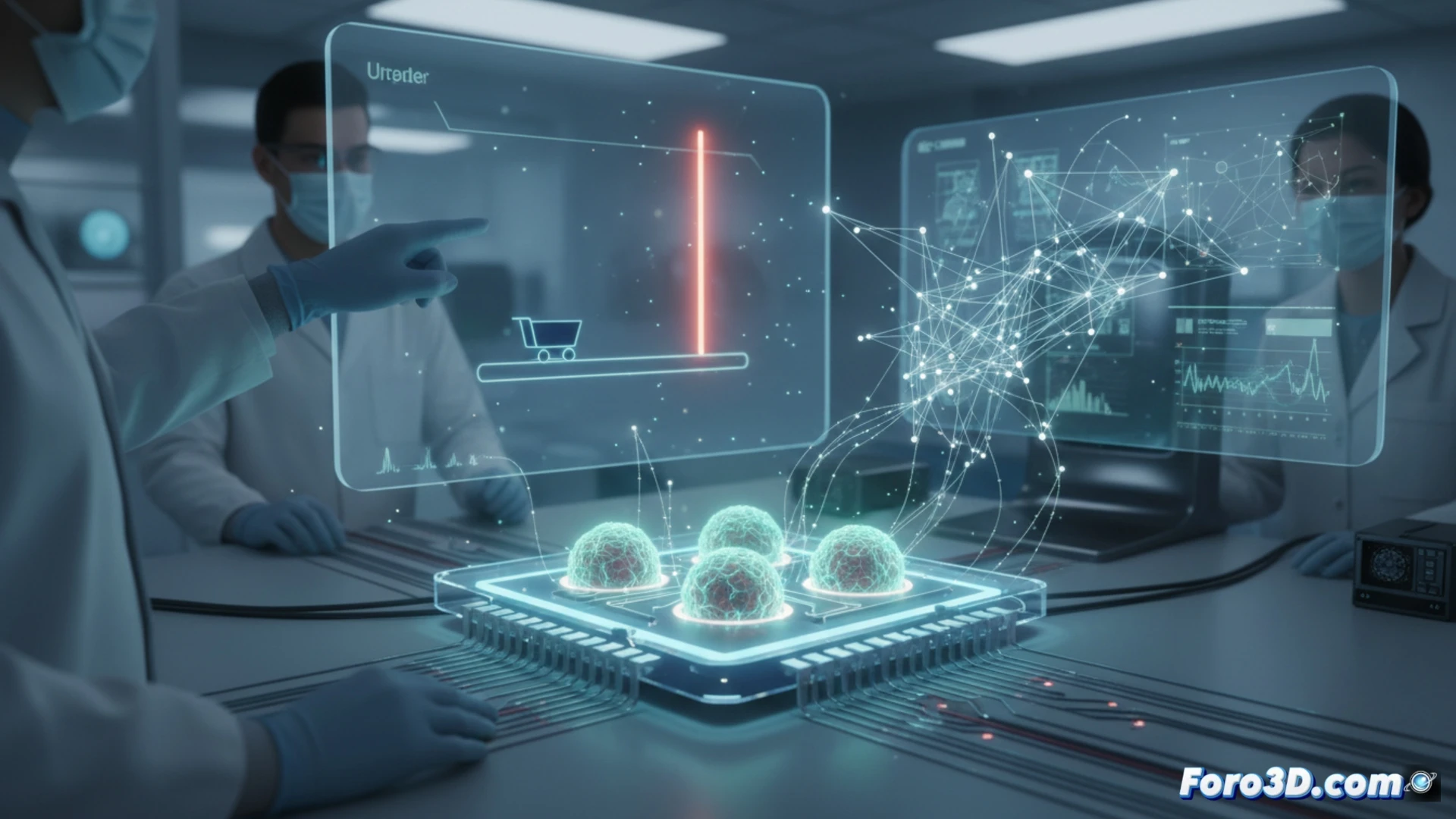
A pioneering experiment demonstrates that brain organoids, 3D models of neuronal tissue, can learn a complex task. Researchers integrated these mouse minibrains into a chip that connected them to a virtual environment, specifically the classic problem of controlling a pole balancing on a cart. Through electrical stimuli and reinforcement algorithms, the organoids learned to maintain balance, showing surprising adaptive capacity in real time.
3D Simulation as a Bridge to Study Cognition 🧠
The technical core lies in the bidirectional interface: a chip records the organoid's activity and translates its response into movement within the simulation, while returning sensory information through electrical stimulation. Training with directed reinforcement learning was key, doubling performance. However, a crucial limitation was revealed: memory was volatile, disappearing after prolonged pauses. This 3D biomimetic system allows dissecting the cellular foundations of learning in a controlled environment, something impossible in a complete brain.
Towards 3D Models to Understand Disorders and Therapies 🔬
This advance is not a game; it is a methodological leap. The combination of organoids (3D biological models) and simulated virtual environments opens a path to study memory mechanisms and failures in cognitive disorders. The future involves developing more complex assembloids that retain long-term knowledge, creating unprecedented three-dimensional platforms to test drugs and understand brain plasticity, bringing us closer to more predictive and personalized biomedicine.
Could 3D cultured brain organoids be the basis for a new generation of biocomputers capable of learning specific tasks?
(PS: If you 3D print a heart, make sure it beats... or at least doesn't have copyright issues.)