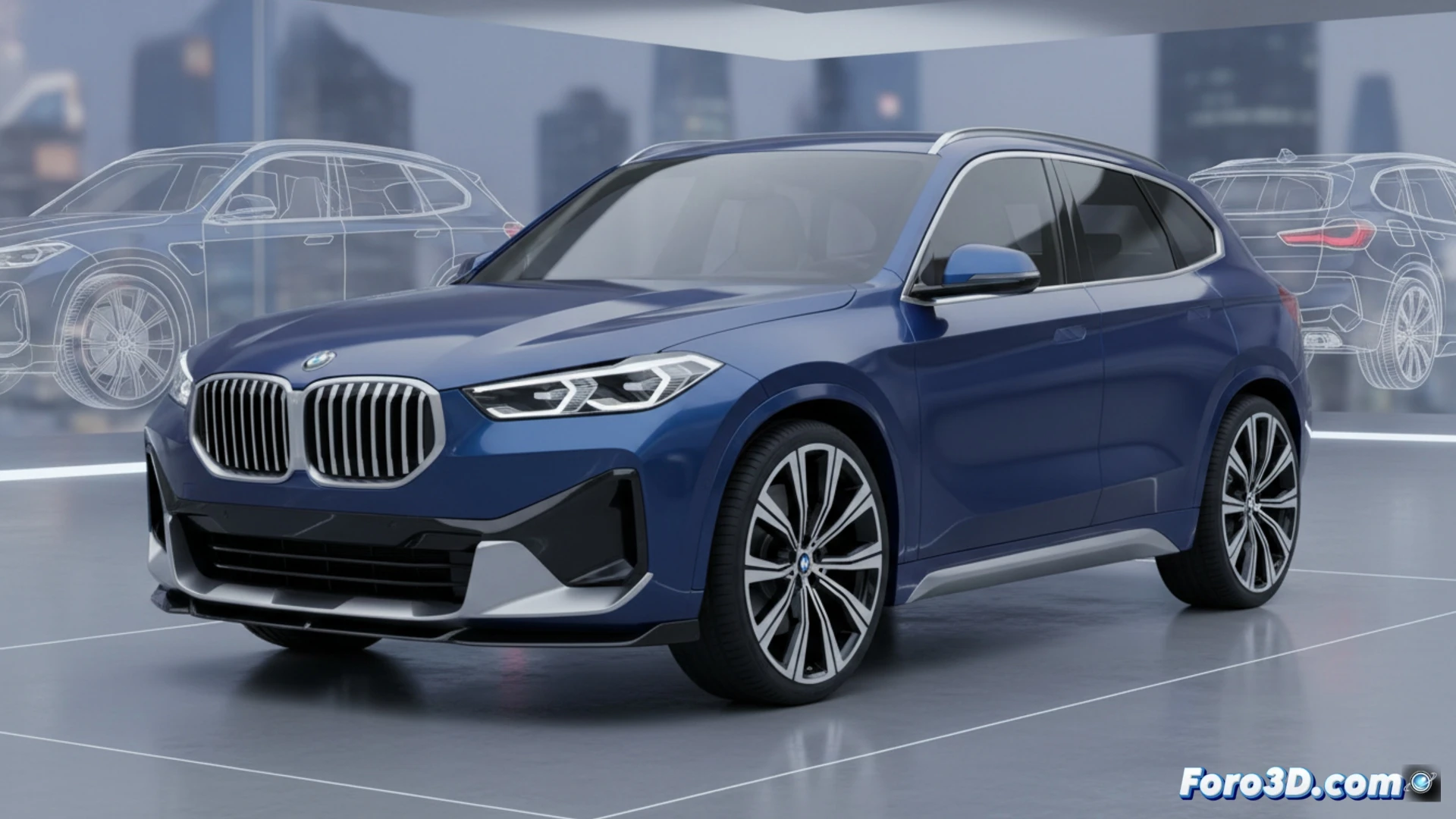
The next facelift of the BMW X1, scheduled for 2027, is a perfect example of how modern design strategy relies on digital tools. By integrating the Neue Klasse language into an existing platform model, BMW must balance innovation and cost. Here, 3D modeling software is indispensable for prototyping, visualizing, and validating aesthetic changes, such as the new headlights and grille, before any physical manufacturing, ensuring coherence and viability.
3D Tools in Integrating the New Design Language 🛠️
The redesign focuses on the front end, with integrated Full LED headlights and the characteristic ovoid grille. Modeling these elements in 3D allows for precise simulation of their lighting, reflections, and fit into the current bodywork without modifying the side profile. Material simulation and photorealistic rendering tools are key to evaluating how the Neue Klasse style merges with the existing lines. Additionally, 3D modeling facilitates direct comparison between the thermal/hybrid version and the electric iX1, allowing for planning differentiated renewals and optimizing resources in a single virtual environment, accelerating the entire development process.
Simulation as a Bridge Between Generations 🌉
This case underscores a paradigm shift: the facelift is no longer just a styling exercise, but a digital engineering process. The 3D platform acts as a bridge, allowing the injection of future DNA into present architectures. Thus, the thermal range is modernized with a renewed identity, while resources are reserved for a deeper evolution in electric models, all validated virtually before reaching the production line.
How are 3D design tools and digital simulation transforming the development process of a "facelift" like that of the BMW X1 2027, from the initial concept to production validation? 🚗
(P.S.: car electronics are like family: there's always a fuse that blows)