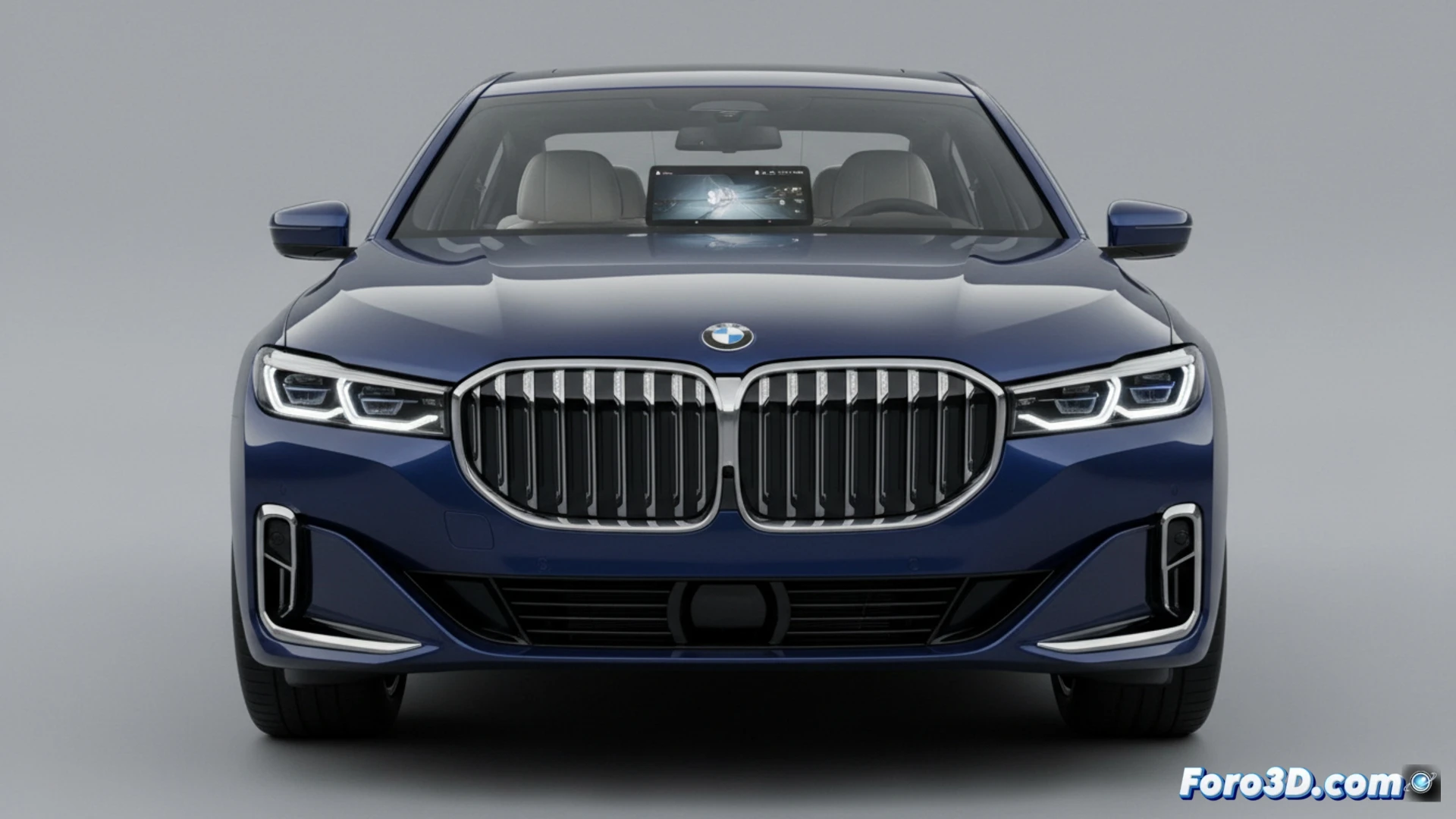
BMW has unveiled the front end of the upcoming 2026 7 Series during tests at the Nürburgring. The model confirms its distinctive luxury language, with the large ovoid grille featuring perimeter lighting, slim headlights with Swarovski crystals, and a hood with a longitudinal slit. Inside, the panoramic dashboard stands out with a 17.9-inch central screen. This complex and detailed design approach would not be understood without the digital development tools that make it possible.
3D Tools in Cutting-Edge Automotive Design 🛠️
The development of elements like the illuminated grille or the integrated dashboard relies entirely on 3D design suites. Class A surface modeling is crucial for defining pure volumes and complex transitions in the front end. CAD allows iterating the engineering of the slim headlights and their optical components. Before a physical prototype, photorealistic rendering and virtual reality validate the perception of luxury and interaction with the touchscreen. These tools enable simulating lighting under different conditions, optimizing the visual impact of the light signature and Swarovski crystals.
The Digital Prototype, Key in Luxury 💎
The 2026 7 Series underscores that modern luxury is first defined in the digital realm. The decision to reserve a differentiated design for the high segment is made based on thousands of renders and 3D models. This methodology reduces costs and time, but above all allows refining to the extreme details that define the premium experience, ensuring that every curve and every interaction with the screen fulfills its promise before manufacturing.
How is 3D modeling and computational simulation transforming the design of iconic elements like the large grille of the BMW 7 Series 2026?
(P.S.: car electronics are like family: there's always a fusible that blows)