Accident statistics in transportation in Spain show an alarming trend. Against cosmetic solutions, the root problem usually lies in the deterioration of infrastructure and vehicles. This is where modern forensic analysis, supported by 3D documentation technologies, becomes a crucial tool. It allows going beyond the traditional expert report to discover objective and tangible evidence about the material causes of accidents.
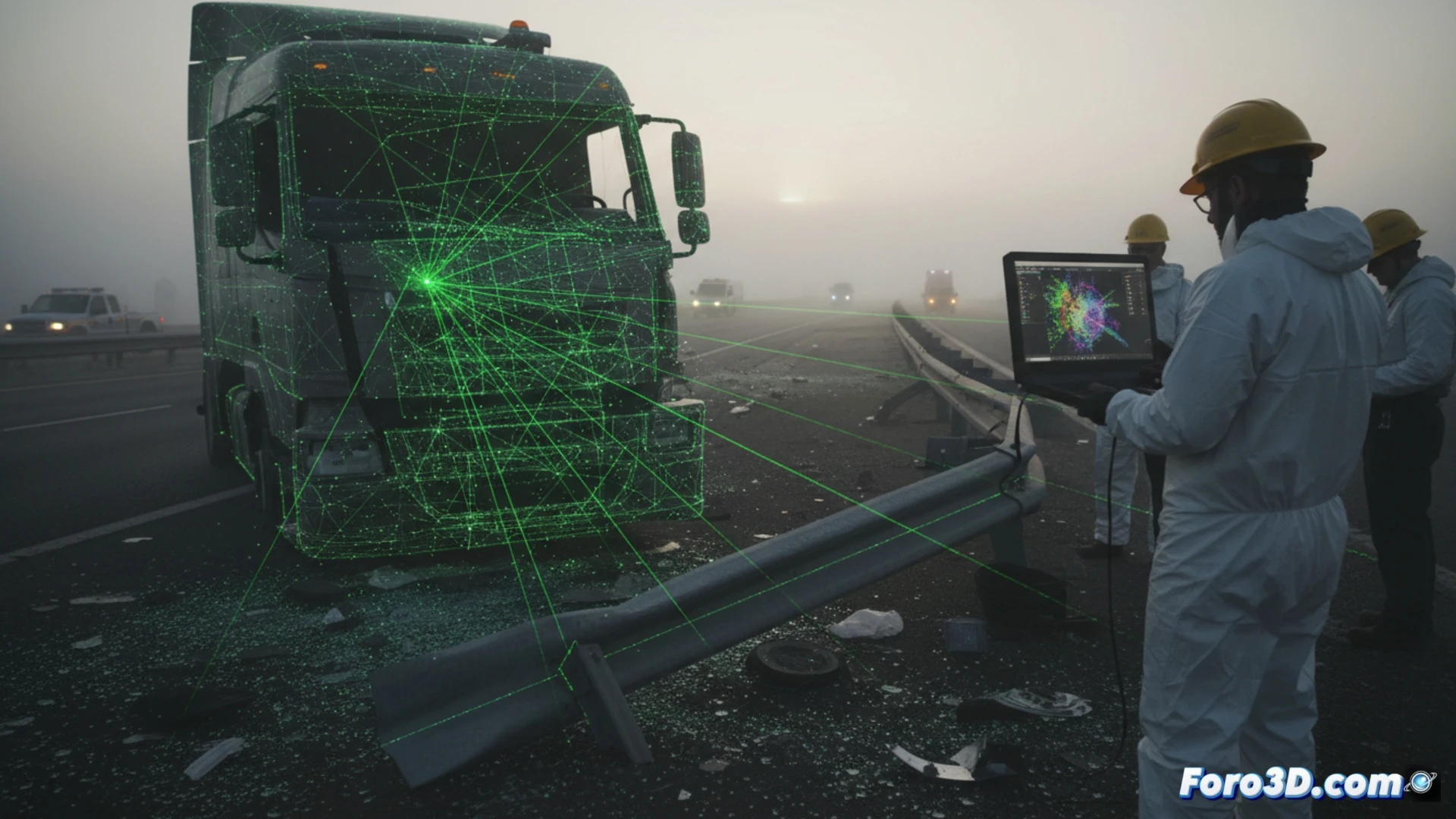
Photogrammetry and laser scanning: capturing the material truth 🔍
The investigation of a serious accident, whether rail or road, begins with the preservation and exhaustive documentation of the scene. Techniques such as photogrammetry and 3D laser scanning allow capturing millions of data points quickly and accurately, generating an exact digital model. This digital twin of the scene includes deformations in the rails, platform wear, skid marks, final positions of the vehicles, and structural damage. This model is permanent, measurable, and analyzable from any angle, allowing the identification of maintenance failures, infrastructure defects, or recreating the impact dynamics with reliability unattainable by manual sketches.
From data to claim: objectivity for prevention ⚖️
The ultimate value of these 3D models goes beyond mere reconstruction. They provide an objective and indisputable evidence base that can precisely determine if a derailment was due to a defective weld, if a road collapse originated from the poor condition of the roadway, or if a mechanical failure was foreseeable. This technical objectivity is essential for directing investment demands where they are truly needed: predictive maintenance, renewal of critical infrastructure, and data-based safety policies, not appearances.
Would you combine scanning with photogrammetry?