Building a coherent narrative universe is a pillar in video game development. Masterpieces like Berserk by Kentaro Miura, despite their seemingly solid lore, hide details and variations that illustrate the challenges of internal consistency. Analyzing two forgotten examples—a key difference in Guts' origin and a deleted chapter—reveals creative processes and editing decisions whose lessons are directly applicable to interactive narrative design.
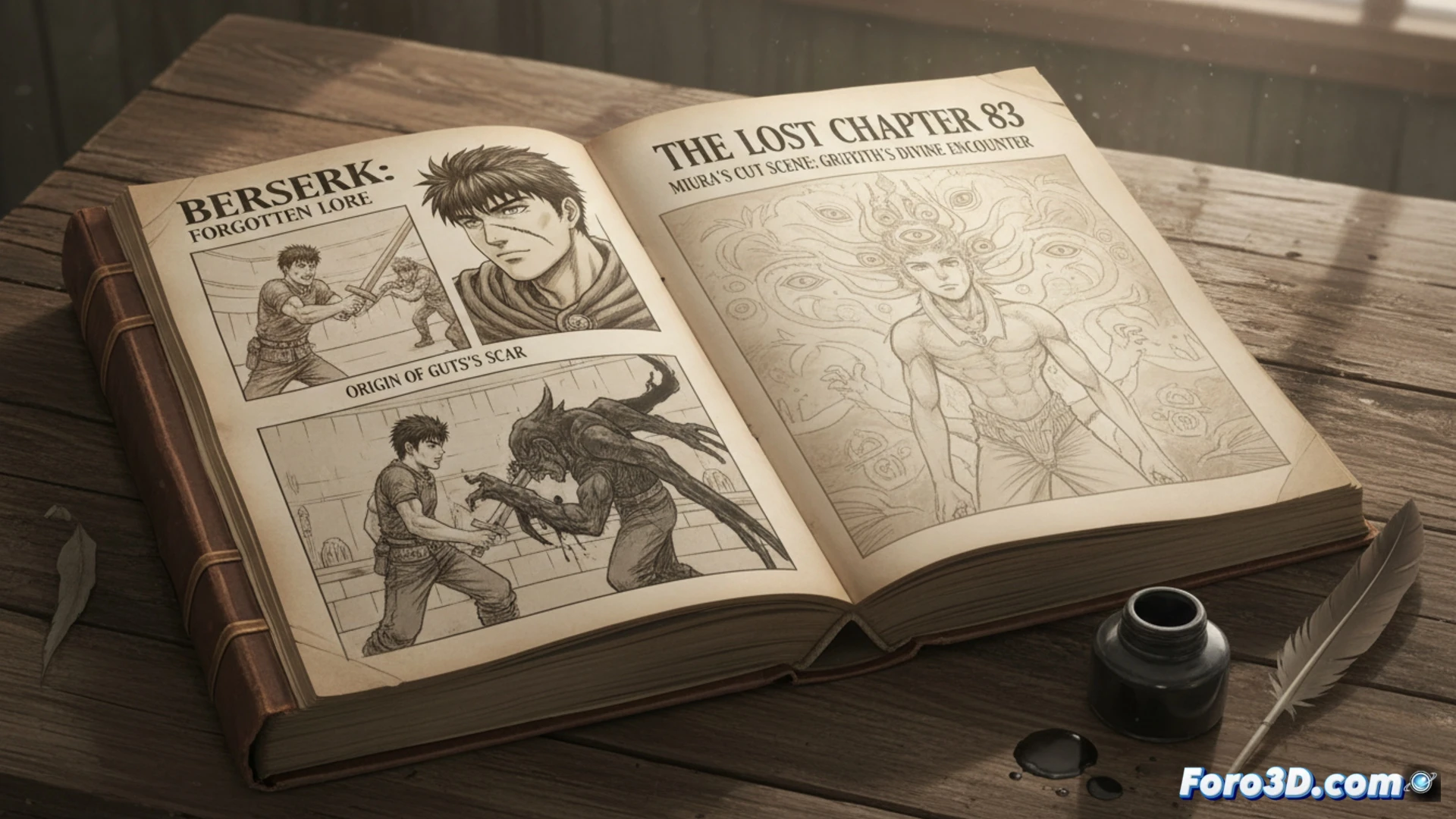
Adaptation Differences and Internal Coherence 🎭
The first example is the scar on Guts' nose. In the manga, it originates during a harsh training session with his adoptive father Gambino, a moment that reinforces their toxic relationship and violent upbringing. However, in the 1997 anime, the scar results from a deathmatch with another mercenary. This divergence, though seemingly minor, alters the nuance of the character's backstory. For a video game developer, this underscores the critical importance of a centralized lore bible when adapting an IP to different media (game, comic, DLC) or even when delegating writing to large teams. Inconsistency in origin details can dilute the character's integrity.
Editing as a Narrative Tool ✂️
The second case is Chapter 83, removed by Miura from the volume publications because he considered it too expository and abrupt in showing an early divine revelation to Griffith. This decision to prune original content, prioritizing pacing and mystery over direct explanation, is a vital lesson. In video games, especially with non-linear stories or cut content, it must be evaluated whether lore information enriches the experience or saturates it. Knowing what to omit, delay, or recontextualize is as crucial as knowing what to include, ensuring that the world grows organically with the player.
How can video game developers implement Berserk's principles of world-building and character evolution to create interactive narratives that balance despair, player agency, and unbreakable thematic coherence?
(P.S.: game jams are like weddings: everyone happy, no one sleeps, and you end up crying)