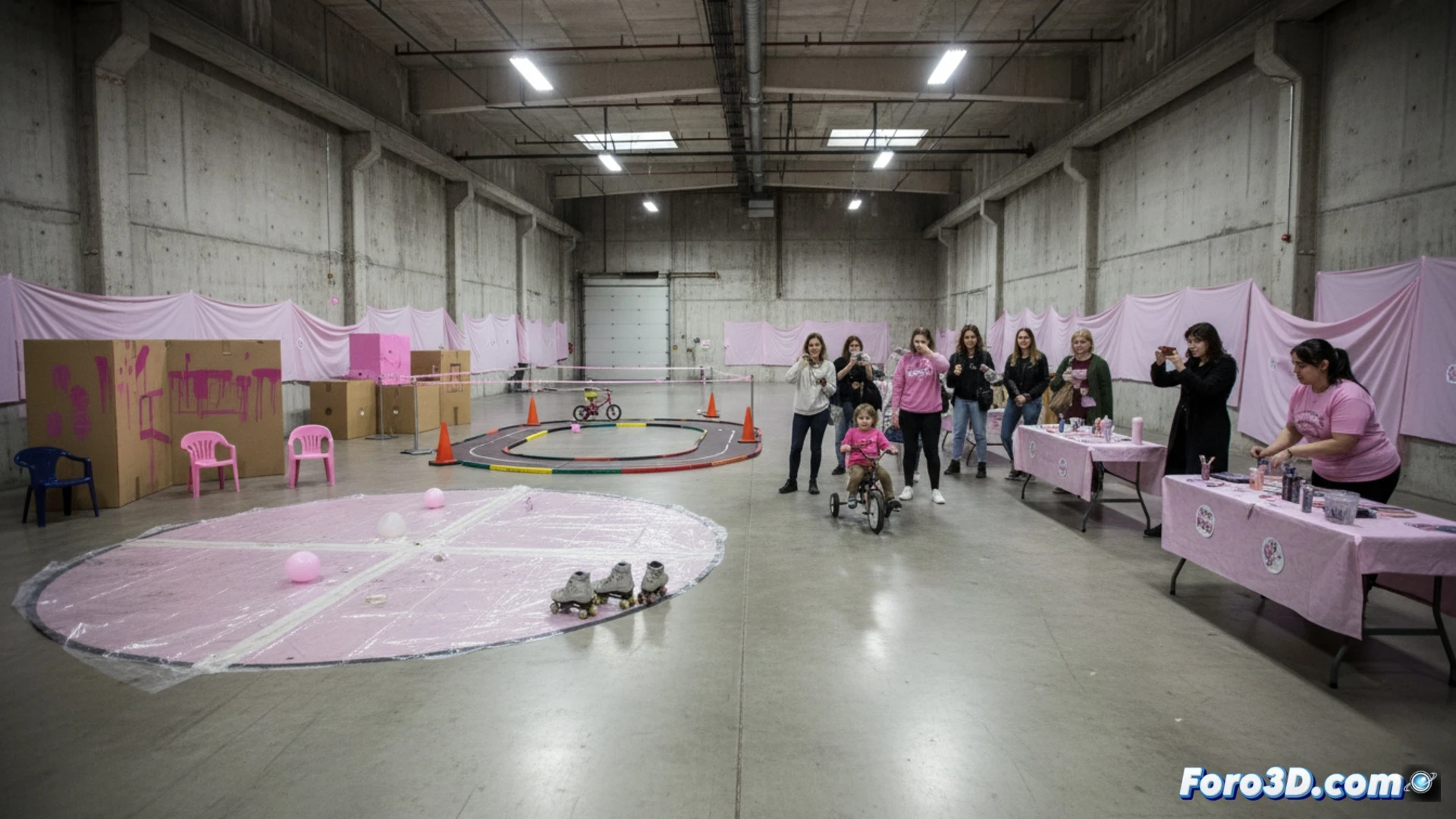
The recent failure of the Barbie Dream Fest in Florida is a case study on how not to produce an immersive event. Attendees who paid hundreds of dollars found an empty warehouse with minimal decorations, far from the promised interactive experiences. This event, similar to the Willy's Chocolate Experience disaster, underscores the dangerous gap between marketing and actual execution, a crucial reminder for scenography and show professionals. 🎭
3D Previsualization as an Antidote to Failure 🛡️
This fiasco highlights the total absence of a critical phase: pre-production and accurate visualization. 3D modeling and previsualization tools allow building the event digitally before spending on materials. Walkthroughs can be simulated, scales tested, lighting adjusted, and crowd densities calculated. A photorealistic render of the supposed Dream Fest would have immediately exposed the poverty of the concept. Software for flow simulation helps size spaces and attractions, avoiding underestimating needs. Projected mapping could have economically transformed plain walls, but it requires technical planning. Without this process, you're building blindly.
From Promise to Measurable Reality 📏
The final lesson is professional responsibility. 3D technology is not just for creating fantasies, but for anchoring them in the feasible. A 3D model acts as a visual contract between the creative, the producer, and the client, aligning expectations. When the promise is immersion, the delivery must be tangible. Our role as technicians and artists is to close the gap between the sold dream and the lived experience, using all available tools to ensure quality and integrity.
What technical and 3D design errors in planning an immersive event can turn a promising experience, like the Barbie Dream Fest, into a fiasco of perception and execution for the public?
(PS: lighting simulation always looks better than reality... like Tinder photos)