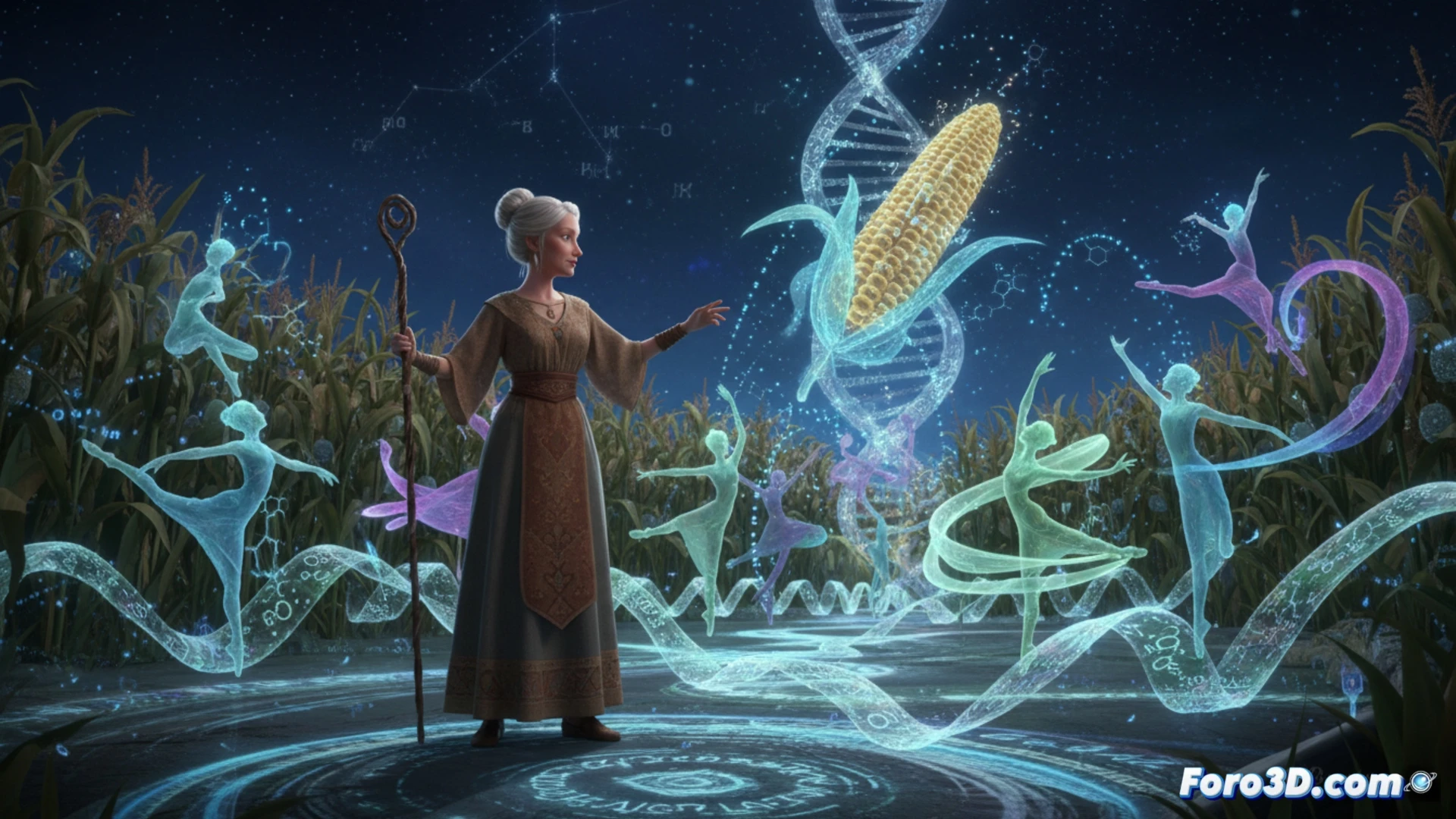
The life of geneticist Barbara McClintock, Nobel Prize winner in 1983, inspires a proposal for an animated movie. The synopsis visualizes her work with corn in a fantastic way: she not only observes the plants, but perceives the jumping genes (transposons) as dancers on a stage. The animation would transform DNA into a luminous choreography within a magical cornfield, where Barbara is the choreographer who deciphers the language of life.
Technical Challenges: Choreographing the Dance of DNA in 3D 🧬
Bringing this vision to the screen requires a specific technical approach. Animating the transposons demands a particle system and rigging that simulates organic and deliberate movements, like a dance. The magical cornfield would need custom shaders so that stalks and leaves act as bioluminescent screens. The biggest challenge is the visual representation of Barbara's understanding, perhaps through ray-tracing effects that connect her gaze with the moving genes.
What if the genes demanded a raise for overtime? 💼
One wonders how Barbara would negotiate with her little genetic dancers. Imagine the scene: a transposon digs in and demands a break after jumping ten thousand times between chromosomes. Or that the corn color genes go on strike, leaving all the ears monochromatic out of pure exhaustion. Her research would surely have included labor mediation sessions between rebellious chromosomes and genes with artistic pretensions. A union of genetic elements would be her most complex discovery.