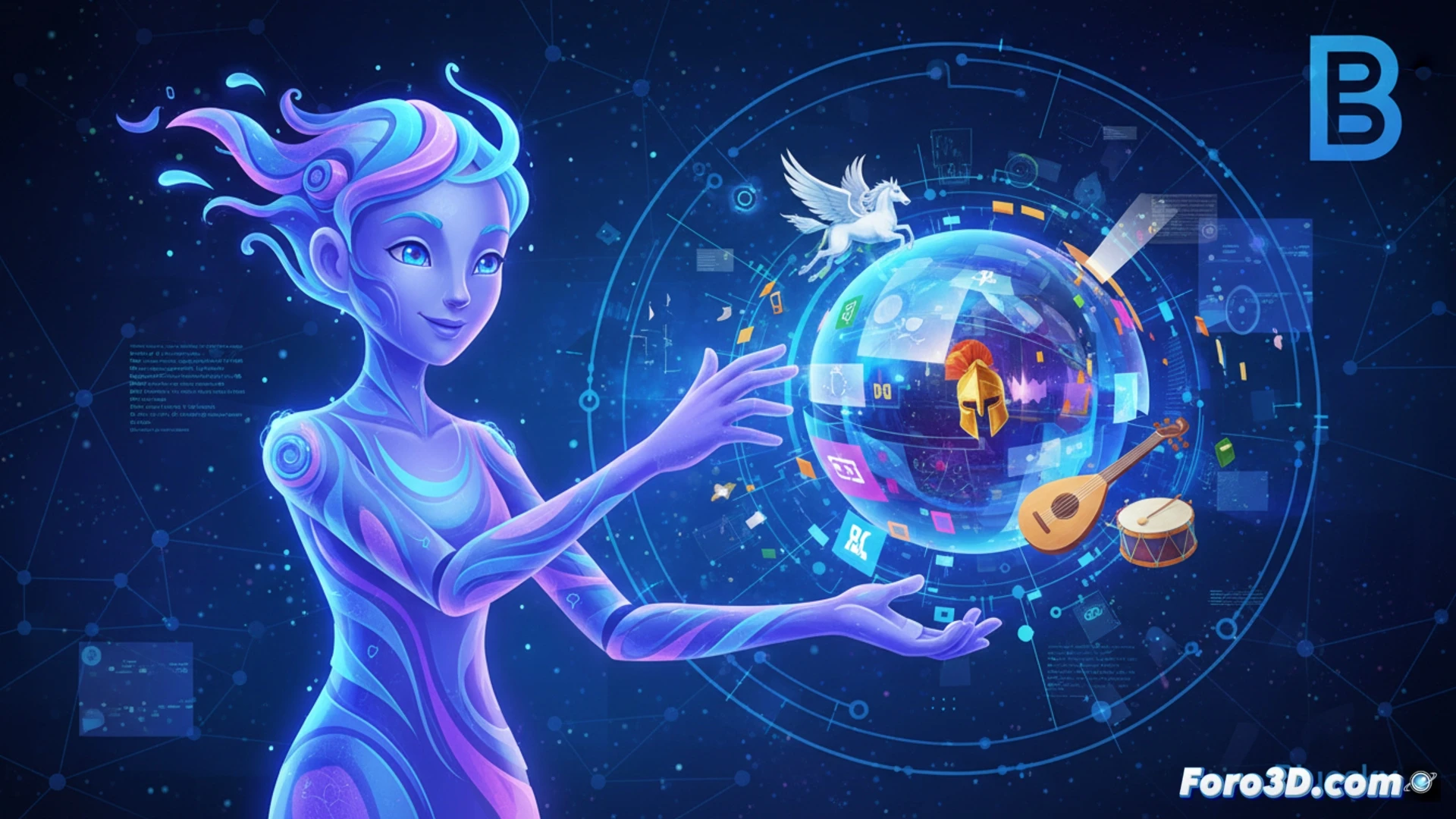
Bluesky advances beyond the social client with the launch of Attie, an experimental application that uses artificial intelligence to personalize the user experience. Based on Anthropic's Claude model and built on the open AT protocol, Attie allows creating personalized feeds through natural language instructions. This tool not only filters content but lays the foundation for a future where any user could program applications simply by describing their functioning, a concept known as vibe-coding.
Technical architecture and the potential of vibe-coding 🤖
Attie operates as an intelligence layer over Bluesky's decentralized AT protocol. Its core is an AI agent that interprets user requests, such as show me debates on Stoic philosophy or only folk music, and translates that intention into queries and filters on the open social graph. The true conceptual leap is its long-term vision: evolving from a feed curator to a creation tool. The goal is to enable users without technical knowledge to design complete applications by describing their vibe or purpose, using the AT data layer as a backend. This could radically redefine who builds social tools.
Personal control versus opaque algorithms 🧩
Attie raises a critical reflection on control in the digital era. Against the opaque algorithms of traditional networks, which shape filter bubbles, Attie proposes a user-configurable agent. However, questions arise: Does an AI assistant truly amplify our agency or simply hide a new layer of intermediation? The promise of democratization through vibe-coding is powerful, but its success will depend on the model's transparency and whether end users gain genuine control, or just the illusion of personalization.
Can AI, like Bluesky's Attie, become the definitive tool to combat fragmentation and information overload in decentralized social networks? 🚀
(P.S.: the Streisand effect in action: the more you prohibit it, the more they use it, like microslop)