The Reina Sofía Museum has launched a provocative exhibition program confronting Picasso's iconic Guernica with Dumile Feni's African Guernica. This physical confrontation, where Feni's charcoal drawing is literally reflected in the glass protecting Picasso's work, transcends mere juxtaposition. It establishes a conscious dialogue on state violence, apartheid, and modernities, using the museological setup as a powerful activist device with great visual and conceptual potency.
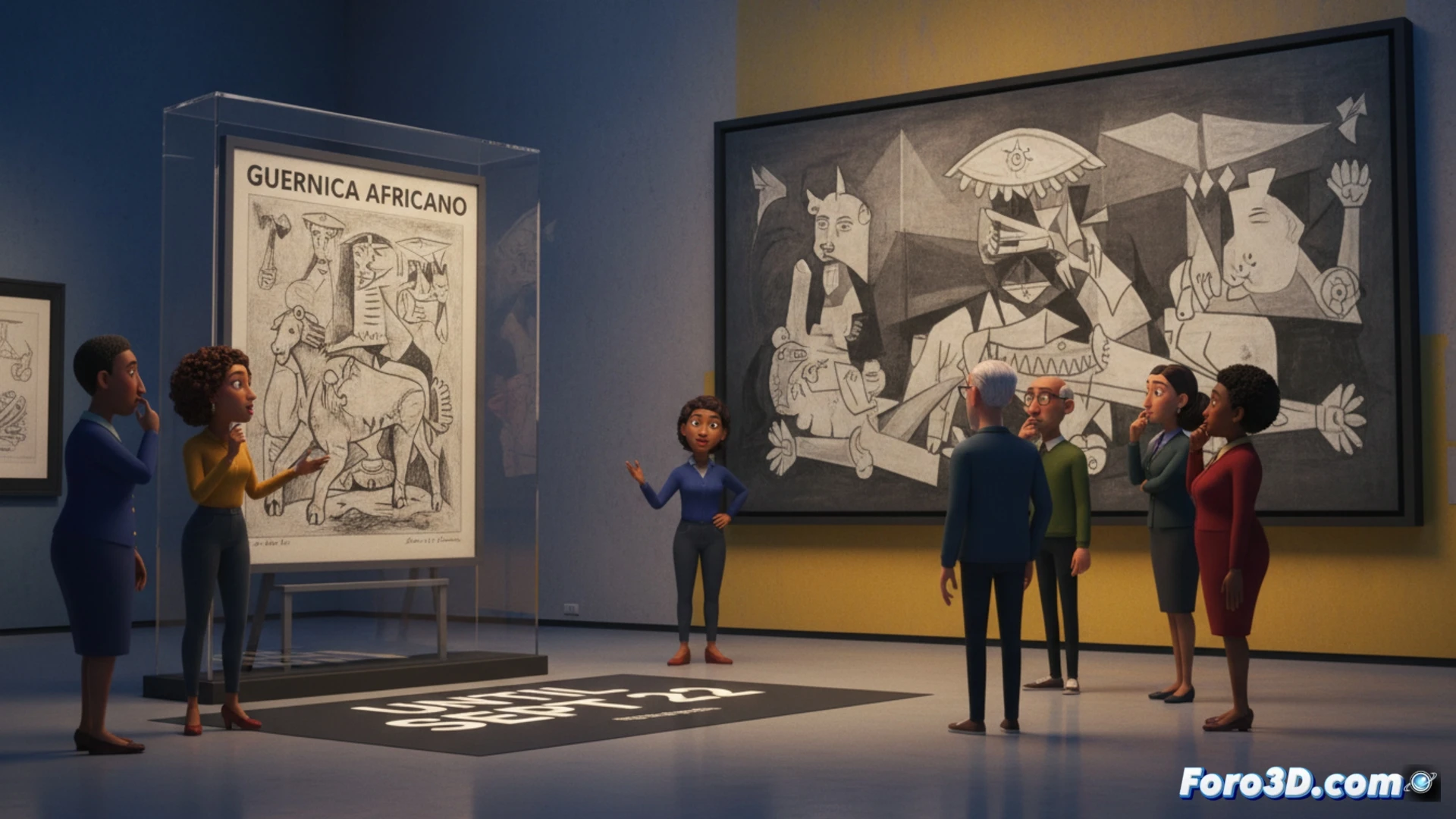
Dialogical curation and physical setup: anatomy of an artivist device 🎨
The methodology here is key. Curator Tamar Garb denies a direct influence to emphasize an intentional dialogue between traditions. The reflection resource is not decorative; it is the core of the statement. It acts as a technical metaphor: one work interrogates and distorts the perception of the other, creating a third space of meaning. This setup operates as a curatorial algorithm that processes two distinct historical inputs (the Spanish Civil War and South African apartheid) to generate a common critique against tyranny. In digital activist art, this principle is replicated using layers in 3D compositions or VR environments where works or symbols interact, forcing the viewer into a comparative and critical reading.
From reflective glass to virtual space: expanding the dialogue 🕶️
This exhibition proposes an exportable model. Imagine this dialogue in an immersive virtual space, where the viewer could manipulate the reflection angle or introduce a third historical context. Technology could amplify the dialogical methodology, creating networks of interconnected works that speak about oppression from multiple geographies and times. The Reina Sofía case demonstrates that artivism does not reside solely in the individual work, but in the relational framework built around it, a framework that digital tools are prepared to take to an unprecedented scale and depth.
Could this work function as an interactive installation in a museum?