Apple is redefining its AI strategy through a unique technical collaboration with Google. Instead of directly integrating Gemini, Apple uses distillation to transfer knowledge from large models to efficient systems that run locally on the iPhone. This approach prioritizes privacy and Apple's total control, but comes with significant delays. The new Siri, absent in iOS 26.4, is expected for June or September, while competitors like ChatGPT and Gemini already dominate the conversational space.
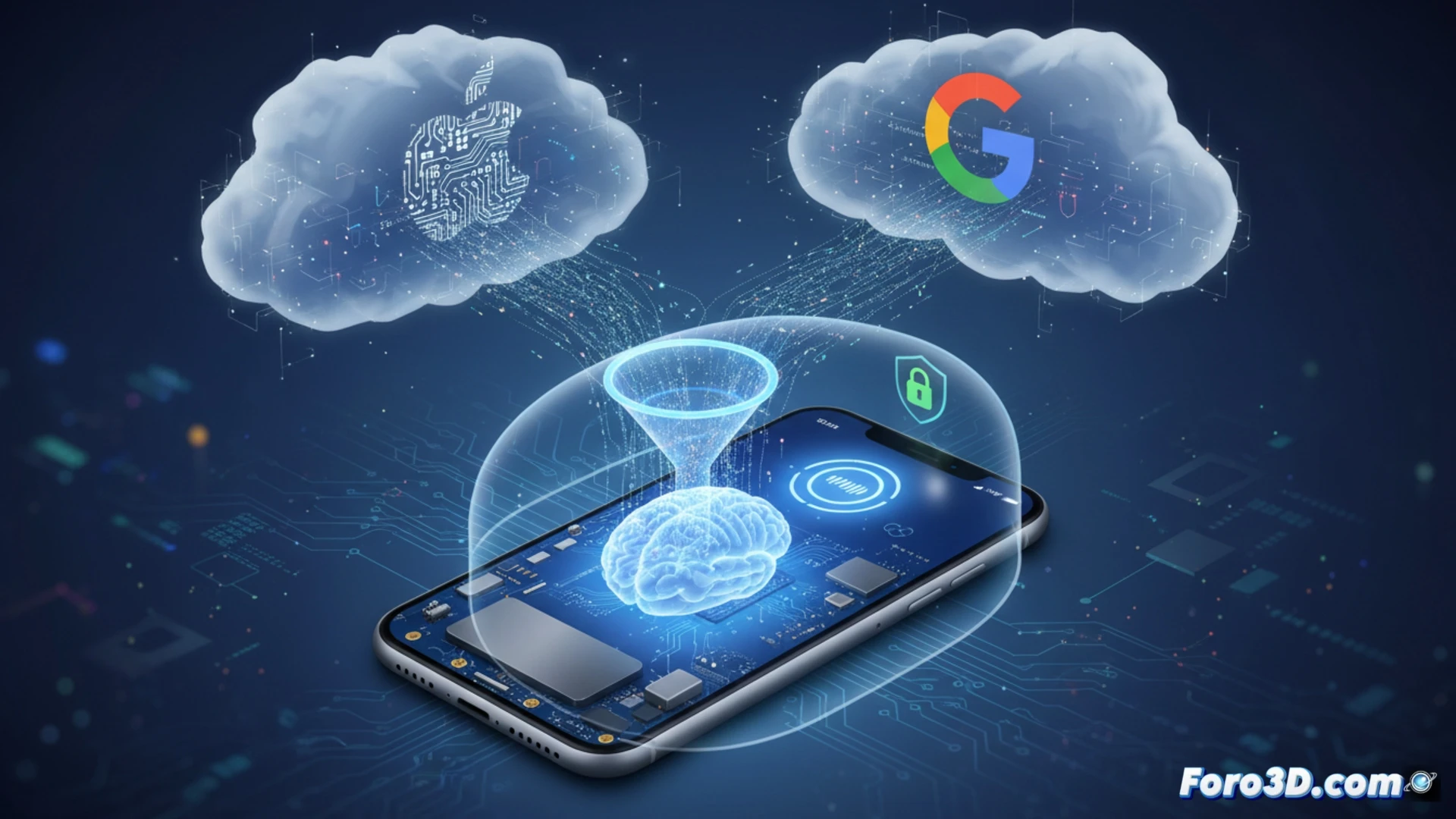
AI Distillation: the art of compressing knowledge for privacy 🤖
The technical core of this collaboration is model distillation. Apple does not run Google's massive servers on the iPhone. Instead, it extracts capabilities and knowledge from massive models like Gemini to train much smaller and optimized systems. These distilled models can operate completely on the device, without sending queries to the cloud. This mitigates privacy risks and reduces latency. Apple maintains absolute control: it can request adjustments from Google on the master model and then refine the behavior of the distilled system according to its philosophy, creating an AI experience that bears Apple's signature without external branding.
The social pressure of arriving late to the conversational revolution ⏳
Apple's biggest challenge is not technical, but one of expectations. The delay has created a vacuum where users and the market have normalized advanced assistants. The new Siri must not only match ChatGPT or Gemini, but justify the wait with seamless integration, reliability, and a unique value proposition: privacy as a premium feature. Its success or failure will redefine the balance of power in conversational AI and test whether privacy and local processing are decisive arguments for the end user.
Does the Apple-Google alliance in AI mean the definitive end of the strict privacy model that characterized Siri, or is it the only way to compete in the era of large-scale models without completely sacrificing user security?
(P.S.: tech nicknames are like children: you name them, but the community decides what to call them) 🍎