The alliance between Apple and Google to use the Gemini model marks a turning point in the industry. Far from a simple integration, Apple seeks the core of Google's technology to create small and efficient models that run on its devices. This move, unusual for the apple company, reveals a race for AI in which it arrives late and needs to ally with the current leader. The WWDC in June will be the moment of truth to show if the wait has been worth it. 🤔
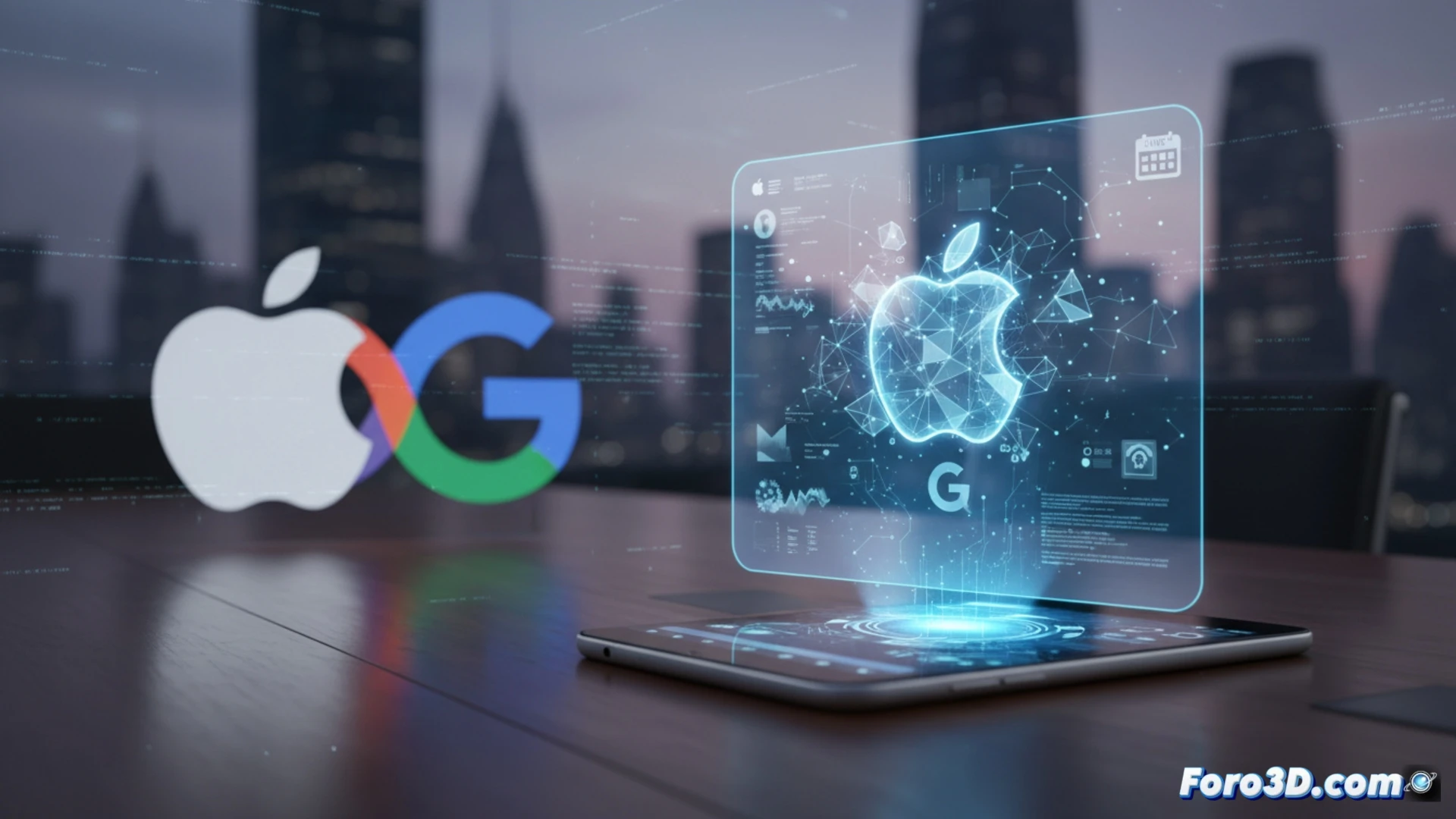
The technical strategy: small models for a big local impact 📱
The goal is not for Siri to become a Gemini chatbot, but to use that advanced model as a base to train reduced and highly optimized versions. These specific AIs would run locally on iPhones and Macs, prioritizing privacy, response speed, and energy efficiency for specific tasks. This approach differs from that of competitors who rely more on the cloud, and could be Apple's key to offering an integrated and fluid experience, even if it is part of a tacit admission: it has not been able to develop an in-house base model of that caliber at the required speed.
The social perception: Is Apple losing its aura of innovator? 🧐
This collaboration impacts the narrative of Apple as a beacon of autonomous innovation. By depending on Google, it cedes part of its control and myth. For digital society, the battle is no longer just for features, but for which company will define everyday AI. If Apple achieves a truly contextual and useful Siri, it will justify its strategy. If not, it will consolidate the image of a giant that, in AI, follows others. The pressure is not only technical, but also public perception in a market that no longer waits.
Does this alliance between Apple and Google represent the beginning of an era of collaboration between tech giants to overcome the current limitations of AI, or does it consolidate a future where power over artificial intelligence will be in the hands of a few corporations?
(PS: the Streisand effect in action: the more you prohibit it, the more they use it, like microslop)