Apple turns half a century not only as a technology company, but as the main architect of contemporary digital society. Its true innovation was not just the Mac or the iPhone, but the creation of closed and vertical ecosystems that redefined the relationship between hardware, software, and user. This model, which prioritizes the integrated experience over openness, has shaped consumption expectations, market dynamics, and has concentrated unprecedented economic power in a single corporation, laying the foundations for its next big move: integrated artificial intelligence.
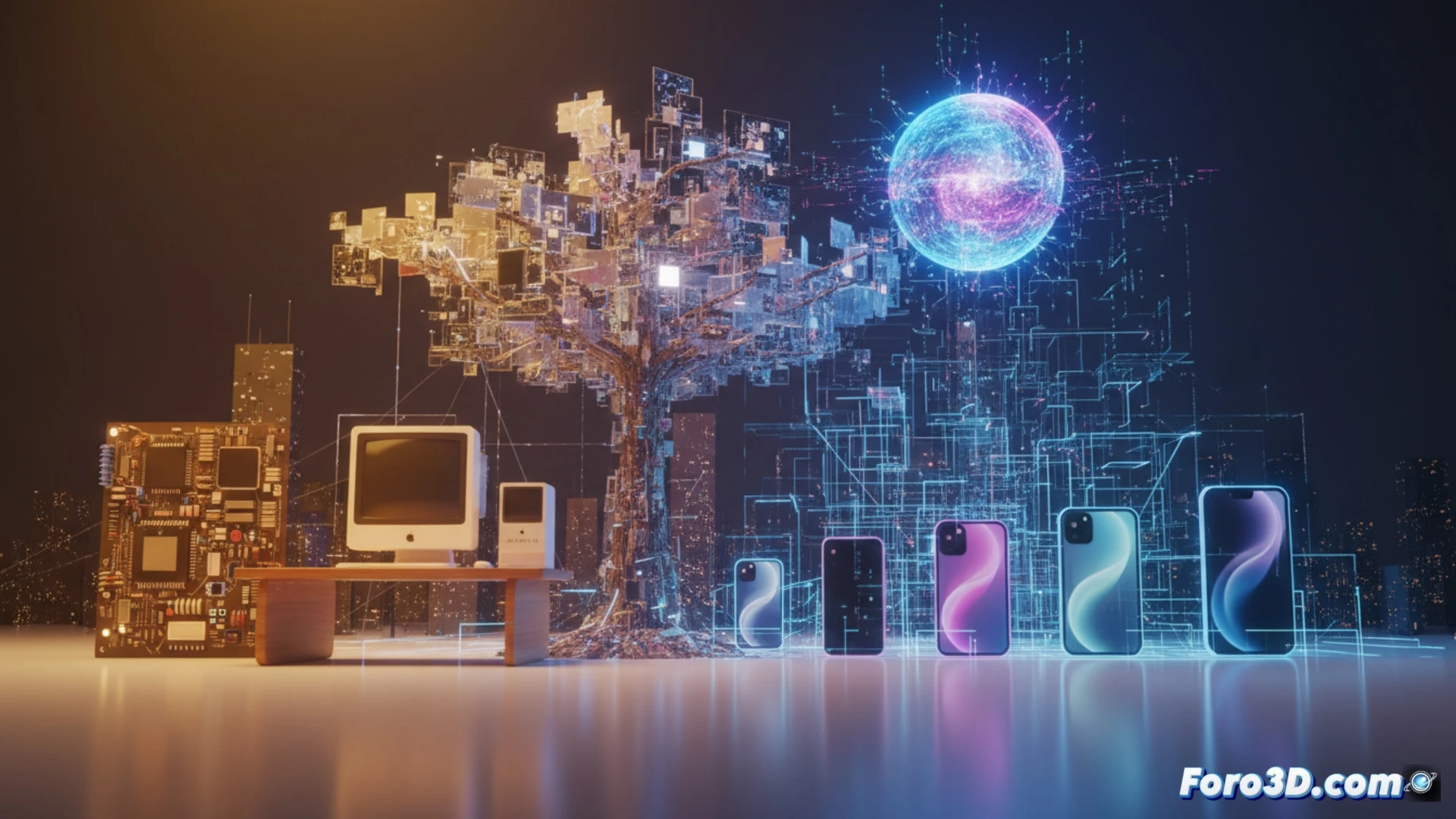
The strategic transition: From hardware as product to hardware as platform 🤔
Apple's crucial pivot was understanding that lasting value was not in selling devices, but in controlling the platform they enable. The launch of iTunes and then the App Store transformed the iPhone from a phone into a gateway to a universe of services and content with a recurring business model. This transition from manufacturer to ecosystem manager is what sustains its current valuation. Now, with AI, Apple seeks to repeat the formula: hardware (iPhone, own chips) will be the necessary base to access advanced AI services, probably under subscription, prioritizing on-device privacy and seamless integration as differentiating arguments against competitors' cloud solutions.
The future under the AI ecosystem: Innovation or greater dependence? ⚖️
Apple's next phase, dominated by integrated AI, raises profound social questions. By offering an AI that works optimally within its ecosystem, the company could further strengthen its control, defining human-machine interaction standards. This promises convenience and security, but also risks deepening user dependence, limiting interoperability, and consolidating a digital market fragmented into walled gardens. The challenge, as a society, will be to balance the advantages of powerful and private technology with the need to maintain a diverse and open digital space for external innovation.
Can Apple's closed ecosystem, which defined personal computing, become the ethical and efficient model for integrating AI into our daily lives without sacrificing privacy?
(PS: trying to ban a nickname on the internet is like trying to cover the sun with a finger... but digital)