A team from Osaka University has discovered the key mechanism that triggers cellular senescence. The protein AP2A1 acts as a switch, transporting integrin β1 to strengthen cell adhesion until it causes rigidity and aging. The study reveals that blocking AP2A1 in old cells reverses the process, while its excess accelerates it. This finding positions it as a priority therapeutic target against aging and associated diseases.
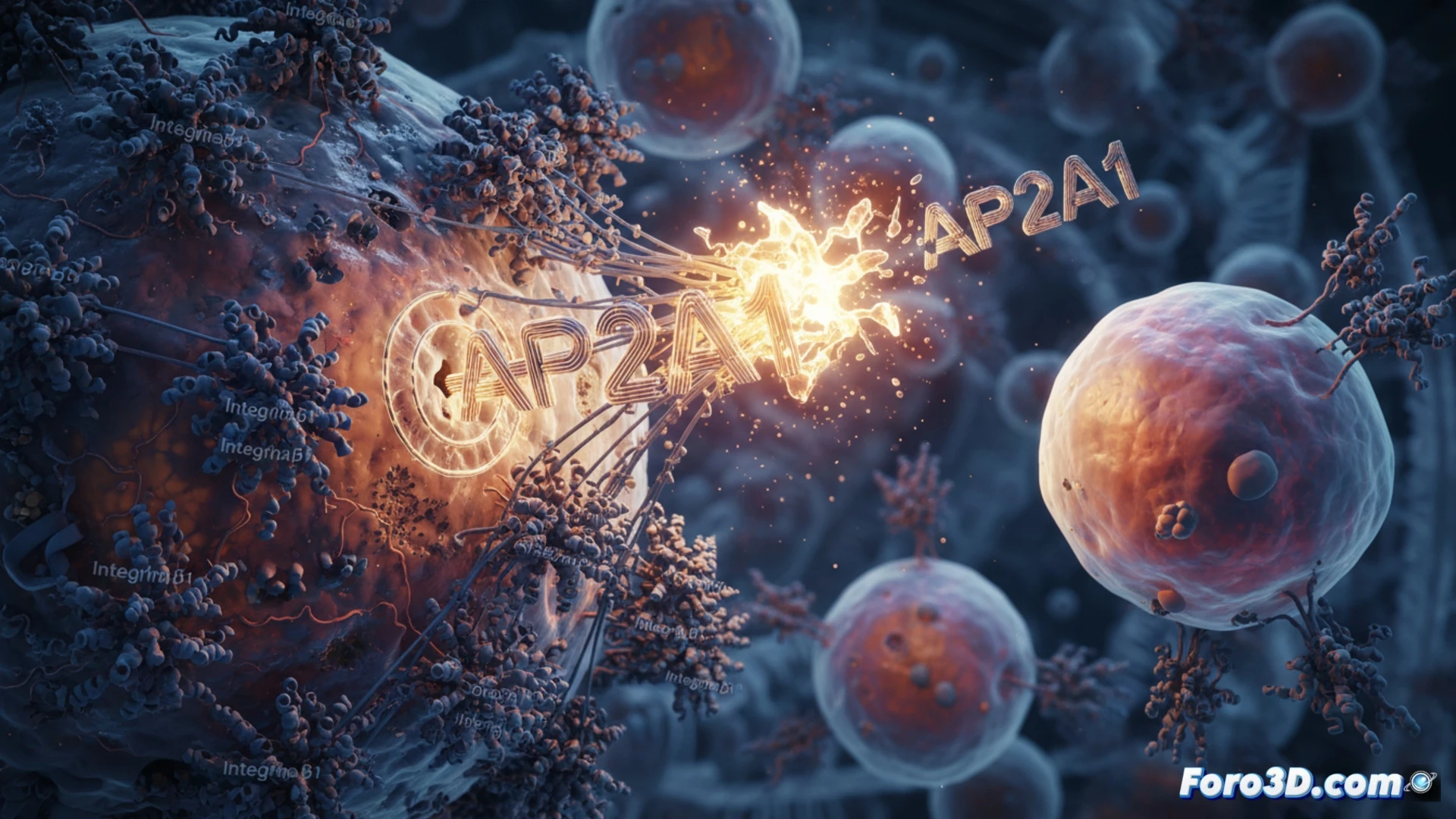
3D Visualization: unraveling the senescence mechanism 🔬
Understanding the dynamic interaction between AP2A1 and integrin β1 goes beyond the bidimensional. Here, 3D biomedicine is crucial. 3D molecular modeling allows visualizing the tertiary structure of AP2A1 and its binding site, while dynamic simulations show the transport and adhesion process leading to rigidity. This visualization not only clarifies the mechanism but is the first step for rational drug design. Digitally identifying a compound that couples to the active site of AP2A1 to inhibit it would be the direct therapeutic approach.
From digital model to anti-aging therapy 💊
The translational potential of this discovery materializes with 3D tools. Computer-assisted design of inhibitory molecules, validated with 3D printing of physical models for interaction studies, accelerates drug development. Blocking AP2A1 could rejuvenate tissues, extending healthy lifespan. This case exemplifies how 3D visualization and manipulation of biological structures are already indispensable for converting basic findings into future therapies.
How could 3D printing of tissues and advanced cellular models accelerate the research and therapeutic application of the AP2A1 protein discovery in aging control?
(P.S.: If you 3D print a heart, make sure it beats... or at least doesn't have copyright issues.)