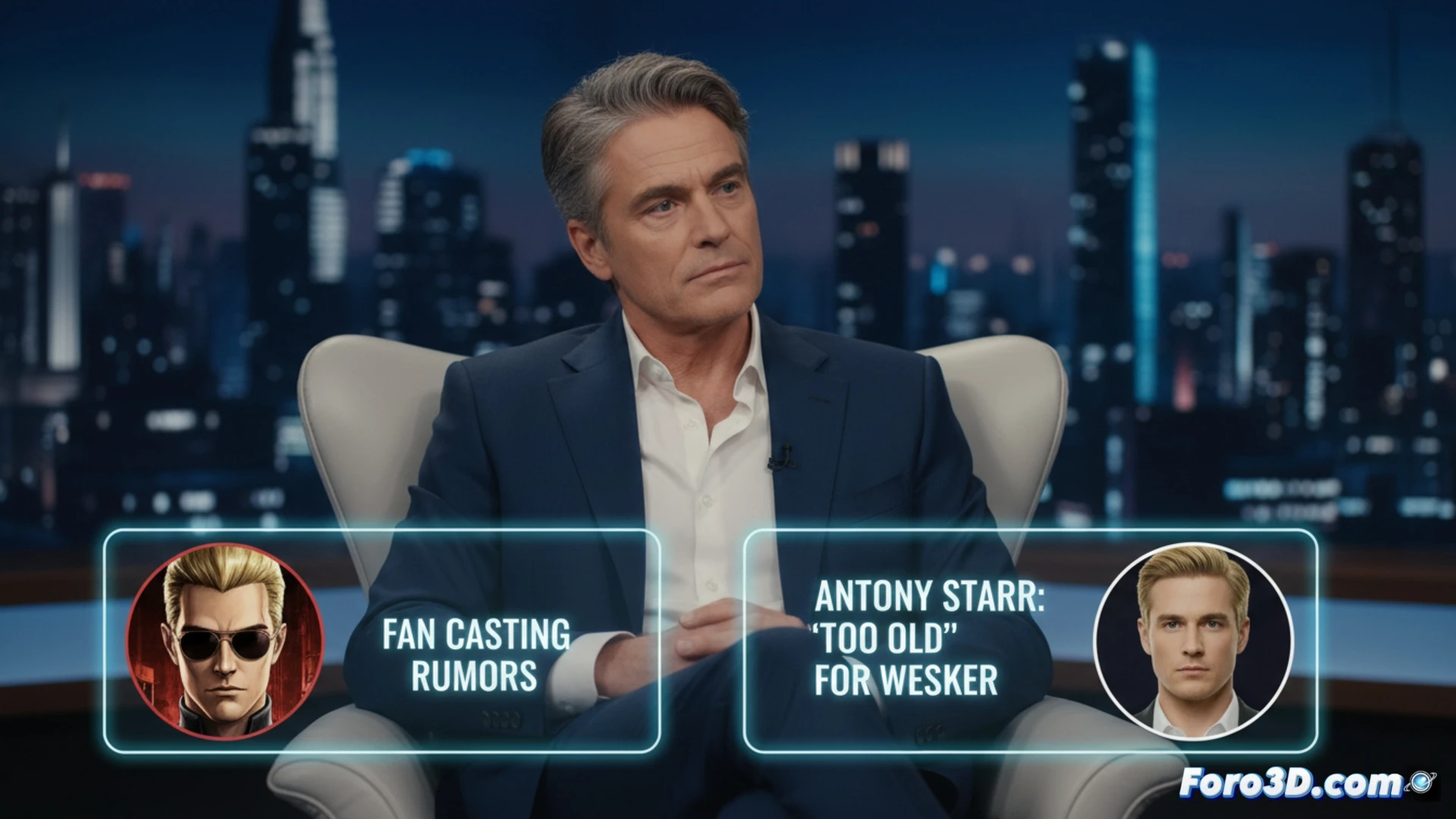
Antony Starr, the actor behind Homelander, has cooled the hopes of fans who saw him as the perfect Albert Wesker for a new Resident Evil adaptation. At 50 years old and with a change in look, Starr believes he no longer fits physically in the role, suggesting it be for a younger actor. This case opens a fascinating debate about casting in the digital era: to what extent is the actor's real physical appearance decisive when advanced pre-production and post-production tools exist?
3D Previsualization and Digital Prosthetics: Revolutionizing Casting 🎬
Starr's statement underscores a classic challenge in adaptations: visual fidelity. However, today technology mitigates these limitations. In pre-production, 3D scanning and previsualization allow testing an actor digitally in the role, adjusting build, age, or features like hair color before filming. In post-production, digital prosthetics and facial rejuvenation are common tools. An actor like Starr could portray Wesker, and then, through modeling and texturing, be adjusted to the villain's iconic design, separating the performance from raw physical appearance.
The Essence of the Character Beyond the 3D Model 🤔
Starr's reflection goes beyond the technical. Although software can shape appearance, the decision touches an acting principle: feeling suitable to embody the character's essence. 3D technology is a powerful tool for visual design, but the final choice resides in an alchemy between the director's vision, the actor's ability, and respect for the original source. The Wesker case exemplifies how modern cinema negotiates between fidelity to the original material and current narrative and technical possibilities.
How is motion capture and generative AI redefining the casting of iconic characters beyond actors' physical limitations?
(P.S.: Previz in cinema is like the storyboard, but with more chances for the director to change their mind.)