Kimi Antonelli has entered the history books of Formula 1. At just 19 years and 201 days old, the Italian Mercedes driver became the youngest to achieve a pole position, surpassing Sebastian Vettel's record during the Chinese GP qualifying. While his teammate George Russell secured second place, the session was bitter for the Spaniards Sainz and Alonso, who will start far back. This milestone is not just the result of raw talent, but the final outcome of a process where 3D technology plays an increasingly decisive role in squeezing every millisecond.
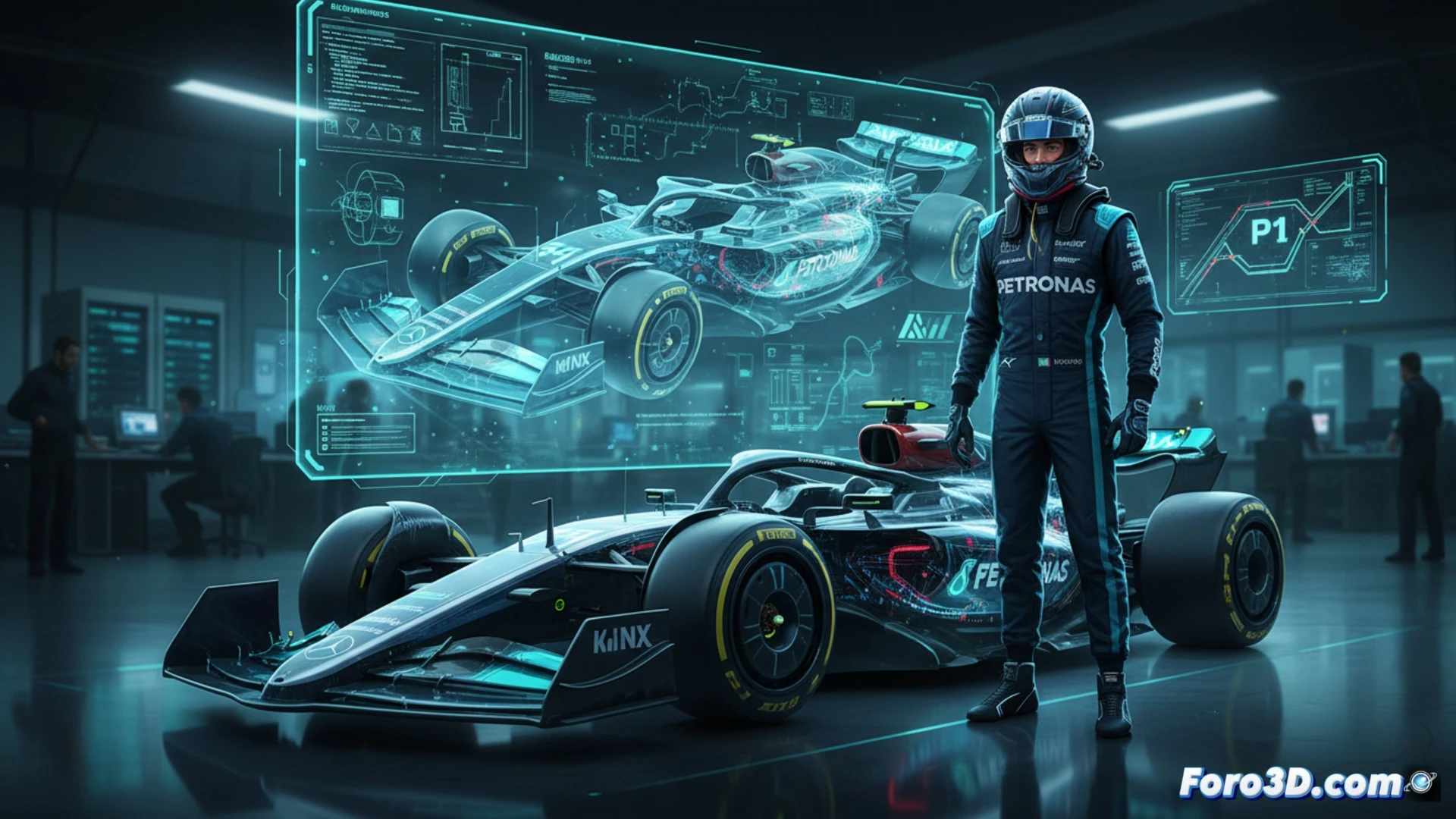
3D Simulation and Virtual Aerodynamics: The Invisible Tools of the Pole 🛠️
Behind a historic fast lap are thousands of hours of work in virtual environments. F1 teams use high-fidelity 3D simulators that recreate every bump and curve of the circuit, allowing drivers like Antonelli to memorize racing lines and practice limit conditions without setting foot on the asphalt. In parallel, computational fluid dynamics (CFD) 3D modeling is crucial for optimizing the car's aerodynamics, analyzing airflow over every wing and diffuser. These tools allow engineers to predict the car's behavior and fine-tune the setup for qualifying, turning data into an advantage on the clock.
Beyond the Stopwatch: Visualizing the Feat 📊
3D technology also transforms how we understand these feats. 3D recreations of the pole lap, overlaid with telemetry data, allow analysts and fans to break down every decision by Antonelli: his braking point, his attack angle in the corners, or his throttle management. This advanced visualization not only celebrates the record but democratizes its technical understanding, revealing the complexity behind a simple number on a qualifying board. The young Italian's achievement is thus a human accomplishment amplified by the digital.
How did 3D simulation and digital modeling influence the development of the car that allowed Kimi Antonelli to achieve the youngest pole position in history?
(PS: player tracking is like following your cat around the house: lots of information and little control)