Sylvain Chomet challenges the conventions of the biopic with his latest film, A Magnificent Life, about Marcel Pagnol. Abandoning linear chronology and factual exposition, the director builds the narrative from memory and subjectivity, using animation as an essential vehicle. This approach prioritizes emotional truth over historical accuracy, allowing the character's essence to flow freely, without the constraints of physical resemblance or temporal linearity.
Overcoming the limitations of live-action: essence over form 🎭
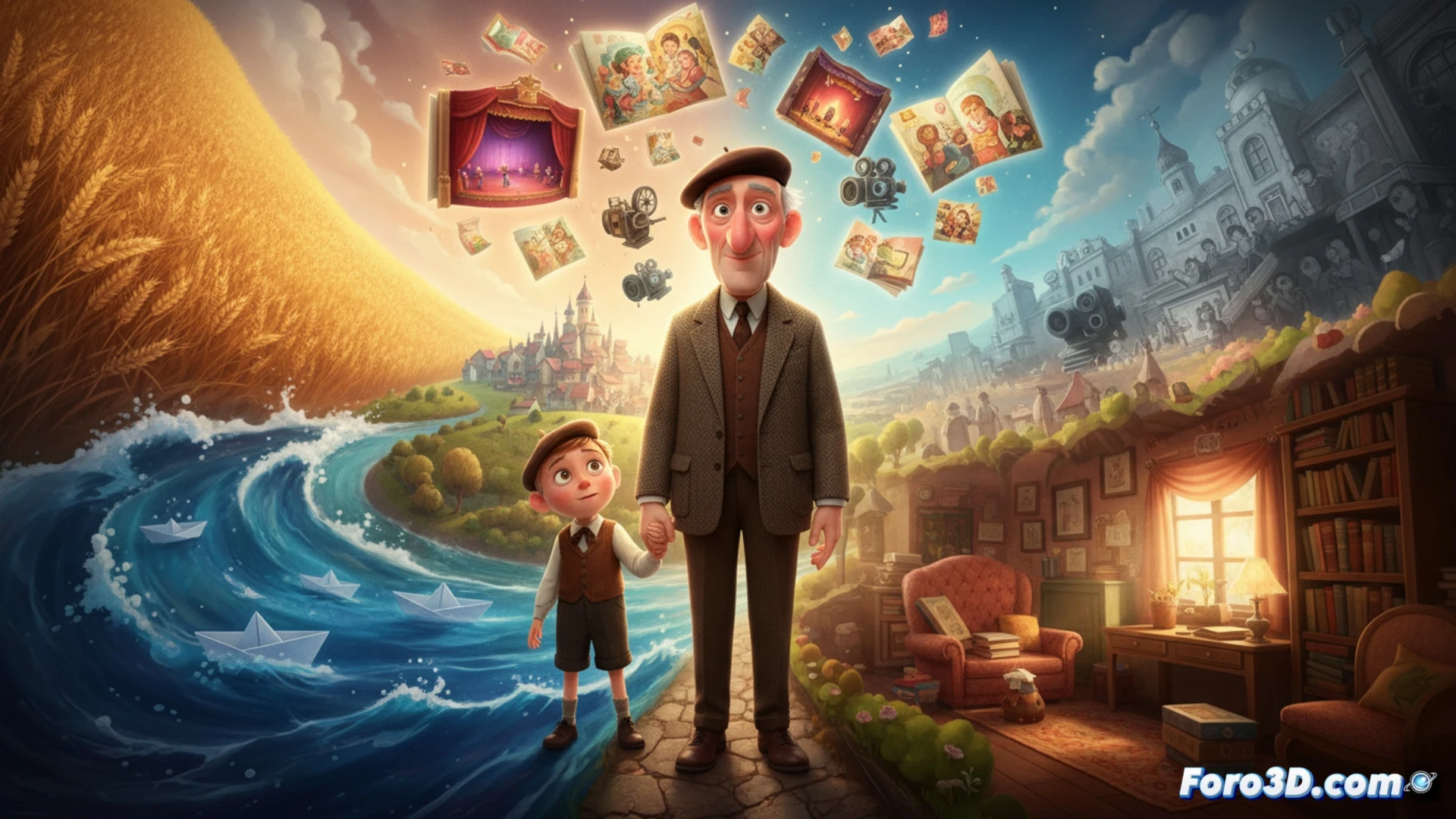
Chomet's key decision was to choose animation to evade the central problem of the traditional biopic: imitative acting. By freeing itself from the need for literal physical resemblance, the film can focus on capturing Pagnol's emotional essence. This allows narrative devices impossible in live-action, such as the constant interaction between the elderly man and his child self, guardian of memories. Animation facilitates this manipulation of time and memory, turning subjectivity into a visual landscape and giving dramatic weight not to successes, but to the struggles and doubts that precede them.
Visual conceptualization: memory as structure 🧠
The pre-production and conceptualization of the film are based on a visual narrative premise: memory is not linear. The structure is woven through memories and dreams, where spaces and characters can transform according to the emotional weight of the scene. This approach in the conception stage demonstrates how animation, whether 2D or 3D, is not just a style, but a framework of thought for building stories where the character's internal time dictates the form of the work.
How does Sylvain Chomet use animation to subvert the traditional chronological structure of the biopic and focus on emotional memory in A Magnificent Life?
(P.S.: Previz in cinema is like the storyboard, but with more possibilities for the director to change their mind.)