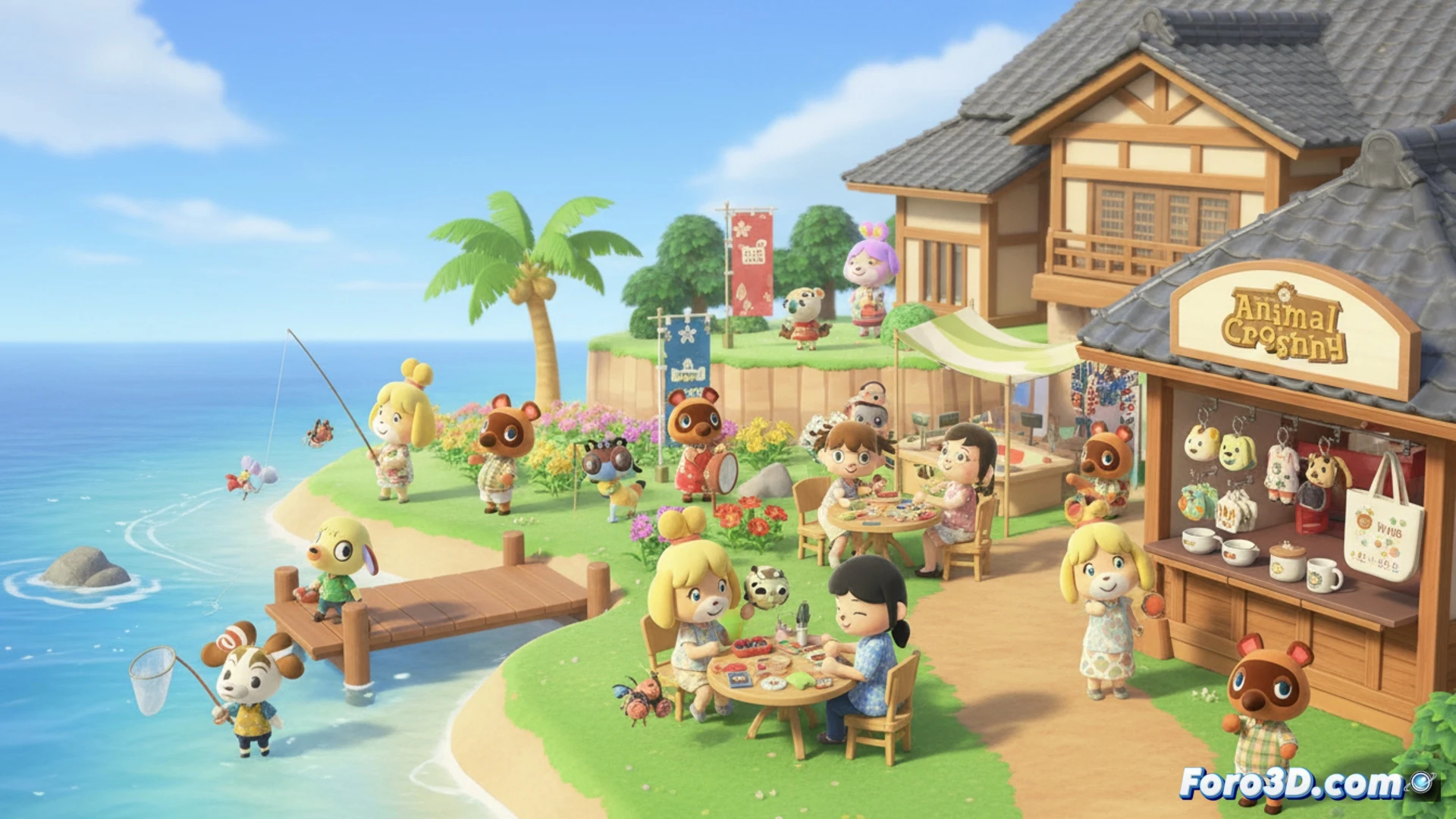
Animal Crossing announces an official collaboration with Tokyu Resorts & Stays for 2026, a physical event that brings game mechanics like fishing or bug catching to a real-world setting. This initiative, along with the launch of exclusive merchandise, contrasts with the absence of announcements about new digital content or an adaptation for the upcoming Switch 2. We analyze how these strategies extend the life of a franchise beyond software updates. 🎮
Experiential marketing: expanding the video game ecosystem 🏕️
This collaboration is a clear case study in experiential marketing. Nintendo and the resort are not selling a game, but a physical immersion in its universe. Themed activities and exclusive merchandising turn players into guests and consumers in a new channel. This strategy generates additional revenue, strengthens the community, and maintains the IP's relevance at a time of conservative development. It is a smart tactic to sustain engagement when the main content cycle is on pause, demonstrating that the value of a franchise can be cultivated outside traditional platforms.
Lifespan beyond code: lessons for developers 📈
This event underscores a crucial lesson for IP management: the life of a video game can be significantly extended through tangible experiences. While internal development may be focused on future hardware or new ideas, these outsourced collaborations keep the community and brand alive. For studios, it represents a model to consider for mature franchises, where physical and experiential content complements the digital, ensuring continuity and revenue without consuming critical development resources.
How can video game developers design engagement mechanics that successfully translate into physical experiences and real-world collaborations, like Animal Crossing with Tokyu Resorts?
(P.S.: a game developer is someone who spends 1000 hours making a game that people complete in 2)