The high jumper Yaroslava Mahuchikh won the world indoor gold with a jump of 2.01 meters. This achievement, beyond the data, is a perfect moment for technical analysis. In the niche of sports and 3D technology, a mark like this is not just a number, but a three-dimensional model to study. The digital reconstruction of her jump allows breaking down the feat into objective data, transforming visual appreciation into a scientific tool for coaches, athletes, and fans.
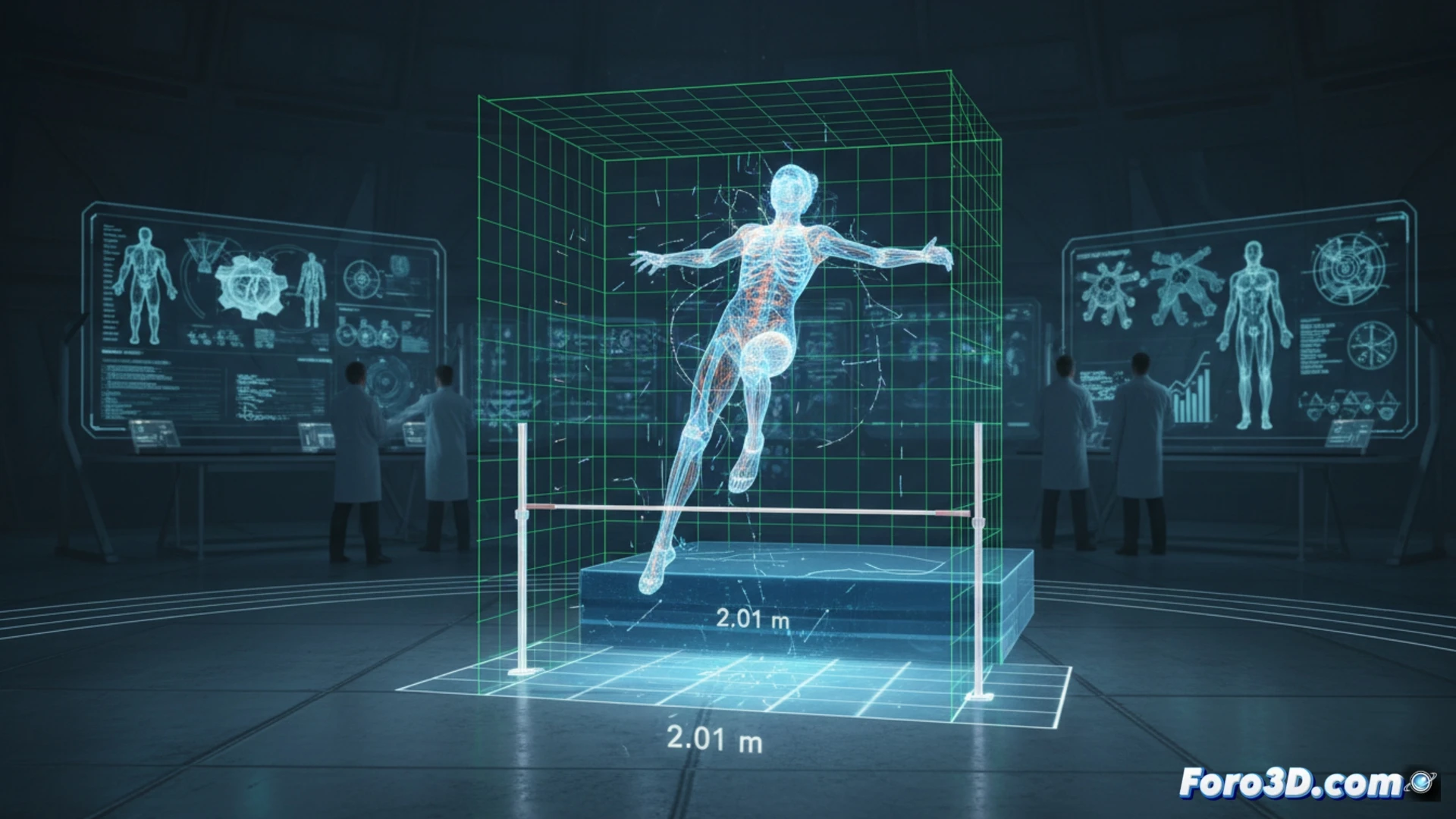
3D Reconstruction and Biomechanical Analysis of the Jump 🧬
Using techniques such as multicamera photogrammetry or LiDAR systems, it is possible to create a precise 3D avatar of the athlete in motion. This model allows calculating with accuracy the trajectories of the center of gravity, key joint angles in the run-up, takeoff, and flight, and the efficiency of the technique over the bar. Simulation software can vary parameters to answer questions: how does a greater approach speed affect it? Or a slightly different takeoff angle? This analysis goes beyond observation, quantifying the millimeters and degrees that separate gold from silver.
Beyond Training: Visualization and Dissemination 📺
The application of these 3D models transcends the laboratory. For dissemination, television networks can integrate 3D graphics overlaid on the real image, showing the ideal trajectory or comparing jumps from different athletes. This enriches the viewer's experience with a layer of accessible technical information. Thus, Mahuchikh's jump becomes an interactive case study, where 3D technology democratizes the understanding of high-level competition and celebrates the complexity of elite athletics.
How can 3D analysis of the biomechanics of a high jump reveal the technical secrets behind a world record like Mahuchikh's?
(P.S.: at Foro3D we know that a 3D simulated penalty always goes in... unlike in real life)