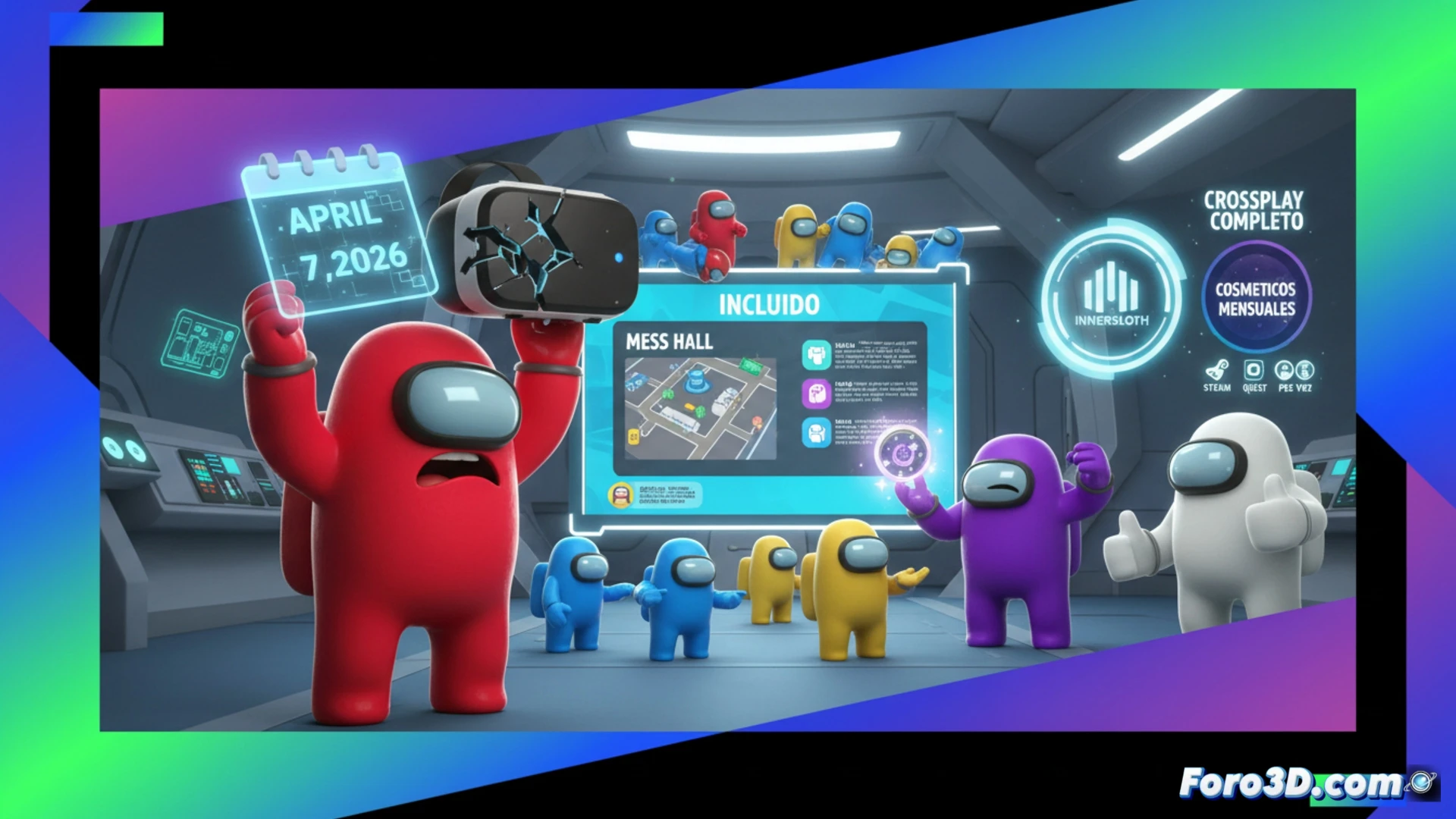
The announcement of the delay of Among Us 3D: VR Definitive Edition until April 2026 comes accompanied by a key strategic move: development returns to Innersloth, the original creator studio, from Schell Games. This change, beyond adjusting the roadmap, reflects a production decision aimed at ensuring visionary coherence and sustained support. The edition promises to unify and make permanent previous limited contents, along with an extended cosmetics plan, ensuring the title's vitality beyond launch.
Development Coherence and Technical Sustainability with Crossplay 🎮
The reinsertion of the project into Innersloth is not a mere administrative formality. It represents a reintegration of the original creative core with a derivative project, which potentially optimizes decision-making and alignment with the franchise's essence. Technically, the greatest challenge remains maintaining full crossplay between VR platforms (Quest, Pico, PS VR2) and the flat-screen version on Steam. This compatibility, already existing, requires a robust network and gameplay architecture that abstracts input methods and representation, a development effort that must continue long-term under the new direction.
Lessons in Lifecycle Management and Content 📈
This case illustrates a modern strategy for managing the lifecycle of a game as a service, even in niches like VR. The decision to make past event contents permanent mitigates community frustration and enriches the game's base. The planned monthly cosmetics calendar until 2027 establishes a public commitment to support, using a non-intrusive monetization model to generate recurring revenue and retain players, ensuring the title's relevance after a significantly delayed launch.
How does the studio change and development extension affect the viability and expectations of a virtual reality project adapting a 2D multiplayer phenomenon like Among Us? 🤔
(P.S.: optimizing for mobile is like trying to fit an elephant into a Mini Cooper)