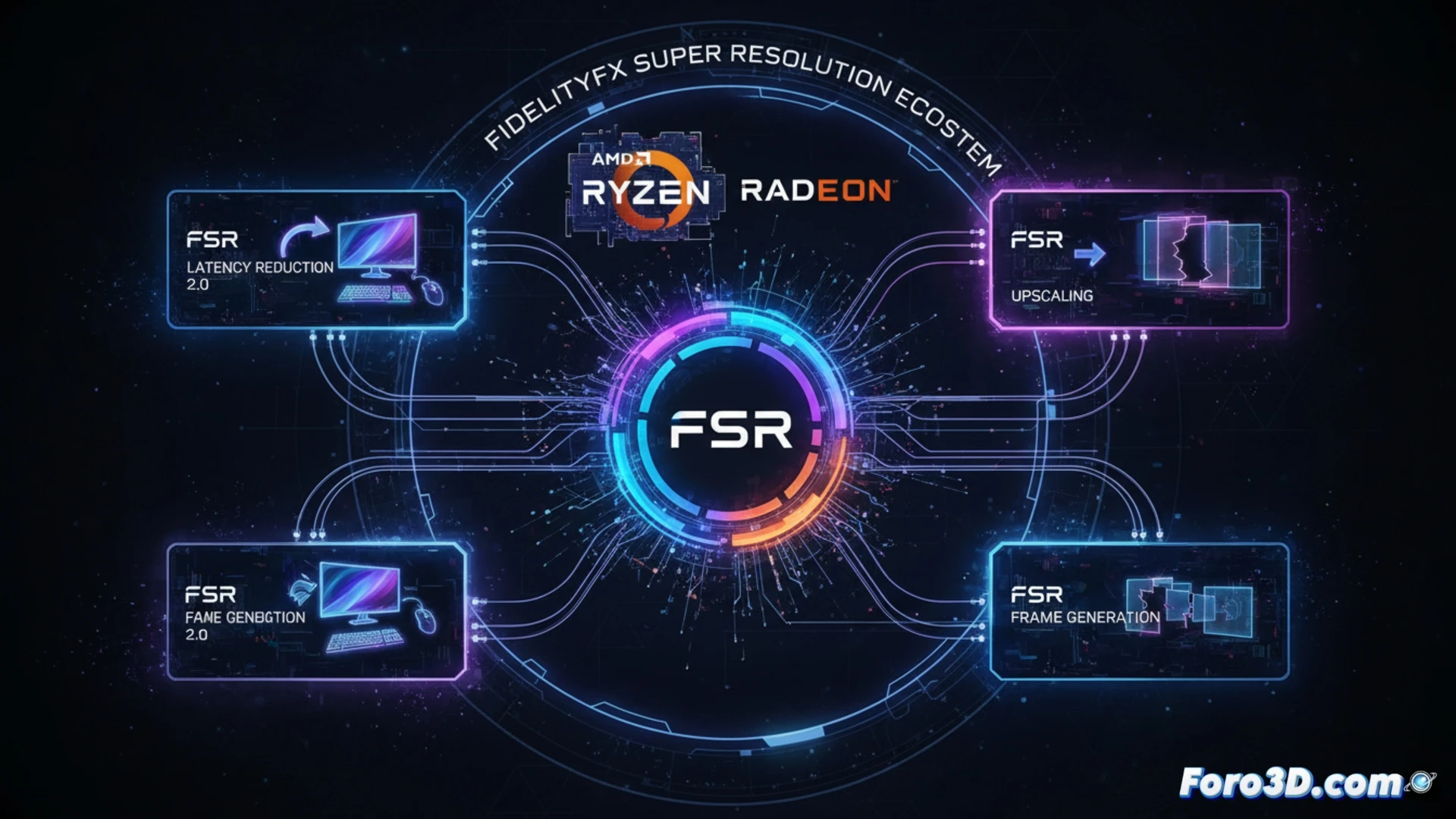
AMD has taken another step in unifying its graphics ecosystem. The Radeon Anti-Lag 2 technology has been officially renamed to FSR Latency Reduction 2.0, as detected in the latest SDK. This move definitively integrates latency reduction under the FidelityFX Super Resolution brand, following the strategy started with upscaling and frame generation. The goal is clear: to offer clear and unified identification for all performance and image enhancement technologies, making it easier for users to understand the complete package of optimizations offered by AMD. 🚀
Technical implications for 3D and real-time workflows ⚙️
The technical functionality remains unchanged. FSR Latency Reduction 2.0 aims to minimize the latency between user input and visual response, something critical not only in gaming but also in professional interactive applications. For artists and developers working with engines like Unreal Engine or Unity in real-time, reduced latency means more direct and reactive manipulation of scenes, more agile viewport navigation, and a preview experience more faithful to the final result. By integrating directly into the application code, unlike its predecessor at the driver level, it gives developers finer control, allowing specific optimizations for 3D creation tools and complex virtual environments.
Brand unification and hardware choice for 3D 🎯
This renaming consolidates FSR as a complete ecosystem for graphics performance. For the 3D professional or enthusiast, it simplifies the equation: when choosing an AMD GPU, they know they have access to a set of technologies (upscaling, frame generation, and latency reduction) designed to work coordinately under the same infrastructure. This can influence hardware decisions, especially for those who prioritize an integrated and optimized workflow in real-time engines. Clarity in the technology offering is an added value that AMD reinforces with this strategy.
How does the integration of Anti-Lag 2 into FSR, now renamed to FSR Latency Reduction 2.0, impact the performance and real user experience in 3D modeling and rendering?
(PD: If your computer starts smoking when opening Blender, you might need more than a fan and faith)