Fernando Alonso has brought Aston Martin fans back to reality. After a poor qualifying in Japan, the Asturian driver has been clear: there will be no magical improvements in the next ten races. His diagnosis of the AMR26 does not point to a specific failure, but to a general lack of competitiveness. Alonso emphasizes that in modern F1 miracles do not exist and that reversing the situation requires months of intense work, a process where 3D technology is the backbone. 🏎️
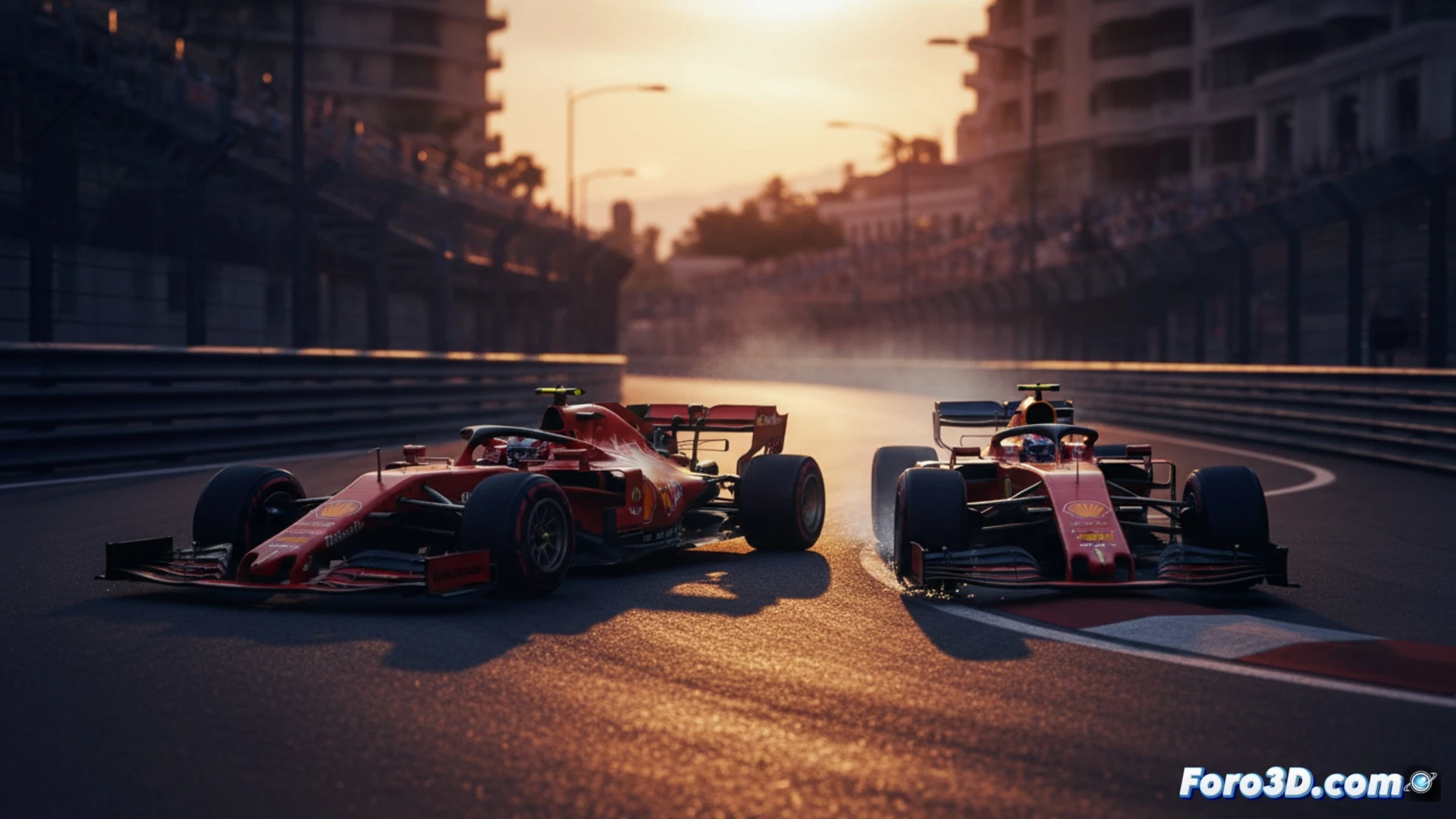
Digital twins and simulation: why improvements are not immediate 💻
When Alonso states that changes take months, he describes the rigorous development cycle in F1. Before manufacturing a physical part, teams work with digital twins of the car. Every aerodynamic or mechanical update is modeled in 3D and subjected to thousands of computational simulations of fluid dynamics and finite element analysis. These processes, which consume enormous computing resources, validate theoretical performance. Then, parts are prototyped, possibly with 3D printing for testing, and finally manufactured. Reconfiguring the project, as Alonso suggests, involves restarting this cycle from scratch in the digital model, explaining why solutions won't arrive until the summer.
3D visualization of data, key to understanding the deficit 📊
The general lack of competitiveness that Alonso mentions is diagnosed with data converted into 3D visual models. Engineers transform telemetry into three-dimensional representations of the car's behavior: virtual airflow, body deformations, or interaction with the asphalt. These comparative visualizations with rivals are crucial for identifying micro-deficiencies in every curve. Therefore, postponing the first races only avoided bad results, it did not accelerate development. 3D analysis confirms that the first half of the year will be a tough technological battle for Aston Martin.
What biomechanical metrics would be relevant to analyze in soccer players?