Fernando Alonso arrives at the Japanese GP with a clear objective: to finish the race. After testing new parts in the free practice sessions at Suzuka without noticing a significant improvement, the Asturian driver acknowledges that Aston Martin is still behind. In this context, 3D technology emerges as an indispensable tool to analyze those components, simulate adjustments, and seek the lost performance before the race, in a special weekend for the Honda engine manufacturer.
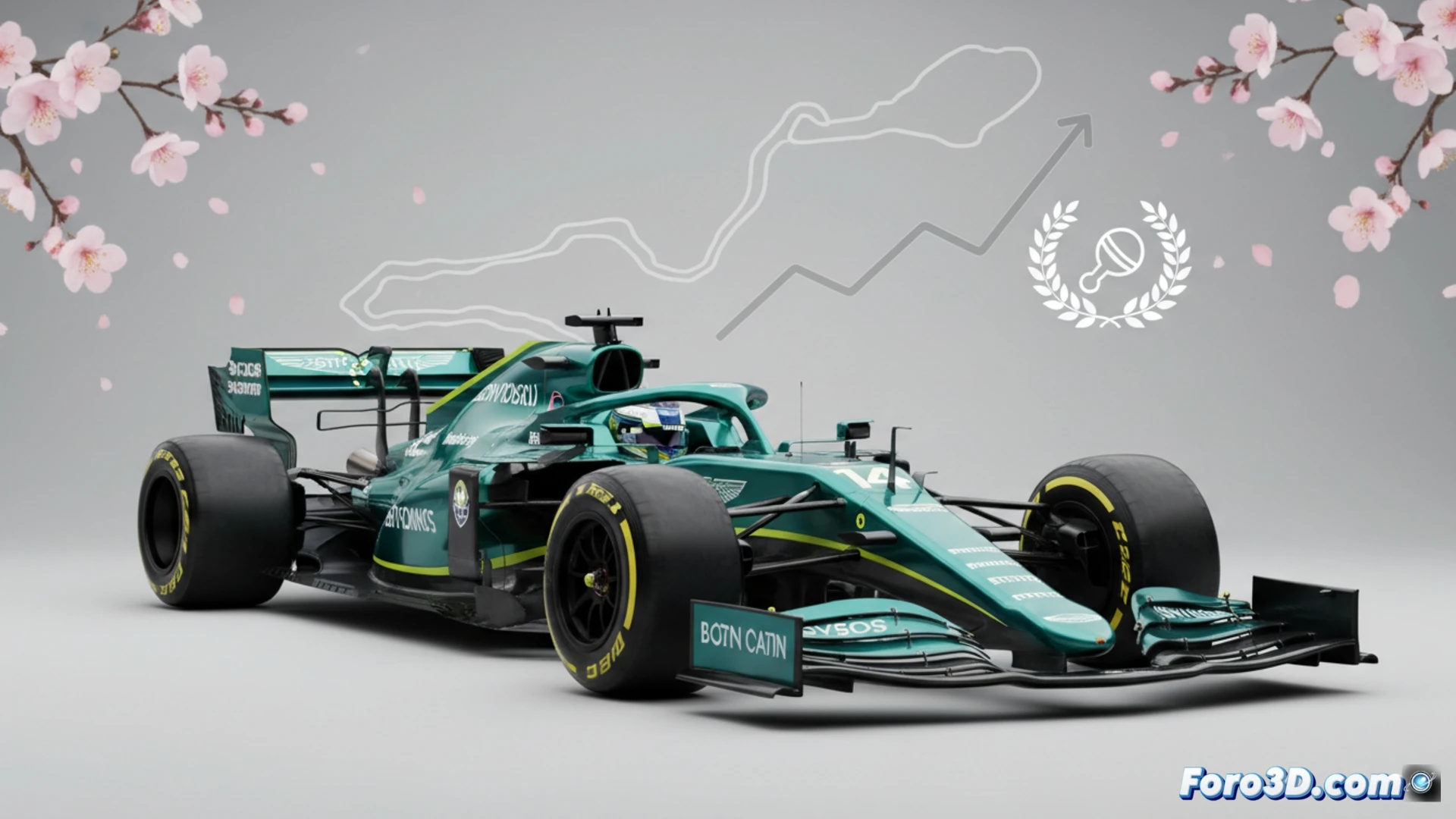
3D Simulation and Aerodynamics: the Virtual Test Bench of F1 🏎️
When Alonso talks about testing parts without finding the expected leap, behind it there is an exhaustive digital process. Teams use 3D modeling and computational fluid dynamics (CFD) to design and analyze each aerodynamic component in a virtual environment before manufacturing it. The Suzuka circuit, with its fast and demanding curves, is digitally recreated for driving and strategy simulations. Additionally, real-time telemetry can be visualized on 3D models of the car, allowing engineers to diagnose performance issues with millimeter precision.
Beyond the Lap Time: Human and Digital Strategy 🧠
Technology provides the data, but the final decision is human. Alonso's approach, prioritizing reliability to support Honda at home, reflects a strategy that goes beyond pure speed. 3D and simulation tools are fundamental to achieve that goal of finishing the race, allowing the car to be optimized for duration and to foresee possible failures. In a sport where every millisecond counts, this symbiosis between the driver's judgment and advanced digital analysis makes the difference between retiring and scoring points.
How can 3D analysis of telemetry and aerodynamics data in simulators help drivers like Alonso optimize their line in complex curves like the Suzuka S?
(PS: reconstructing a goal in 3D is easy, the difficult part is making it not look like it was scored with the leg of a Lego doll)