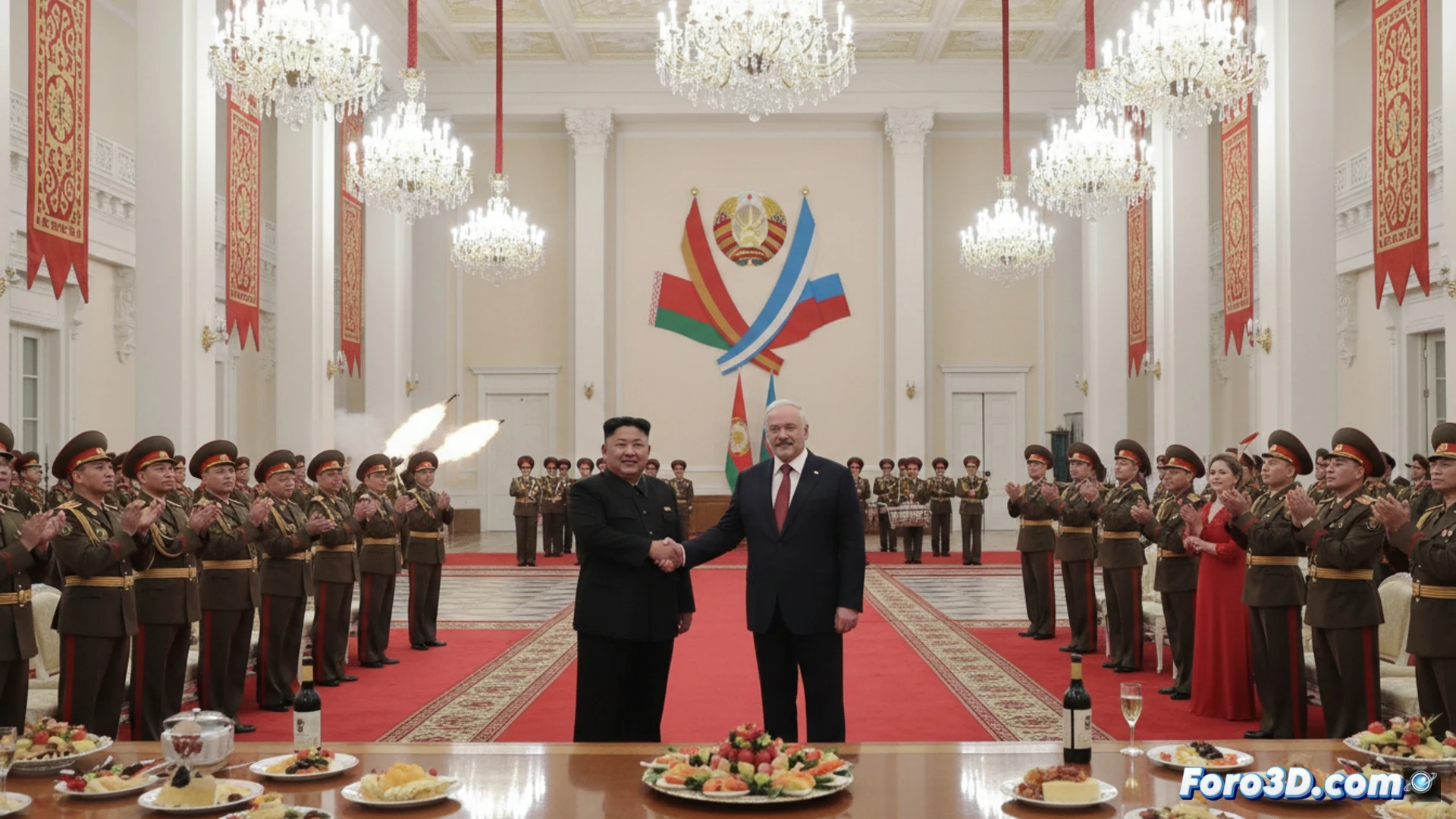
The luxurious reception in Pyongyang for Belarusian President Lukashenko is much more than a diplomatic gesture. It symbolizes the consolidation of a critical supply corridor for Russia. With North Korea as a munitions supplier and Belarus as a logistics platform, this tripartite alliance reconfigures the military supply chain in real time, challenging the Western sanctions siege. It is a geopolitical case study on how isolated regimes weave alternative networks.
Visualizing the logistics corridors: from Pyongyang to the Ukrainian border 🗺️
A spatial analysis with interactive 3D maps reveals the route. Flows depart from North Korean ports, with transshipments in Russia's Far East, then cross Siberia by rail. The key node is Belarus, whose border with Ukraine becomes the final distribution point. Overlaying layers of sanctions data, rail capacity, and warehouses shows a resilient but vulnerable system. This logistics avoids monitored air and sea spaces, prioritizing the Eurasian land network, now a vital artery for the war effort.
The silent reconfiguration of global chains ⚙️
This case exemplifies a larger trend: the fragmentation of global chains into geopolitical blocs. Sanctions, instead of totally isolating, drive the creation of parallel circuits that are less efficient but functional. Russia's dependence on these last-resort suppliers redefines its security, while for North Korea and Belarus, their strategic value multiplies. It is a lesson on how conflicts redraw the maps of global interdependence.
How are alliances under sanctions, like the one between Russia, North Korea, and Belarus, reconfiguring critical logistics routes and the global military materiel supply chain?
(P.S.: geopolitics in 3D looks so good that it makes you want to invade countries just to see it rendered)