Materials science is advancing toward the creation of smart components with tailored properties. Researchers from Bauhaus-Universität Weimar demonstrate this potential by combining algorithmic design and L-PBF additive manufacturing for Nitinol. This synergy overcomes the barriers of traditional methods, designing and producing complex geometries that maximize the flexibility and shape memory of this alloy, opening a new paradigm in materials engineering.
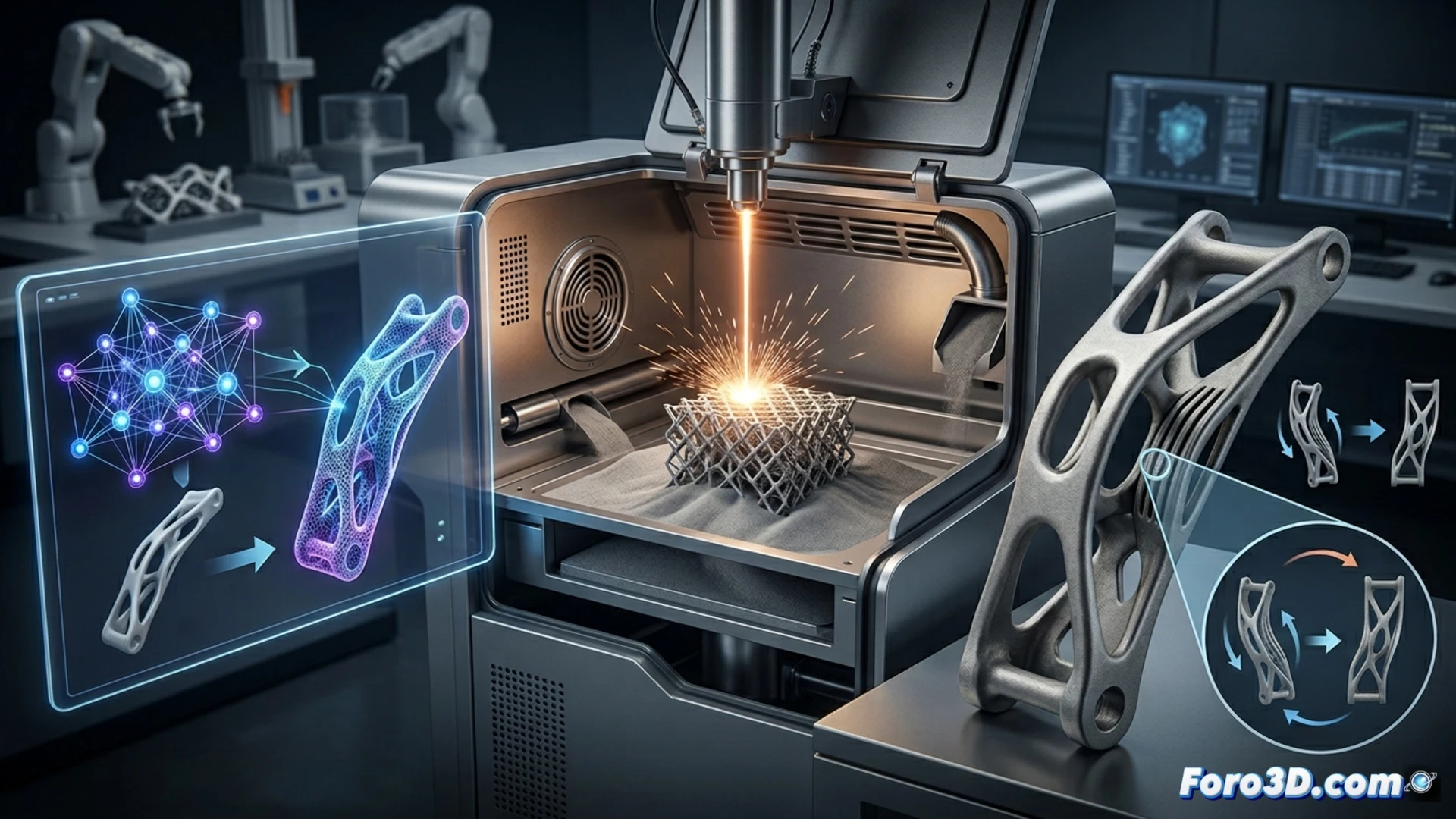
The key synergy: parametric geometry and precise manufacturing 🔬
The core of the advancement lies in the simultaneous control of microstructure and macro-geometry. Through algorithms, parametric designs are generated that distribute the material to optimize elastic deformation and shape recovery. Then, the L-PBF technique precisely manufactures those intricate architectures, impossible to machine, layer by layer. This process not only manufactures a part but materializes a computational simulation of mechanical behavior, allowing properties like flexibility to be adjusted through geometry, not just through chemical composition.
A new horizon for smart materials 🚀
This approach transcends a specific alloy. It establishes a powerful methodology for the development of high-performance materials, where design and manufacturing are an integrated cycle. The ability to create complex and customized structures with predefined mechanical behaviors will drive not only medical implants but also components for aeronautics, soft robotics, or energy. The frontier is no longer just discovering new materials, but designing their optimal physical expression.
How are algorithmic design and L-PBF additive manufacturing revolutionizing the creation of Nitinol components with tailored shape memory and superelasticity properties?
(PS: Visualizing materials at the molecular level is like looking at a sandstorm with a magnifying glass.)