Artificial intelligence is overcoming a millennial barrier: deciphering the first writings of humanity. Advanced Natural Language Processing (NLP) algorithms are being trained to automatically translate clay tablets inscribed in Akkadian or Sumerian. This tool does not replace the philologist, but acts as a powerful assistant that exponentially accelerates analysis, radically transforming the workflow in digital archaeology.
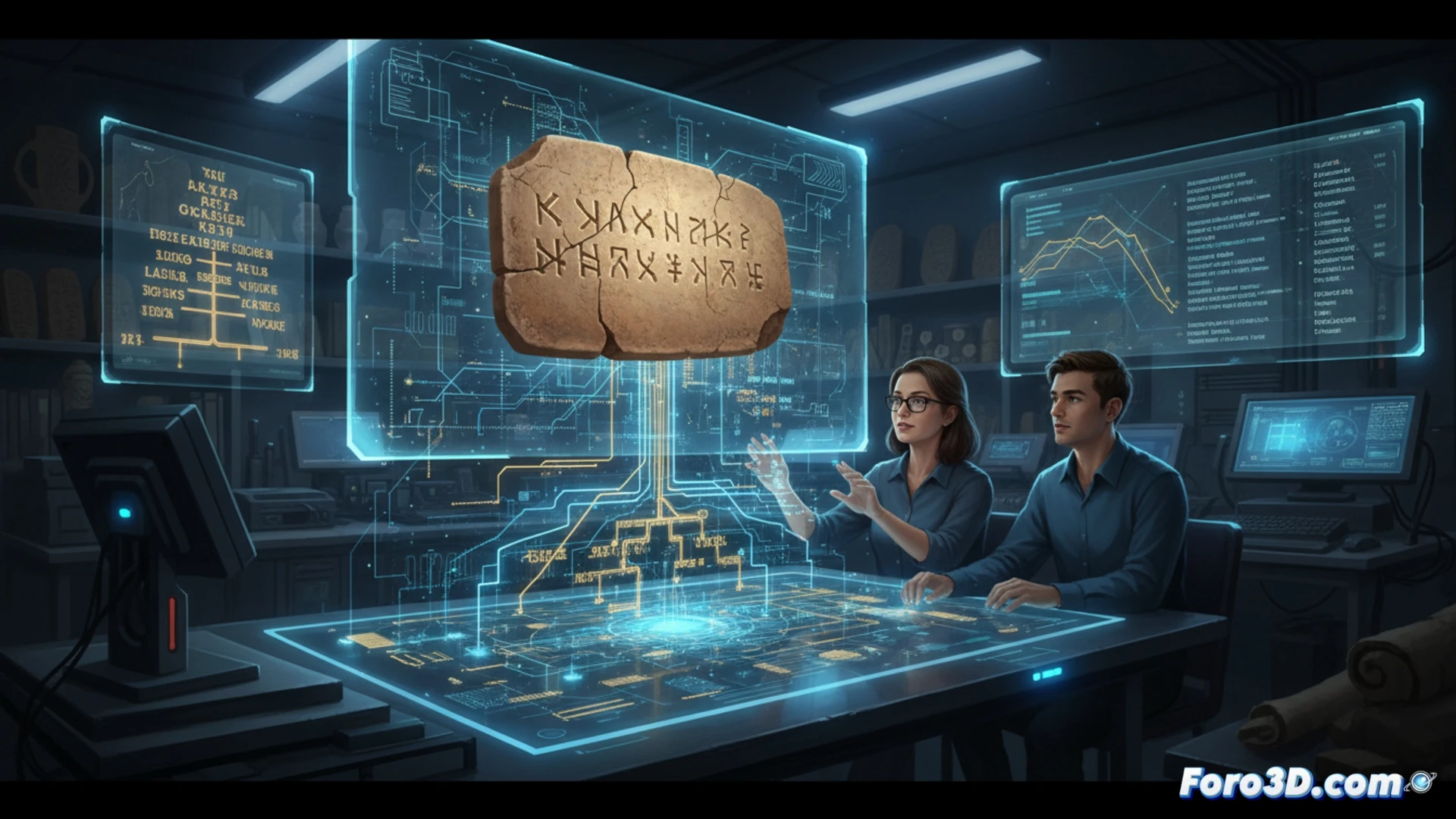
From 3D scanning to translation: the technological pipeline 🤖
The process begins with the exhaustive digitization of the physical artifact using photogrammetry or 3D laser scanning, creating a precise geometric model. Then, computer vision algorithms isolate and vectorize the cuneiform signs. This structured data feeds NLP models, trained with corpora of texts already translated by experts. The AI identifies patterns, grammar, and context, proposing translations. This allows cross-referencing information between thousands of tablets in seconds, revealing previously unmanageable historical and economic connections.
Beyond speed: a new paradigm of knowledge 💡
The true revolution is not speed, but democratization and the new perspective. By automating basic translation, researchers can focus on deep analysis and historical interpretation. Additionally, this technology makes this knowledge accessible to the public, enabling virtual museums with tablets translated in real time. AI thus becomes a fundamental bridge between the oldest cultural heritage and the digital society of the 21st century.
How is AI transforming the study of ancient civilizations by automatically deciphering unpublished cuneiform tablets?
(P.S.: and remember: if you can't find a bone, you can always model it yourself)