Current AI lighting tools operate mainly by imitating visual patterns. This works in simple cases, but fails when relighting complex scenes, such as integrating a character into a new environment. The skin loses volume and the reflections look artificial. The problem is that imitating is not the same as understanding the real behavior of light.
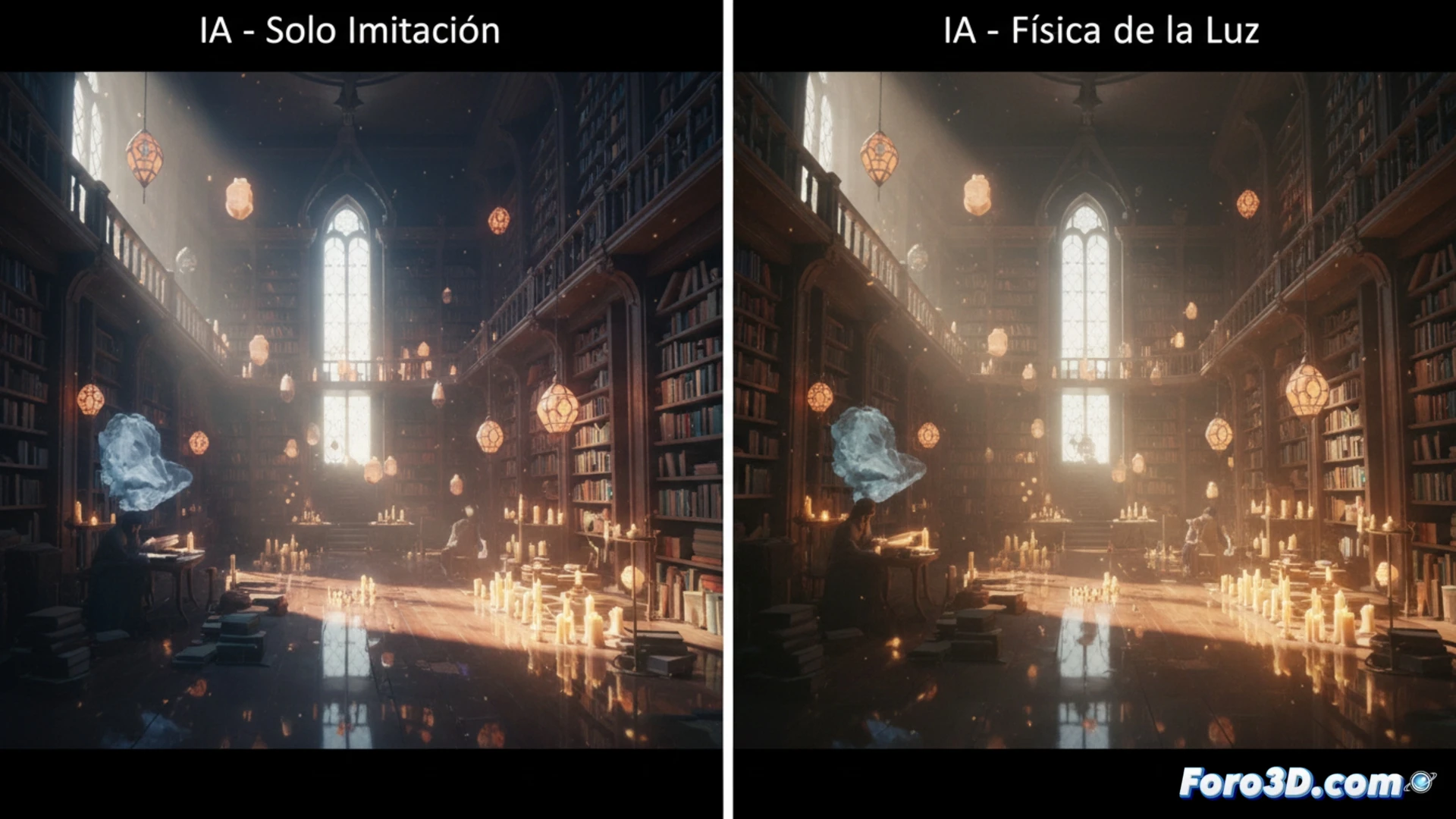
From visual pattern to physics-based causal model 🔬
The solution lies in adopting principles of physically based rendering (PBR) in AI training. Instead of treating the scene as a flat surface, the network is taught how light reflects, diffuses, and interacts with material properties. This causal understanding allows precise control: when adjusting the light direction, changes in shadows, reflections, and dispersion are coherent and predictable, overcoming the fragility of methods based solely on pixel correlations.
When your portrait shines like a toy plastic 🤖
It's the classic result of relying on blind imitation. The AI, after analyzing thousands of faces, decides that your cheek should shine with the intensity of a car headlight on a puddle. The hair, instead of having subtle highlights, looks like a polished helmet. And so, your professional LinkedIn photo ends up having the aura of a freshly unboxed action figure. Technology advances, but sometimes it seems that a fine arts student understands light better than a server full of models.