The Mobile World Congress 2026 has served as a mirror of the two faces of artificial intelligence. On one hand, it was warned how AI can crystallize exclusion if it replicates biases in digital infrastructures. On the other, its most practical and socially beneficial facet was presented. This contrast defines the current moment of technology: its impact will depend on the design decisions we make today, where 3D visualization emerges as a crucial ally.
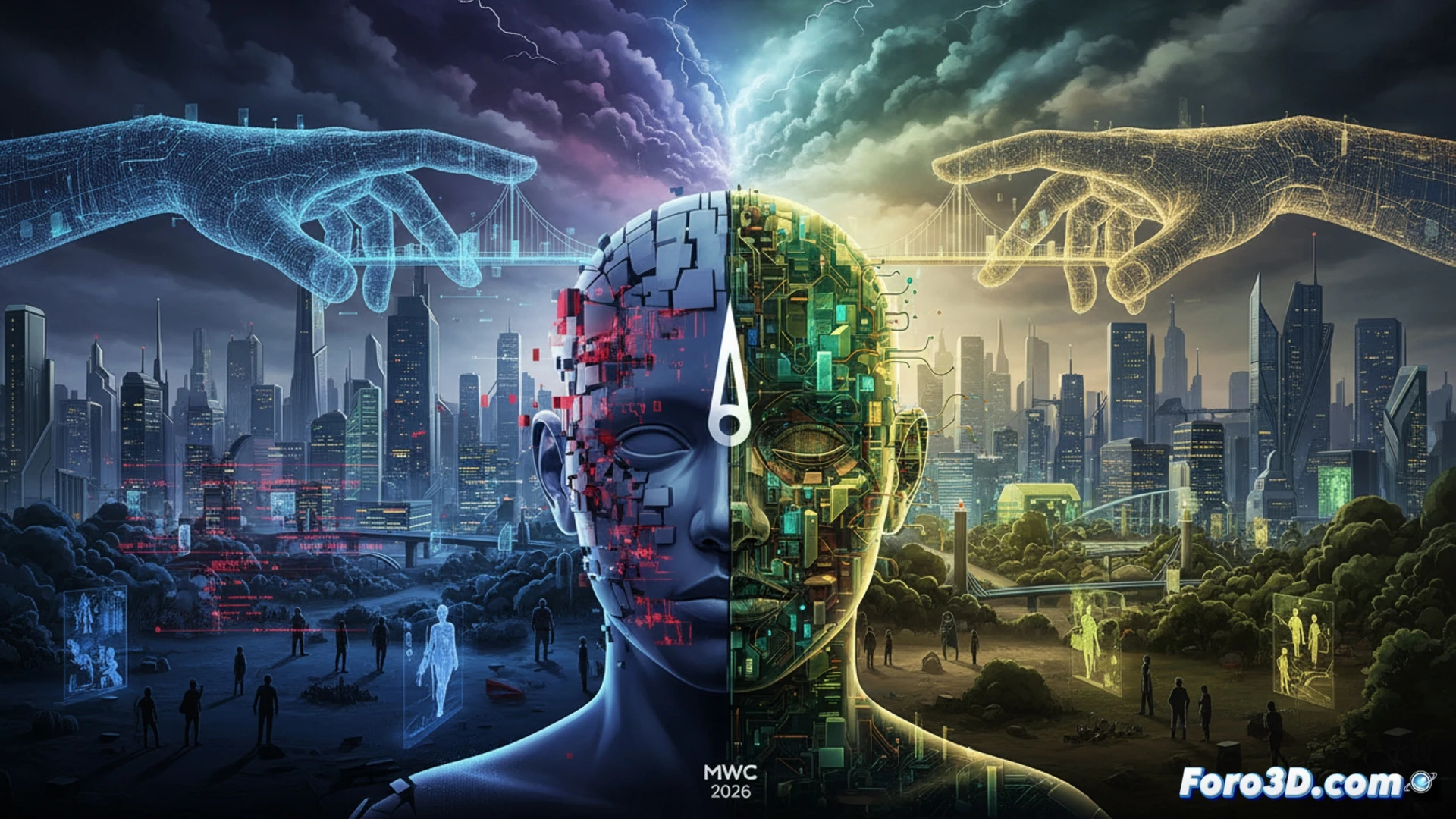
Algorithmic biases: the digital highway with narrow lanes 🤖
Professor Holloway's warning is powerful: designing systems only for dominant languages or profiles easy for algorithms is like building a highway with overly narrow lanes. It excludes by default. The data presented on gender, where more than half of women perceive a professional glass ceiling, are a symptom of this exclusionary design. This is where 3D technology and simulations can be transformative. They allow modeling interactions of diverse users with digital interfaces, visualizing biased data flows, and prototyping inclusive solutions before implementing them, moving from reactive correction to proactive and ethical design.
From criticism to creation: purposeful AI 🛠️
In the face of this landscape, the purposeful AI shown at MWC is not just a mere slogan. It represents the shift toward task-centered systems that solve concrete problems. The final reflection is clear: inclusion is not an add-on, it is a technical requirement for the health of business and society. As digital creators, our responsibility is to use all tools, from 3D modeling to simulate diversity to audited algorithms, to ensure that the digital highway has room for everyone.
How can we ensure that ethical AI design prevents digital exclusion instead of accelerating it?
(P.S.: tech nicknames are like children: you name them, but the community decides what to call them)