AML3D's recent financial report, a specialist in metal 3D printing, reveals more than just figures. It shows a clear strategy: to be the physical supplier of components for the US defense sector. This bet is crucial for the digital twins ecosystem. Without precise and adaptable physical components, the digital twin of a ship or defense system lacks a reliable real counterpart. Additive manufacturing thus stands as the indispensable bridge between the digital model and the operational physical asset.
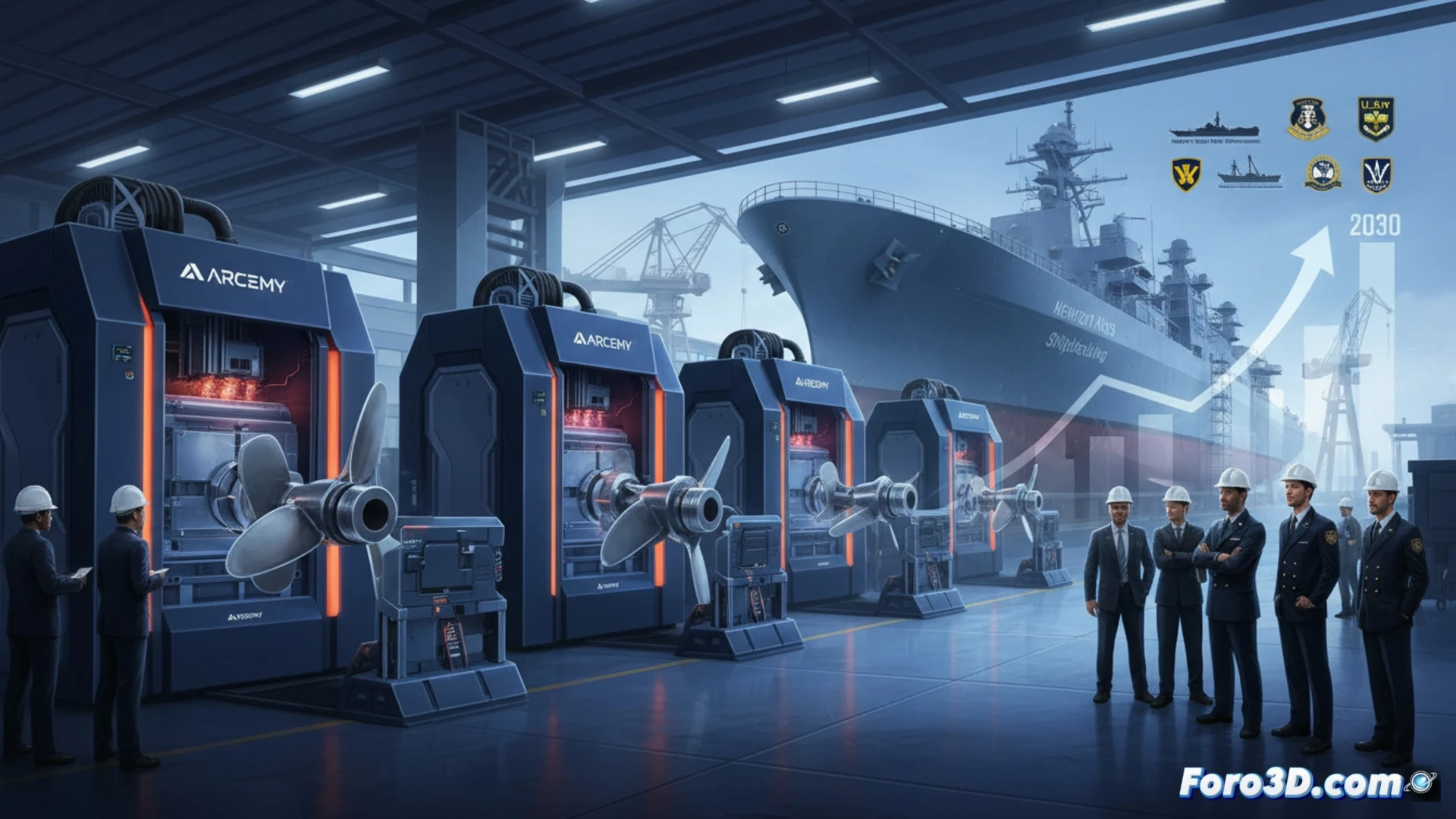
ARCEMY and Agility in Creating Physical Assets for Simulation 🛠️
AML3D's ARCEMY systems, deployed in key shipyards like Newport News, enable on-demand production of critical, complex, and customized parts. This capability is fundamental for building and maintaining high-value physical infrastructures, such as warships, whose digital twin requires an exact replica of each component. Additive manufacturing allows rapid iterations in physical design, immediate updates that are reflected in the twin, and the production of spare parts that maintain fidelity between the real asset and its digital model throughout the entire lifecycle, facilitating precise simulations and predictive maintenance.
Beyond Financial Loss: A Strategic Long-Term Bet 🎯
Although the numbers show losses, AML3D's focus is strategic. Its order backlog and the US Navy's letter of intent project sustained demand through 2030. This consolidates its role as a key enabler: by ensuring agile production of metal components, they guarantee that the evolution of digital twins in defense is not limited by the constraints of traditional manufacturing. Its future success will be tied to the fidelity with which its physical components feed and validate tomorrow's complex digital twins.
How is additive manufacturing transforming the creation and updating of digital twins in critical defense systems?
(PS: don't forget to update the digital twin, or your real twin will complain)