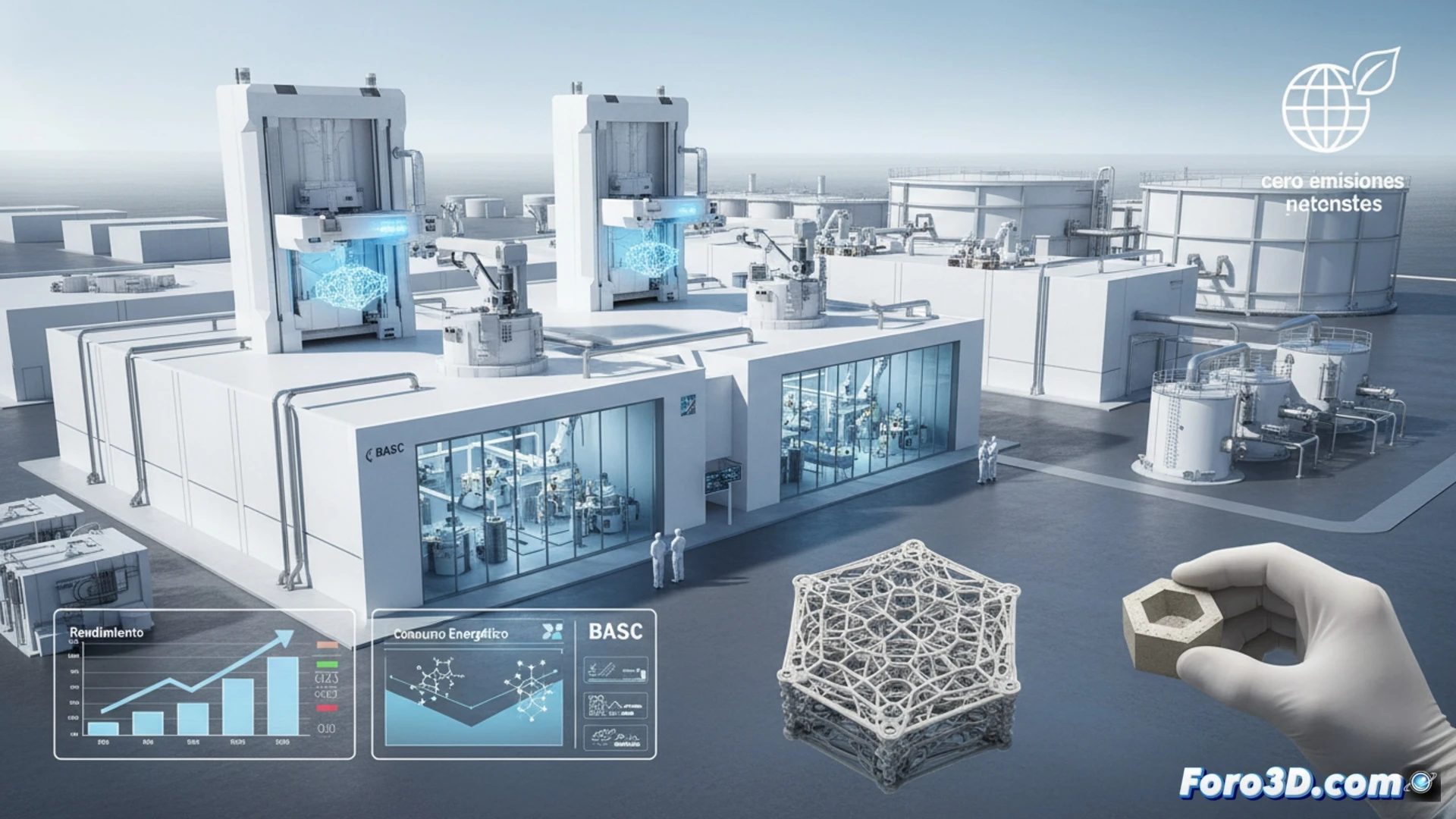
BASF has inaugurated the world's first plant dedicated to the production of catalysts using 3D printing, employing its X3D technology. This milestone represents the materialization of years of simulation and computational modeling. The ability to design complex internal geometries, previously optimized in virtual environments, enables the creation of catalysts that combine high mechanical stability with an open structure. The direct result is a more efficient chemical process, with lower pressure drop, greater active surface area, and ultimately, reduced energy consumption.
Process optimization through simulated and printed geometries 🔬
The core of this innovation lies in generative design and fluid simulation. Additive manufacturing enables the materialization of open-cell geometries and tortuous flow channels that are impossible to produce with conventional manufacturing methods such as extrusion or pressing. These geometries, previously validated through CFD (Computational Fluid Dynamics) simulations, optimize contact between reactants and the active catalytic surface. Pressure drop in the reactor is minimized—a critical parameter that limits efficiency—and mass transfer is maximized. This translates into higher process yield, better product selectivity, and substantial energy savings, as already demonstrated by the success case of An Hui Jintung company in China.
The future of simulation: from digital model to physical asset 🚀
This advance marks a turning point for process simulation. It is no longer just about predicting behavior in a virtual environment, but using those models to directly create the optimal physical asset. BASF's X3D technology closes the loop between computational design and industrial-scale manufacturing, offering customized catalysts for specific processes. This approach accelerates innovation and is a key pillar for the chemical industry's transition toward greater resource efficiency and emission reduction, demonstrating that simulation is the fundamental tool for designing cleaner and more economical processes.
How can process simulation optimize the design and additive manufacturing of high-efficiency catalysts at BASF's plant?
(PD: Simulating industrial processes is like watching an ant in a maze, but more expensive.)