Additive manufacturing promises to revolutionize logistics and production in defense, offering agility and resilience. However, its strategic implementation faces three major challenges: integration into rigid supply chains, the complex qualification of parts, and the necessary evolution of doctrine and training. Overcoming these obstacles requires more than 3D printers; it demands 3D visualization and simulation tools that model solutions and accelerate the transition from prototype to reliable production.
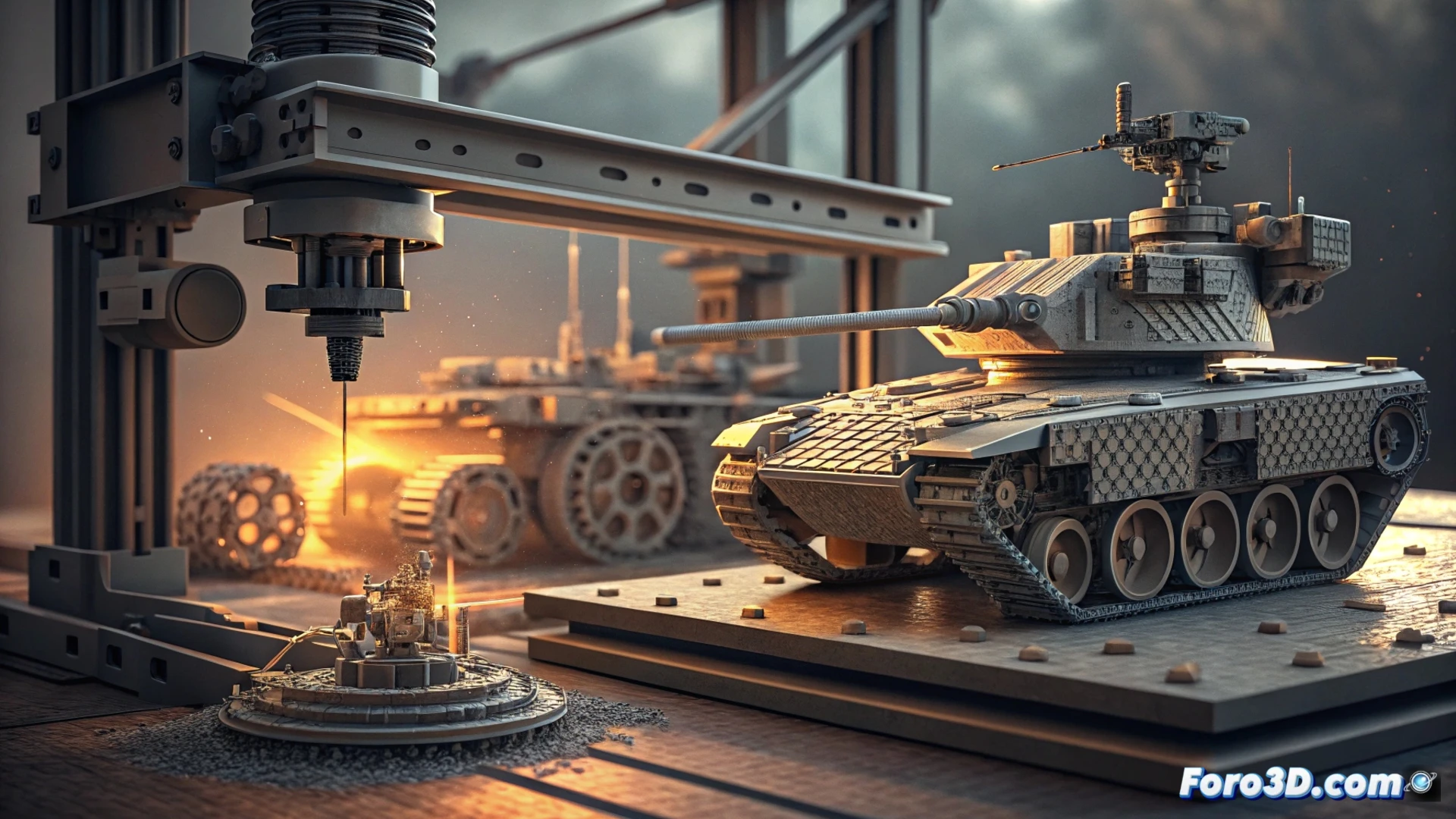
3D Modeling: the key to integration, qualification, and training 🧩
3D simulation tools are the bridge between technology and its effective adoption. For logistical integration, they enable modeling hybrid supply chains, visualizing material flows and optimizing decentralized manufacturing points. In qualification, virtual environments simulate stress, fatigue, and critical conditions, reducing costly and lengthy physical certification processes. Finally, for training, they create immersive environments where personnel can master design for additive manufacturing, maintenance, and logistical operation of these new systems, accelerating doctrinal change.
Beyond printing: 3D as a resilience strategy 🛡️
The true value of additive manufacturing in defense lies not in the machine, but in the digital capacity to foresee and manage its impact. 3D simulation transcends its role as a technical tool to become a strategic enabler. By allowing the testing of scenarios, optimization of processes, and training of personnel in virtual environments, it builds the confidence and knowledge necessary to deploy agile, decentralized production capable of responding to disruptions. Visualizing the entire process is the first step toward mastering it.
How can 3D simulation predict and resolve logistical bottlenecks in the additive manufacturing of critical parts for defense?
(P.S.: 3D logistics is beautiful until you try to fit a container into a place where it doesn't fit)