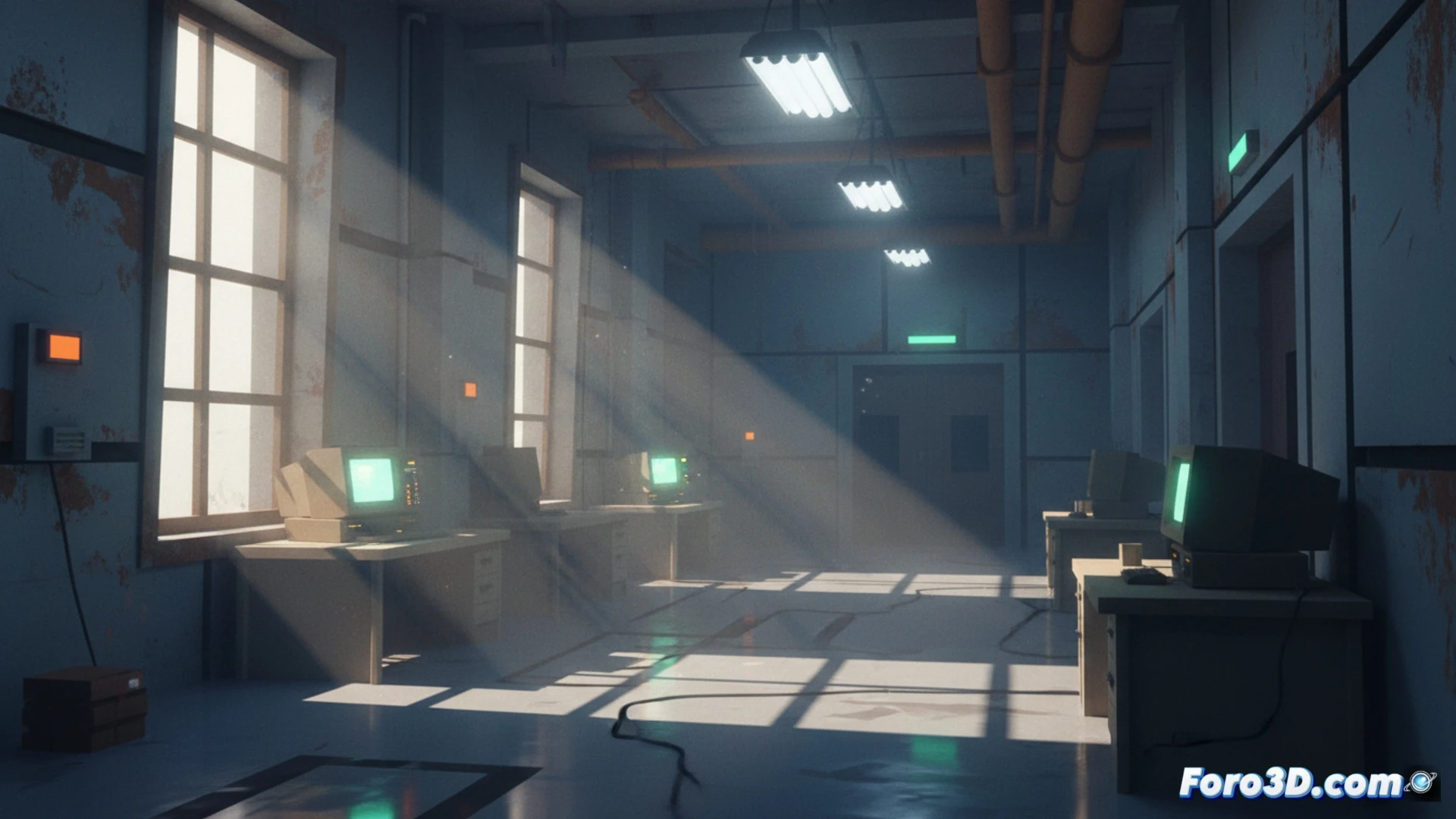
Abiotic Factor emerges as a fascinating case study in contemporary visual design. The game, developed in Unreal Engine 4, opts for a retro-tech aesthetic that directly evokes the spirit of late 90s titles like Half-Life. However, its magic lies in the fusion: it combines low-poly models and intentionally grainy textures with a completely modern lighting and shadows system. This approach creates a unique identity, where nostalgia clashes with current technical fidelity.
Technical Pipeline: Blender, Photoshop, and the Magic of Lighting in UE4 🛠️
The art pipeline of Abiotic Factor is key to its look. Models are created in Blender, focusing on low-poly geometry with stylized and non-realistic detail. Textures are painted in Photoshop, adding grain and a limited palette to reinforce the retro feel. The true transformation happens in Unreal Engine 4. There, simple assets are subjected to high-quality dynamic or baked lighting, soft shadows, and advanced post-processing. This technical layer adds depth, atmosphere, and physical realism to the simple models, demonstrating that complexity is not in the polygon count, but in how it is lit.
Trends and Lessons for Independent Developers 📈
This approach represents an intelligent trend for studios with limited resources. It prioritizes a coherent and evocative artistic style over the race for hyperrealism, which is often costly. For independent developers, Abiotic Factor offers valuable lessons: strong art direction is paramount, and modern engines like UE4 can elevate seemingly simple aesthetics to new levels. It is a reminder that visual identity is forged with bold decisions, not just polygons.
How does Abiotic Factor balance a nostalgic low-poly aesthetic with the advanced technical capabilities of Unreal Engine 4 to create a modern and cohesive visual experience?
(P.S.: game jams are like weddings: everyone happy, no one sleeps, and you end up crying)