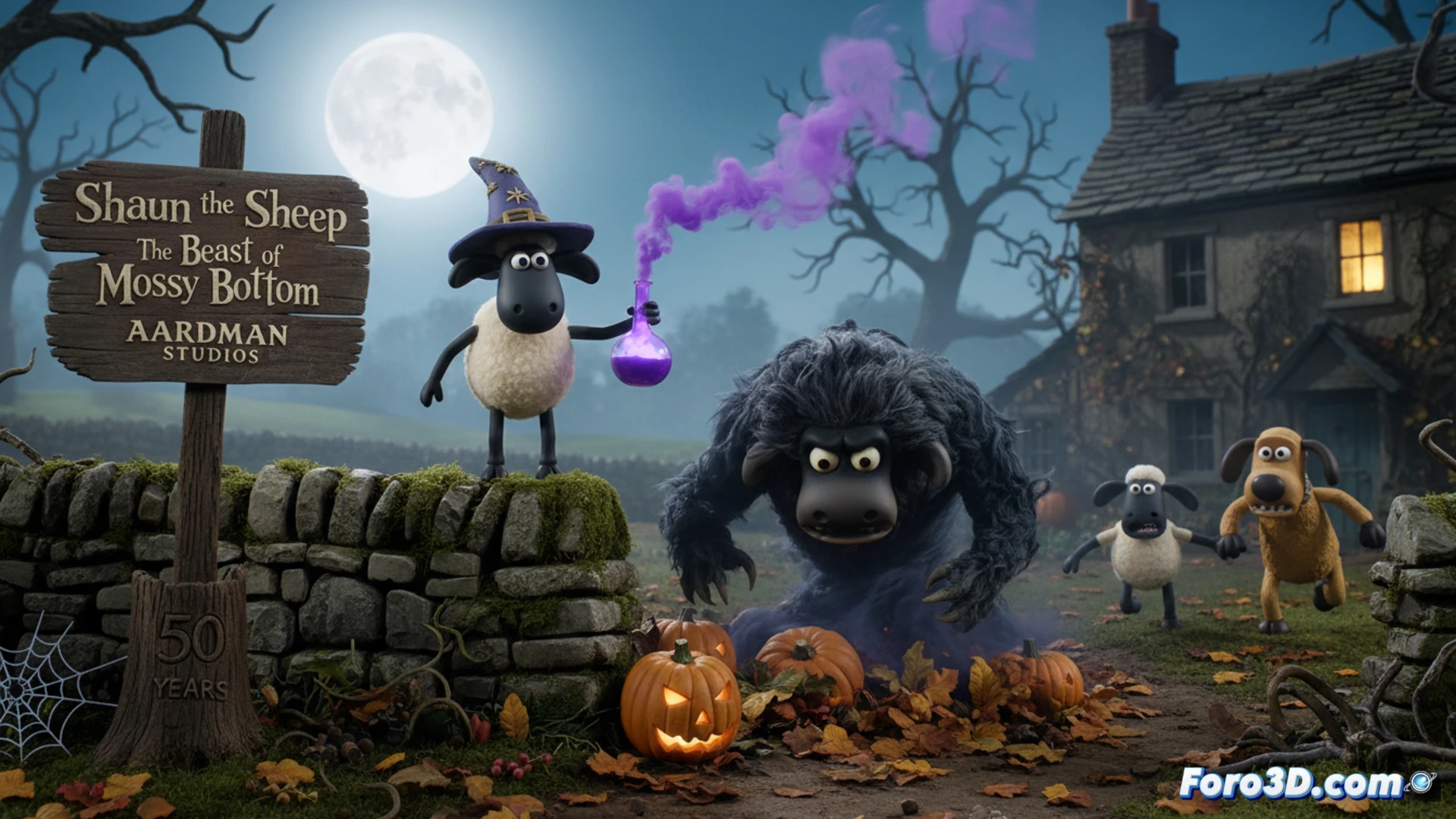
GKIDS and Studiocanal have unveiled the trailer for Shaun the Sheep The Beast of Mossy Bottom, marking the return of stop-motion's most famous sheep. Scheduled for release on September 18, this third installment adopts a Halloween atmosphere. The plot is triggered when the Farmer ruins the pumpkin patch, leading Shaun to a scientific experiment that unleashes chaos and a mysterious beast. Directed by Steve Cox and Matthew Walker, the film celebrates Aardman's 50th anniversary while maintaining its artisanal hallmark.
The resilient art of frame-by-frame animation 🎬
The production reaffirms Aardman's commitment to stop-motion animation, a technique where each movement is built manually, frame by frame. This pipeline, seemingly anachronistic in the digital era, is a pillar of its visual narrative, granting a warmth and tangibility impossible to replicate with pure CGI. The film faces enormous technical challenges, from maintaining lighting consistency in prolonged scenes to the millimeter-precision manipulation of the puppets. Each shot is an exercise in patience and planning, where a mistake can mean days of lost work. This meticulous process is what gives each character and scene a unique personality, turning craftsmanship into the soul of the project.
Craftsmanship as narrative in the digital era ✨
In a market dominated by the digital, Aardman's persistence with stop-motion is a statement of principles. The technique is not just a method; it is a narrative language that communicates authenticity and human effort. The texture of the materials, the imperfections, and the organic movement are an essential part of the story, creating a distinctive emotional bond with the viewer. This new film, on the studio's anniversary, proves that handmade craftsmanship maintains a vital and relevant place, reminding us that the magic of cinema often lies in the tangible, in the handmade.
How has Aardman's stop-motion technique evolved to maintain freshness and narrative relevance in a long-running franchise like Shaun the Sheep?
(P.S.: Previz in cinema is like the storyboard, but with more chances for the director to change their mind.)