Science explores the limits of intelligence. A recent study with the protist Stentor coeruleus, a single-celled organism without a nervous system, has observed behaviors of associative learning. This process, similar to Pavlov's conditioning, suggests that complex cognitive abilities might have simpler biological bases than thought, challenging established paradigms.
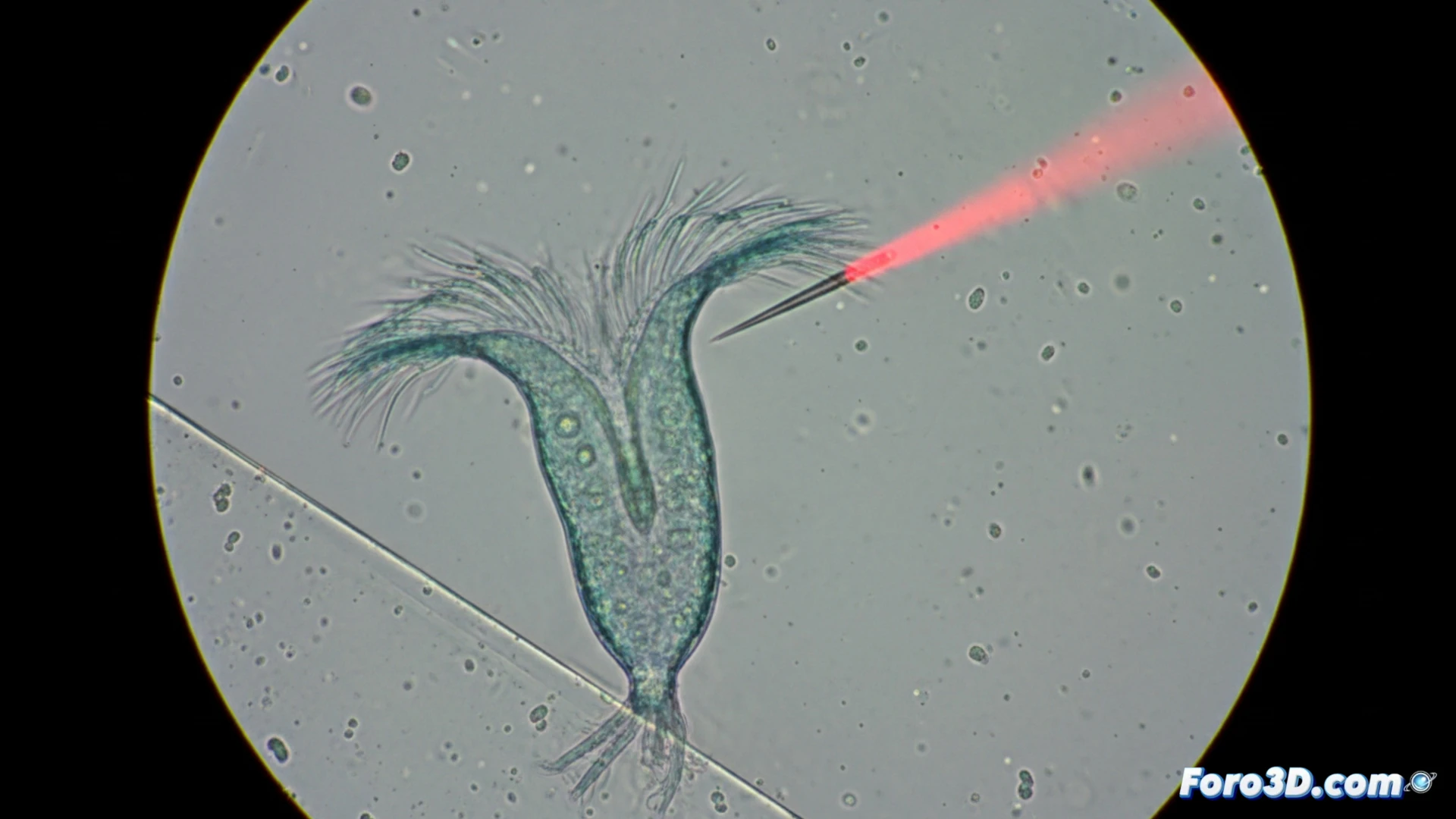
Neuromorphic computing models and decentralized logic 🤖
This finding boosts research in bio-inspired artificial intelligence. If a cell without a neural network can associate events, computing models could move away from centralized architectures. Paths open for more efficient learning algorithms, based on basic cellular mechanisms of signaling and response, that operate with minimal energy and processing resources.
Your CPU has more neurons than this bug and doesn't even learn the basics 😅
While a microscopic being without a brain learns to anticipate blows, our sophisticated systems sometimes can't even predict a compilation error. Maybe we should send some engineers to observe these protists. They might discover that true artificial intelligence has been replicating for millions of years, silently, in a drop of stagnant water.