The battle against deepfakes and audiovisual manipulation takes a radical turn, shifting from post-detection to prevention at the source. A new technology integrated into chips in sensors, such as those in cameras, cryptographically signs each frame at the moment of capture. This signature, unalterable without a physical attack on the hardware, certifies authenticity, origin, and time, acting as a digital notary. Any subsequent modification breaks the signature, leaving irrefutable forensic evidence. The proactive approach could change the rules of the game. 🔐
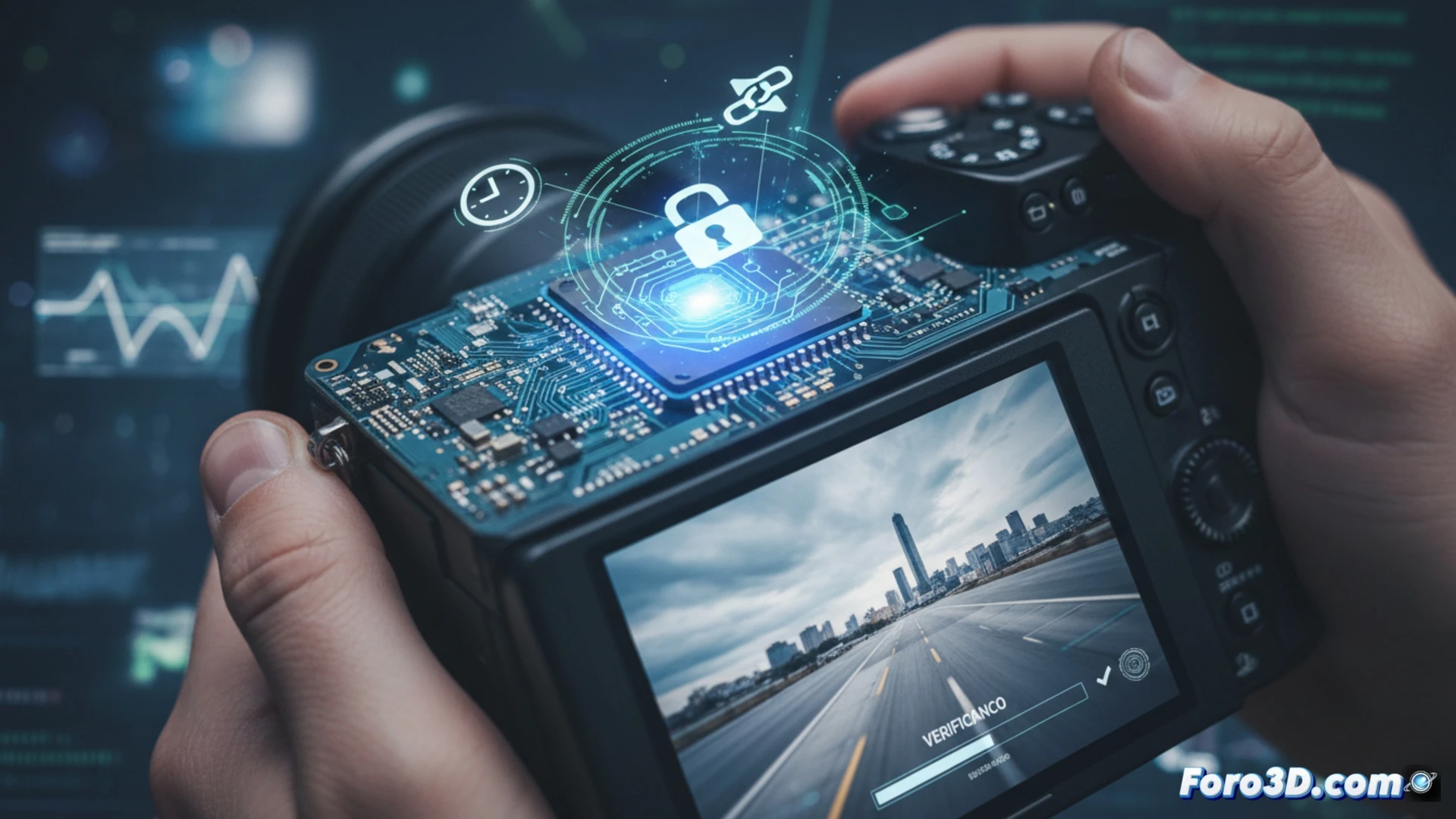
Cryptography in the sensor: the digital signature as a forensic authenticity seal 🔍
The core of this technology lies in integrating a cryptographic module directly into the image or video sensor. When capturing light, the chip generates a unique hash of the data and signs it with a private key securely stored in the same silicon. This process creates a digital seal inseparably linked to the original content. Verification is simple: with the corresponding public key, anyone can check if the data matches the signature. If the file has been altered, even a single pixel, the verification will fail. To falsify signed content, an attacker would need to physically compromise the chip, a logistical and economic barrier that makes mass production of credible deepfakes impossible.
Beyond technology: impact on digital trust and public verification ⛓️
The true power of this system emerges when combining the chip with an immutable public registry, such as a blockchain. Signatures can be published there, allowing anyone to independently verify the provenance and integrity of a video or image. This shifts the burden of proof: content without a valid signature is presumed potentially manipulated. Its application in journalism, legal evidence, or social media could restore an anchor of trust in digital information. It doesn't eliminate deepfakes, but it establishes a new standard of verifiable authenticity, forcing manipulators to a level of effort that makes them easily detectable.
Could a hardware chip integrated into every camera and phone be the definitive solution to authenticate the origin of all visual content and end the era of deepfakes?
(P.S.: Detecting deepfakes is like playing Where's Waldo? but with suspicious pixels.)