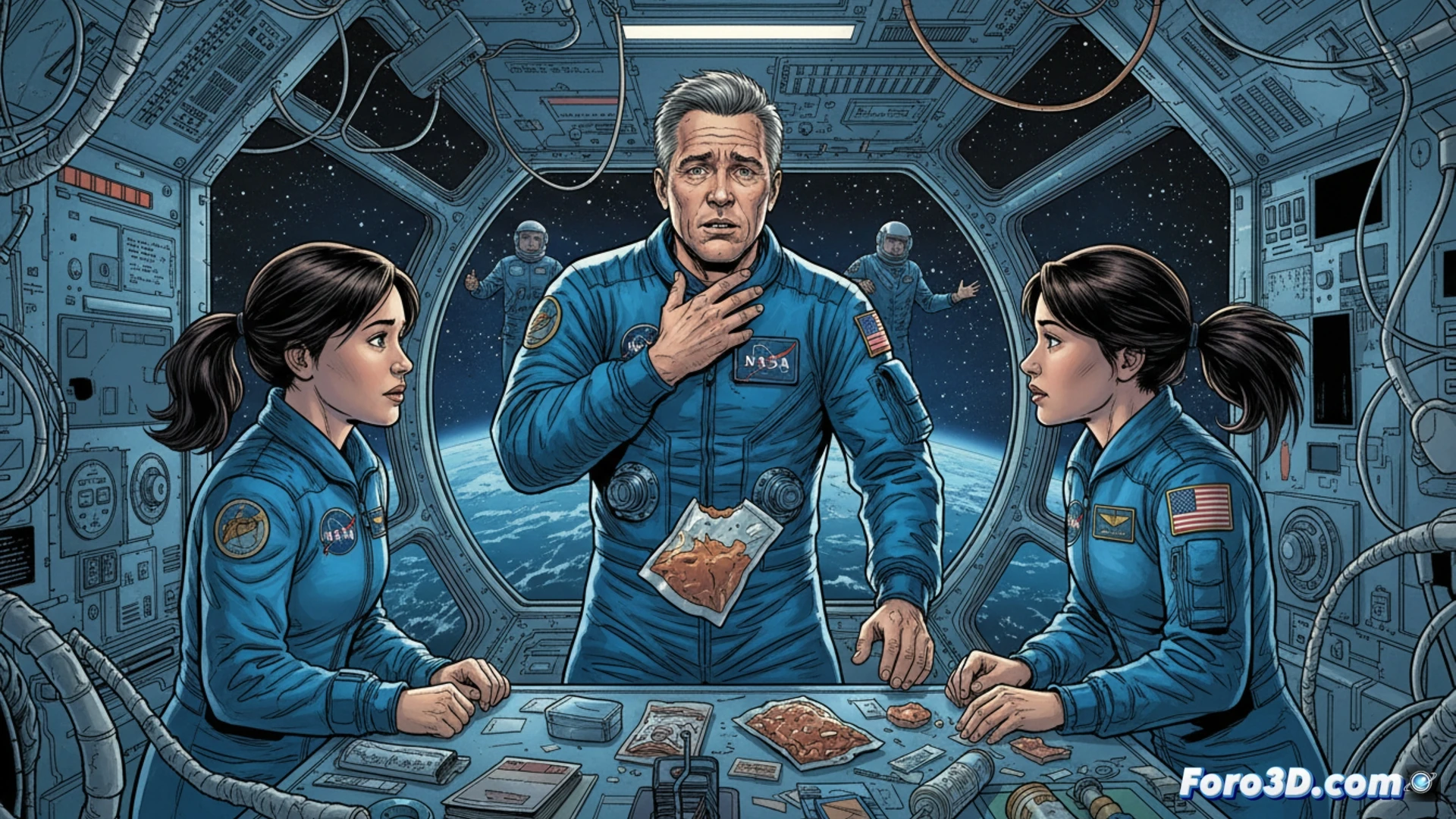
On January 7, 2026, astronaut Mike Fincke experienced a sudden loss of speech on the International Space Station. This incident, without prior symptoms, triggered the emergency evacuation of the crew. Beyond the individual case, the event underscores the critical need to improve the visualization and management of medical risks in extreme confinement environments, where the health of one impacts the safety of all.
Digital twins and visual epidemiology for space safety 🛰️
This case is a call to implement advanced visual epidemiology tools. A digital twin of the ISS would allow 3D simulation of the spread of pathogens or environmental stress factors, mapping air flows and crew interactions. Additionally, emergency protocols and evacuation logistics could be modeled and visually optimized, transforming data into operational maps that anticipate crises and save lives in future missions.
Lessons for public health in extreme confinement 🏔️
The lesson transcends space. Offshore platforms, polar bases, or submarine missions face similar risks. Visualizing health as a dynamic system within a 3D model of the confined environment is key. This turns an isolated medical event, like Fincke's, into vital data for designing safer environments and proactive protocols, where monitoring and response are visually integrated.
How would you show the relationship between obesity and other variables like socioeconomic level?