Imagine a magnet as powerful as those used in large particle accelerators, but that fits in the palm of your hand. This is what ETH Zurich has achieved with a superconductor just 3.1 mm in size. This breakthrough, which generates fields of 42 Tesla with ridiculous power consumption, promises to transform nuclear magnetic resonance, making high-resolution 3D NMR equipment smaller, more efficient, and accessible for clinics and laboratories.
The key is in the REBCO tape and pancake design 🔬
The miracle is not magic, it's materials engineering. The team used a REBCO ceramic superconducting tape, which can carry extreme currents without resistance when cooled. After testing more than 150 designs, the winner was a pancake-shaped coiled configuration. While a conventional 45 Tesla magnet consumes megawatts, this device achieves similar performance with less than a watt. This radical efficiency eliminates the need for costly and bulky cooling and power systems.
The future of 3D visualization in diagnosis and research 🧠
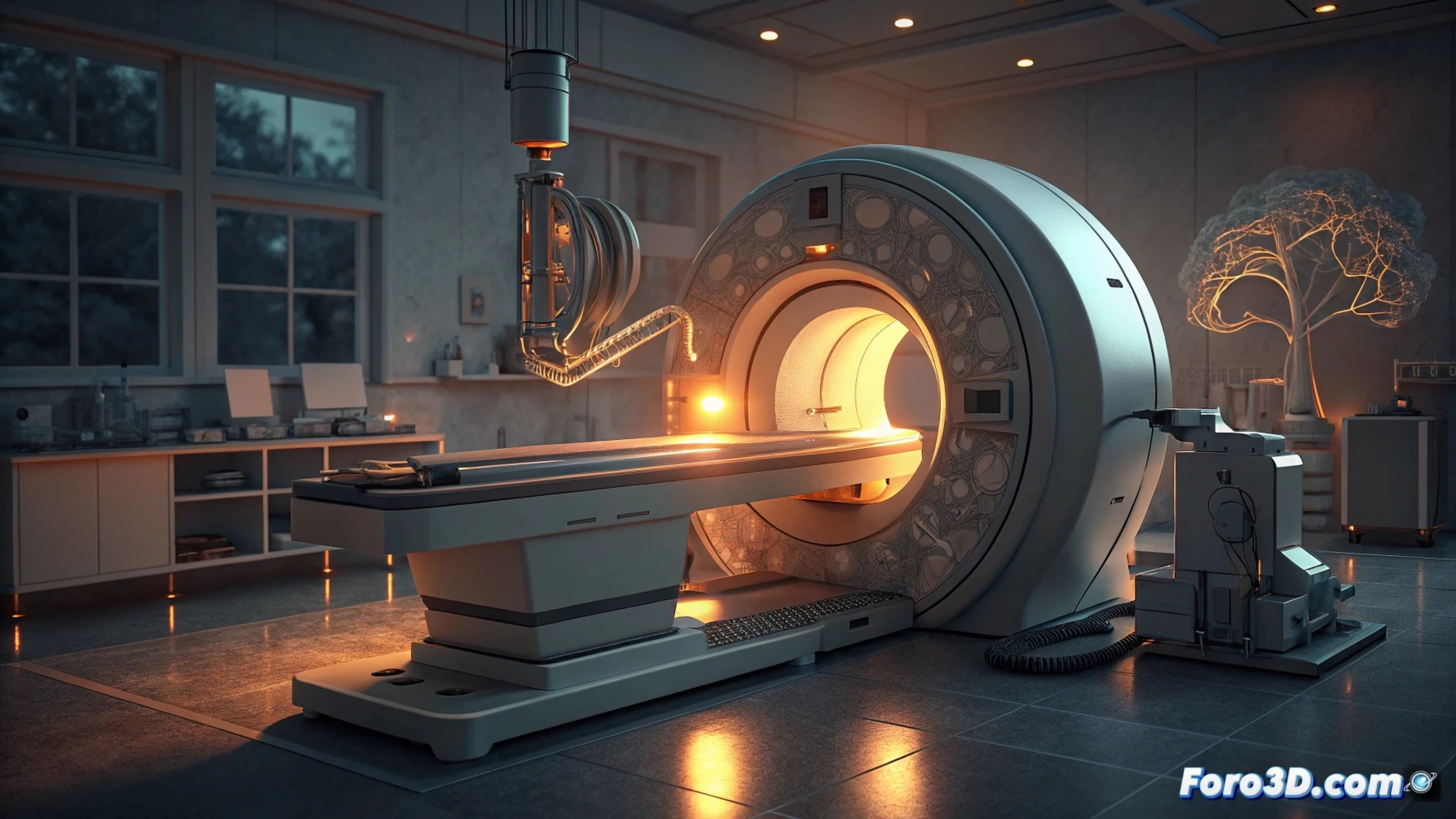
The real impact will be seen in data visualization. Ultra-high-resolution 3D NMR images, generated by compact equipment, could be in any hospital or pharmaceutical laboratory. This would accelerate the analysis of complex molecules for new drugs and dramatically improve medical diagnosis. The democratization of this technology will open a new era in the three-dimensional representation of matter at the atomic scale and living tissues.
How could the extreme miniaturization of superconducting magnets, down to a portable size, transform medical diagnosis through point-of-care 3D magnetic resonances?
(PS: MRI segmentation is like peeling an orange with your eyes closed. But with less vitamin C.)