The discovery in Egypt of a 17-million-year-old ape jaw, named Masripithecus moghraensis, challenges the idea that these primates evolved only in East Africa. This paleontological discovery, key to understanding our origins, would not be so revealing without the tools of digital archaeology. Documentation and analysis using 3D technologies are now fundamental for preserving and studying these fragile testimonies of the past.
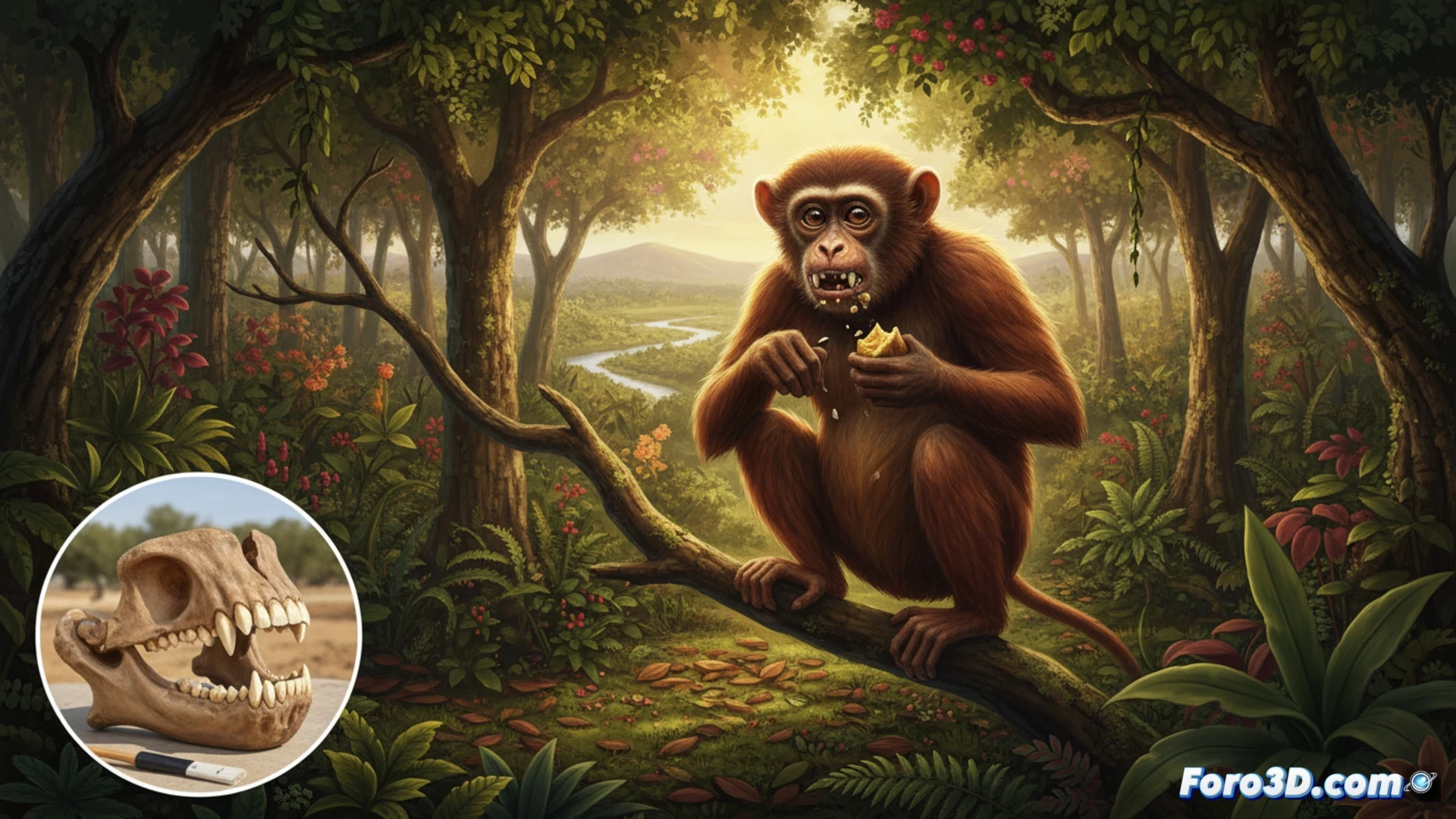
Photogrammetry and 3D Scanning: Documenting a New Origin 🦴
The importance of this fossil goes beyond its morphology. Its proper documentation in Wadi Moghra using photogrammetry allows the creation of a geo-referenced 3D model of the discovery context. Scanning the jaw enables detailed dental analysis without risk of damage, confirming its mixed diet. These digital models are the basis for reconstructing the subtropical forest of the Miocene and facilitate collaboration among researchers worldwide, who can study the specimen virtually, accelerating the scientific validation of the discovery.
Beyond Excavation: Accessible Heritage in 3D 💻
This case exemplifies how digital archaeology transforms paleontology. An interactive 3D model of Masripithecus is not only a research tool but also a top-tier educational and outreach resource. It allows the public to explore the fossil that rewrites our history, democratizing access to heritage and underscoring the need to search in new regions with an integrated technological approach.
How is the digital 3D reconstruction and computational analysis of the Masripithecus jaw revolutionizing our understanding of ape dispersal in the Miocene?
(P.S.: If you dig at a site and find a USB, don't plug it in: it might be Roman malware.)