Other Ocean has unveiled 4 Penny Coffins, a social investigation thriller set in London in 1888. The game proposes an asymmetric multiplayer experience for up to 8 players, where the majority are investigators who must hunt the hidden killer, the Ripper. The narrative tension arises from social deduction, evidence collection, and the deceptions of the infiltrator. We analyze its design from the development perspective, breaking down how its systems seek to generate unpredictability and distrust among players.
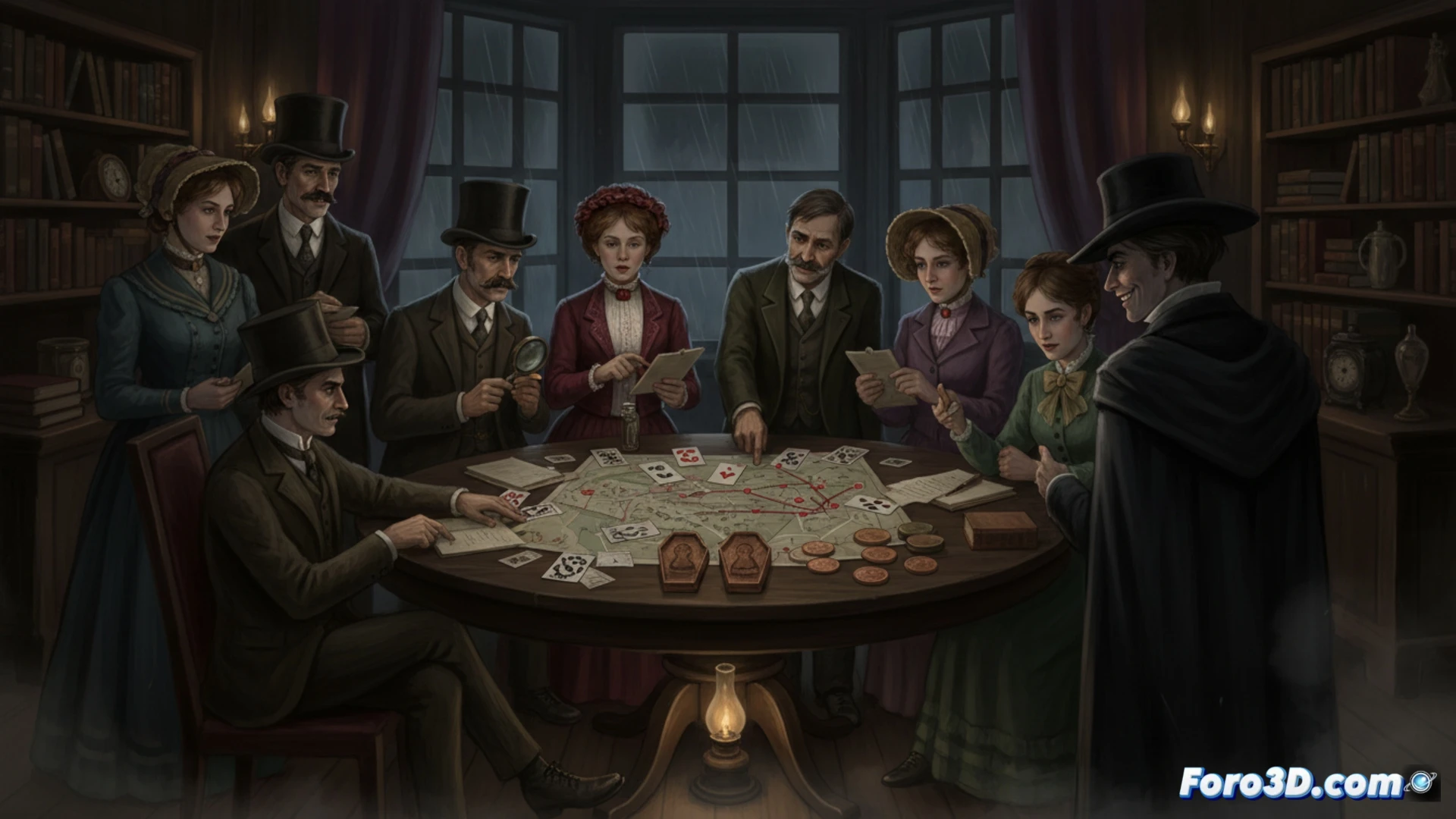
Phase Design and Deduction Mechanics: A Three-Act Cycle 🔄
The three-phase cyclic game structure is a clear design success. The hunt phase establishes initial tension and primary collection. Investigation is the core where social and object systems must balance: investigators have tools to find clues, while the Ripper needs credible mechanisms to sabotage and divert suspicions without breaking immersion. The conviction phase, where evidence is presented and voted on, is the systemic climax. The technical and design challenge here is monumental: creating a meta-game of accusations where partial information and dynamic roles generate legitimate and surprising results in every session, avoiding repetitive patterns.
The Challenge of Balancing Asymmetry in Uncertainty ⚖️
The biggest development challenge in this genre is balancing asymmetry without frustrating any role. The Ripper needs subtle advantages and deception tools that are fun to execute, while investigators must feel empowered by deduction, not helpless. The solo mode suggests a sophisticated AI system to emulate deceptive human behavior, another key technical challenge. The success of 4 Penny Coffins will depend on the finesse with which it calibrates these elements, transforming simple suspicion into a tangible and deep gameplay resource.
How can asymmetric social investigation games, like 4 Penny Coffins, balance narrative depth with accessible gameplay to maintain tension and engagement for all players?
(P.S.: game jams are like weddings: everyone happy, no one sleeps, and you end up crying)