The recent government reshuffle, focused on prioritizing the economy and anti-crisis measures, underscores the need for advanced tools for data analysis. In a volatile international context, understanding Spain's strong macroeconomic performance and simulating the impact of external conflicts or new regulations requires going beyond 2D charts. 3D Financial Visualization emerges as a key ally for economists and analysts, allowing them to explore complex relationships between variables in an intuitive and in-depth manner.
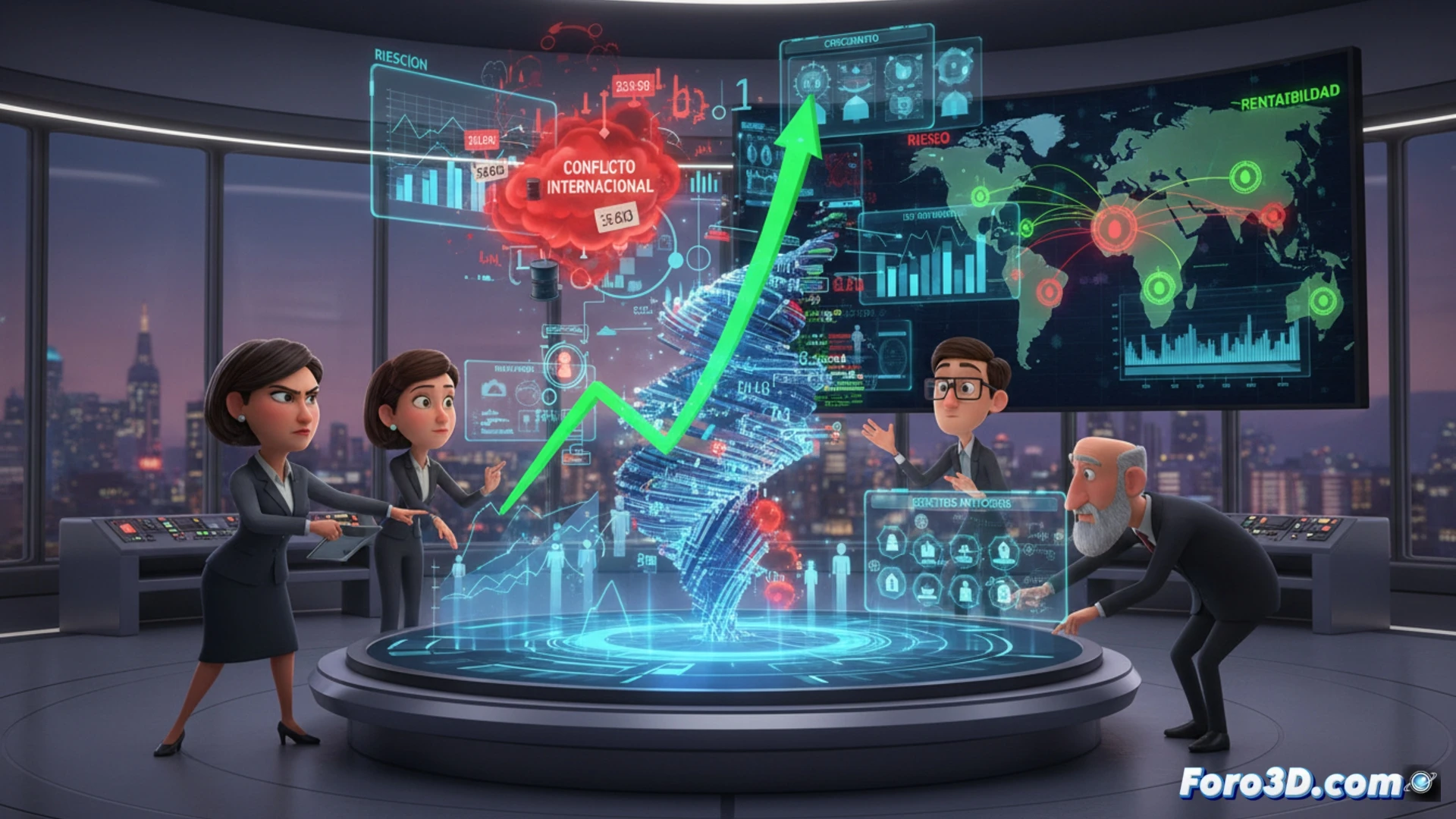
Interactive Dashboards and Real-Time Scenario Modeling 📊
We can design interactive 3D dashboards that represent multiple Spanish macroeconomic indicators, such as GDP, inflation, deficit, or public debt, in a correlated three-dimensional space. This allows visualizing their joint evolution and stability. Additionally, modeling the impact of international conflicts on resources like oil, and their chain effect on prices and growth, becomes clearer with 3D simulations. Tools like Unreal Engine or web solutions with Three.js enable creating these environments where different scenarios derived from anti-crisis decrees or the future housing law can be tested in real time, evaluating potential outcomes before their real-world application.
Beyond Data: Communicating Economic Complexity 🗣️
The true power of 3D visualization in this context is not only technical analysis, but effective communication. A model showing how a measure affects housing, employment, and consumption simultaneously can be crucial for parliamentary debate and public understanding. Transforming abstract data into navigable spatial structures helps all actors, from negotiators to citizens, understand economic priorities and risks in an uncertain world, facilitating more informed decisions and consensuses based on clear visual evidence.
How would you visualize risk and profitability in the same three-dimensional space? 🔍