A recent study has revealed that the Moon is a more dynamic world than previously believed, thanks to the first global map of small ridges in its maria. These structures, similar to wrinkles in dried paint, are geologically young and evidence that the lunar crust is still deforming. This discovery, crucial for future exploration, was made possible through advanced scientific visualization techniques and 3D modeling of topographic data, transforming observations into comprehensible models.
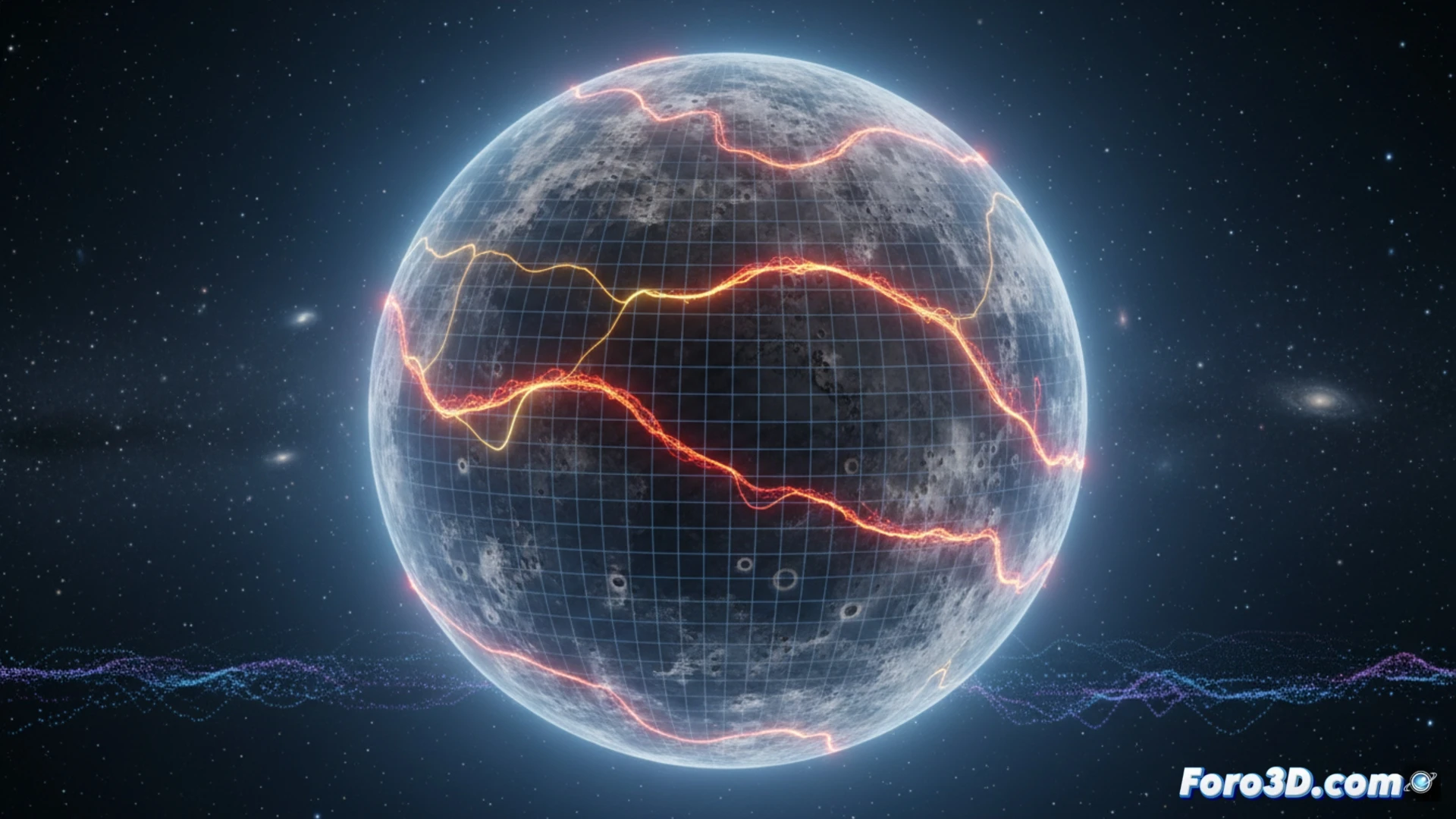
The technical process: from topographic data to interpretive 3D model 🛠️
The creation of this pioneering map was based on the analysis and fusion of laser altimetry data and high-resolution orbital images. Using specialized scientific visualization software, researchers processed these large amounts of data to generate extremely precise 3D topographic models. Three-dimensional visualization allowed for the systematic identification, measurement, and mapping of the tiny ridges, just tens of meters high, which went unnoticed in 2D analyses. This rendering and visual interpretation process was key to correlating the distribution of the ridges with lunar tectonic stresses, revealing their origin in global cooling and Earth's tidal forces.
Implications for exploration and scientific visualization 🚀
This finding underscores the indispensable role of 3D visualization in modern planetary science. It has not only rewritten lunar geological history but its results are a critical input for mission planning. The generated maps identify areas of possible recent seismic activity, serving as an essential tool for selecting safe landing sites for astronauts and the construction of permanent lunar bases, demonstrating that visual data science has direct and practical applications in space exploration.
How are 3D visualization techniques and displacement mapping used to map and analyze the small contraction ridges that evidence recent geological activity on the Moon?
(P.S.: modeling manta rays is easy, the hard part is making them not look like floating plastic bags)