Renfe has launched the largest acquisition in its history: 30 AVE trains for 1.362 million euros, with an option for 40. This industrial megaproyect, with staggered deliveries over 78 months, poses a monumental challenge in logistics and production. In the niche of 3D Industrial Logistics and Production, this translates into the perfect opportunity to digitally model the entire chain, from assembly to delivery, using simulation tools to optimize flows, resources, and deadlines in a virtual environment.
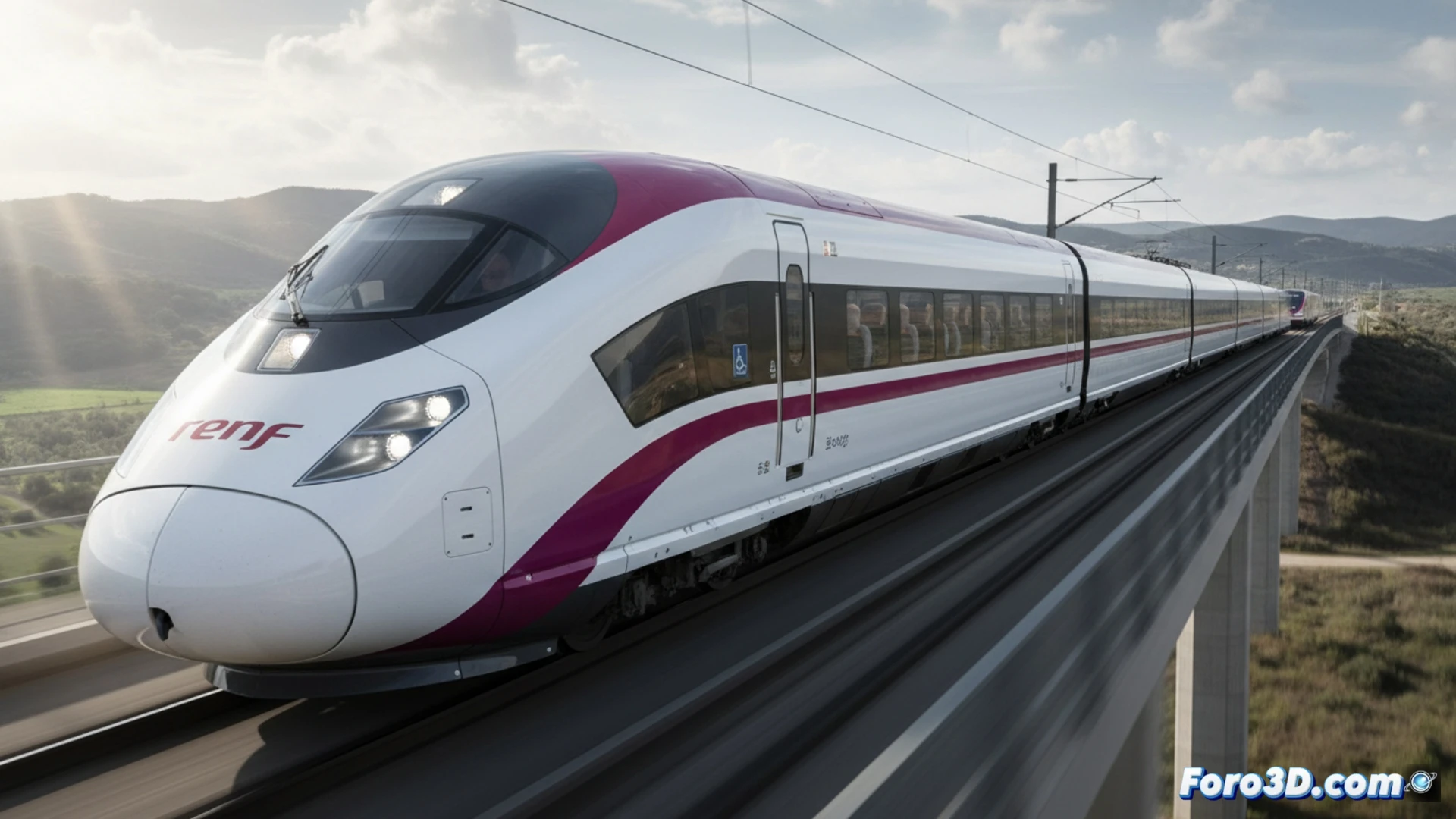
Supply chain and assembly simulation 🚄
A project of this scale, with candidates like Siemens or Hitachi, involves a global network of component suppliers. 3D visualization allows creating a digital twin of the entire process. Assembly lines for 450-passenger trains can be simulated, logistics for critical parts planned, and the assembly sequence optimized. Additionally, modeling the staggered delivery over 78 months is key to synchronizing production, transportation, and commissioning, anticipating bottlenecks and efficiently managing inventories in a controlled environment.
Beyond manufacturing: safety and virtual maintenance 🔧
Following incidents like the one in Adamuz, 3D simulation gains additional strategic value. These digital models are not only used for manufacturing but also for training safety protocols, analyzing future maintenance, and virtually testing improvements before physical implementation. Renfe's investment is not just in trains, but in a system. 3D industrial visualization emerges as the fundamental tool to ensure this project is executed with precision, safety, and efficiency throughout its entire lifecycle.
How can 3D visualization optimize the planning and validation of the assembly chain in a train manufacturing megaproyect like Renfe's new AVE?
(PD: at Foro3D we optimize routes like we optimize polygons: until the computer says enough)