The recent stranding of a young minke whale in the German Baltic underscores the logistical and scientific challenges of these events. Beyond the physical rescue efforts, precise documentation is vital. This is where 3D scientific visualization proves its value, transforming an emergency into an opportunity for research and the improvement of future protocols through exact digital models.
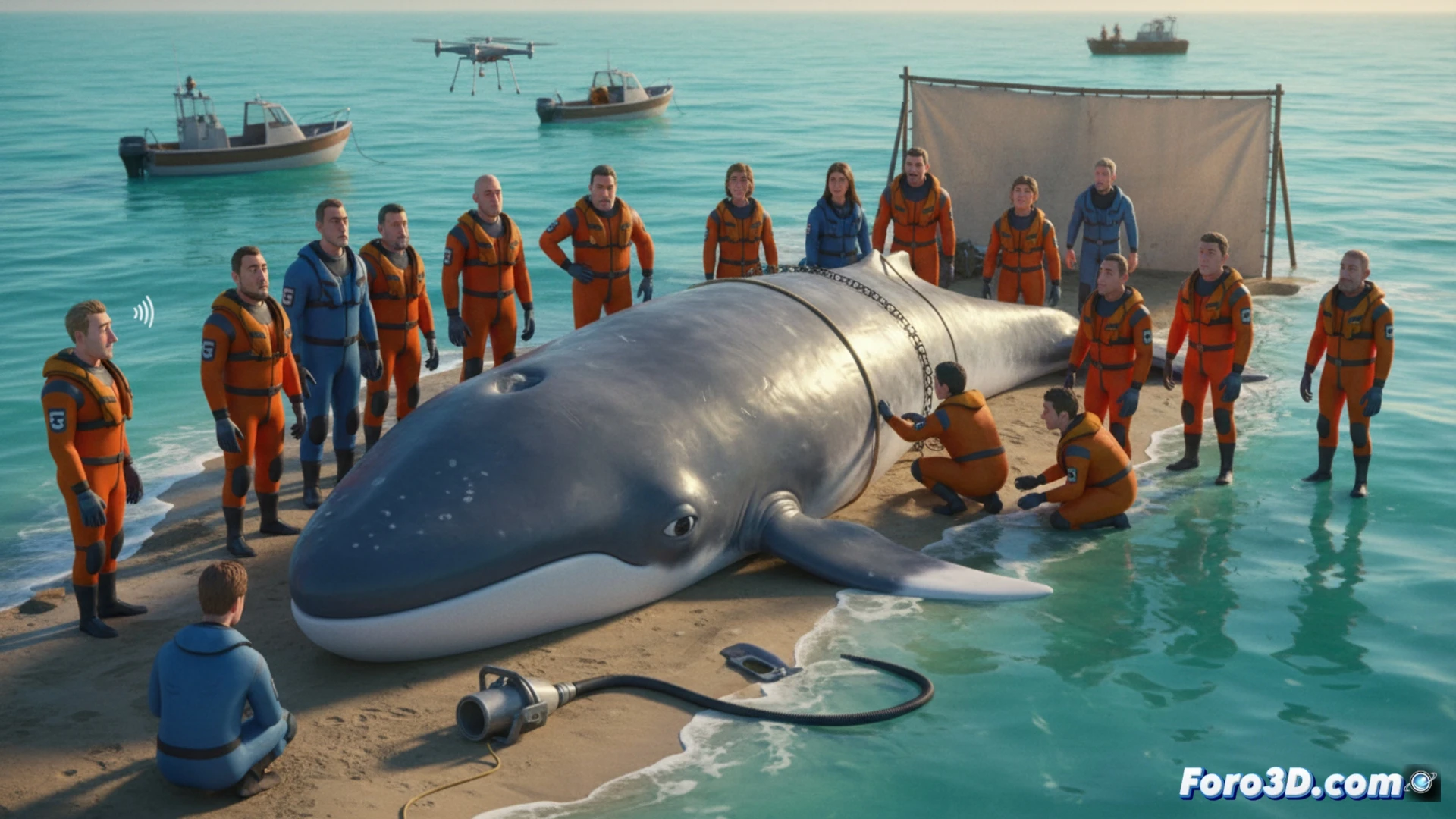
Photogrammetry and simulation: tools for action 🛠️
A drone equipped for photogrammetry could have captured thousands of images of the cetacean and its shallow environment. Once processed, they would generate a millimeter-precise 3D model to analyze its morphology, body condition, and degree of entanglement without additional stress. This model, integrated into a simulation of the environment with tides and underwater relief, would allow virtually testing release strategies, such as sand suction, evaluating their feasibility before moving heavy machinery, optimizing time and resources.
From emergency to educational legacy 📚
After the event, that 3D model becomes a powerful educational resource. It allows recreating the stranding for anatomy and pathology studies, and creating immersive visualizations to raise public awareness about threats to cetaceans. Thus, technology transforms a critical situation into a digital legacy for science and conservation, ensuring that the case contributes to global knowledge even after the outcome.
How can 3D visualization of oceanographic and anatomical data optimize logistical planning and veterinary interventions in the rescue of large stranded cetaceans?
(PD: at Foro3D we know that even manta rays have better social bonds than our polygons)