Spanish athlete Eusebio Cáceres faces the Indoor World Championships with a renewed mindset after overcoming a back injury that altered his posture and technique. His case is a perfect example of how 3D technology could be decisive in elite sports. Tools like body scanning and biomechanical simulation would allow visualizing and quantifying those postural changes, accelerating correction and optimizing performance precisely and scientifically.
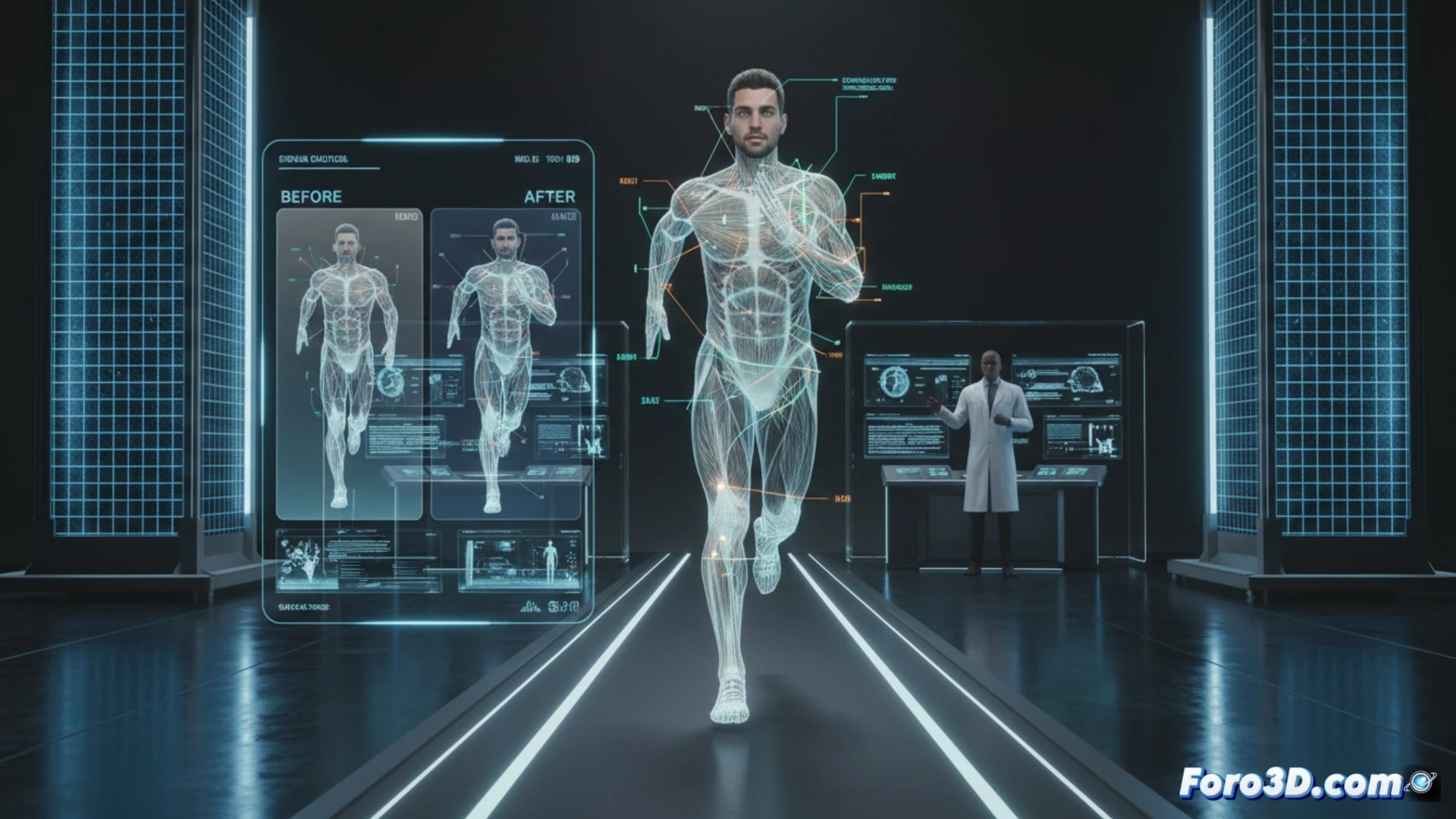
3D Visualization of Injury Biomechanics 🩺
An injury like Cáceres's modifies neuromuscular patterns, forcing compensatory postures that are difficult to detect with the naked eye. Using 3D scanners of his body at rest and in motion, an exact digital model would be obtained. This model would allow comparing his current posture with the ideal one or with pre-injury data, isolating millimeter deviations in the alignment of shoulders, hips, or spine. Additionally, a finite element simulation could analyze anomalous loads on his back, identifying the biomechanical origin of the problem and guiding targeted recovery.
Simulation for Technical Perfection 🚀
Beyond diagnosis, 3D simulation is key to the future. With a precise digital model, the entire sequence of his jump could be recreated and optimized, testing technical variations virtually without risk of relapse. This transforms the adjustment process, which Cáceres has had to compress into a month, into a safer and more efficient path. 3D technology not only helps recover previous form but opens the door to surpassing it, materializing that limitless ambition in perfectly executable data and movements.
How can 3D biomechanical analysis optimize the flight phase and landing in long jump to prevent injuries and maximize performance?
(P.S.: 3D tactical simulation never fails, players on the field do)