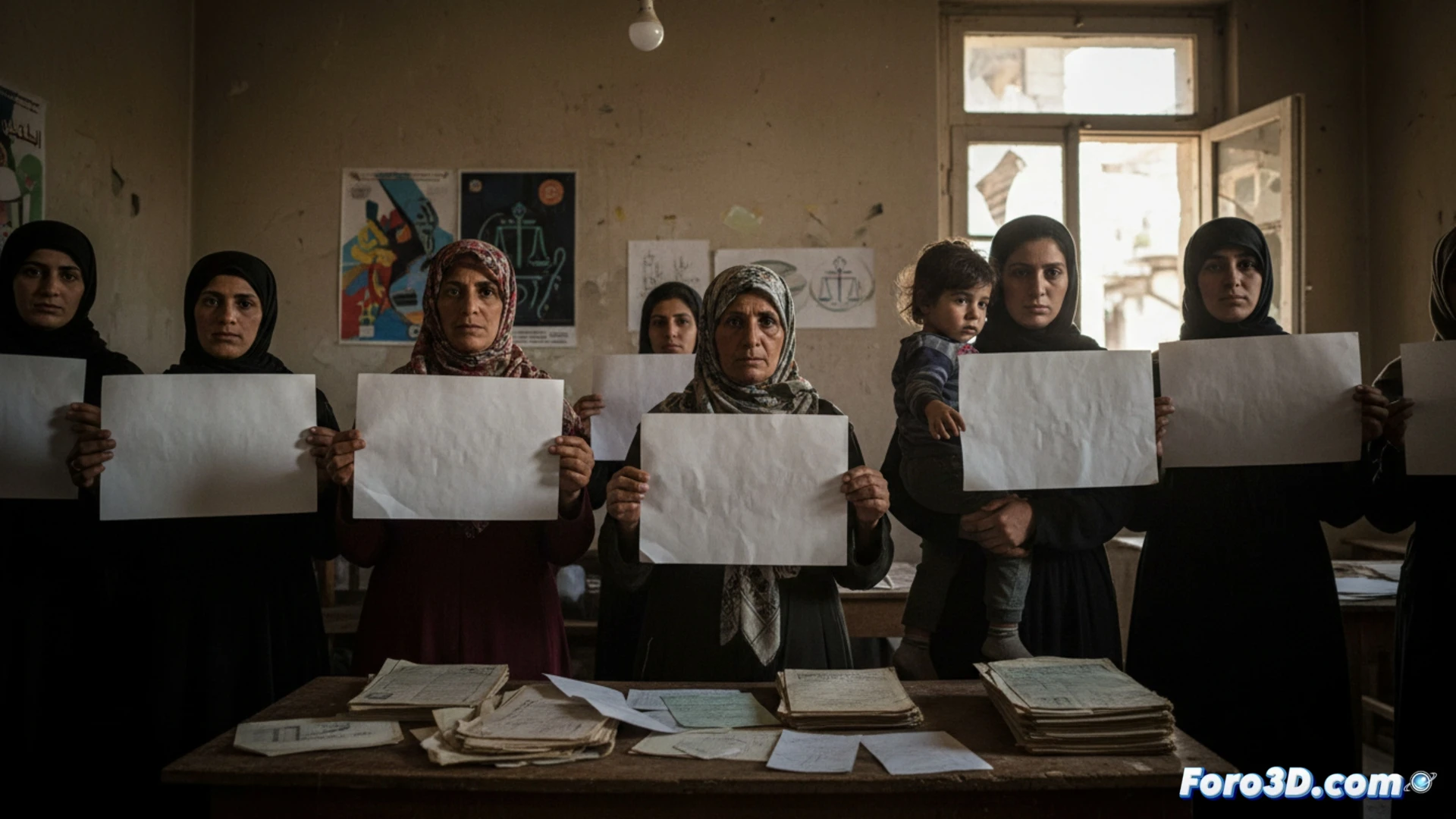
In Syria, more than one hundred thousand women live trapped in a legal limbo for being wives of the disappeared. An archaic law prevents them from rebuilding their lives, denying them the right to inherit, have full custody, or remarry without the permission of the male family of the disappeared. This humanitarian and gender crisis demands innovative solutions, where technology can play a crucial role in transitional justice and reparative processes.
Forensic reconstruction and visual databases as verification tools 🔍
3D technology offers concrete tools to address this legal vacuum. Photogrammetry and laser scanning can document massacres and graves, creating irrefutable forensic records. Additionally, secure databases could be developed with 3D models of personal objects or facial reconstructions from photographs, helping to identify remains. 3D Geographic Information Systems would allow mapping disappearances and visualizing patterns, strengthening families' claims in courts. These robust digital proofs can be key to expediting death declarations.
Innovation in service of dignity and human rights ⚖️
More than a technical exercise, this use of 3D technology is an act of reparation. It makes the invisible visible, gives shape to absence, and turns data into evidence for justice. In Syria's future, innovation must prioritize the protection of the most vulnerable. Integrating these tools into legal reform would not only accelerate administrative solutions but also restore dignity, demonstrating that technology, when it has a human purpose, can help rebuild societies.
Do you believe that digital twins can help prevent abuses in vulnerable groups?