Beyond the showdown on the pitch between FC Barcelona and Sevilla, marked by the club's electoral context, this match inaugurates the new Gol Nord stand. This event is a perfect example to analyze how 3D technology is transforming sports. From the architectural design of stadiums to the most advanced tactical analysis, three-dimensional tools have become an indispensable ally for teams and institutions.
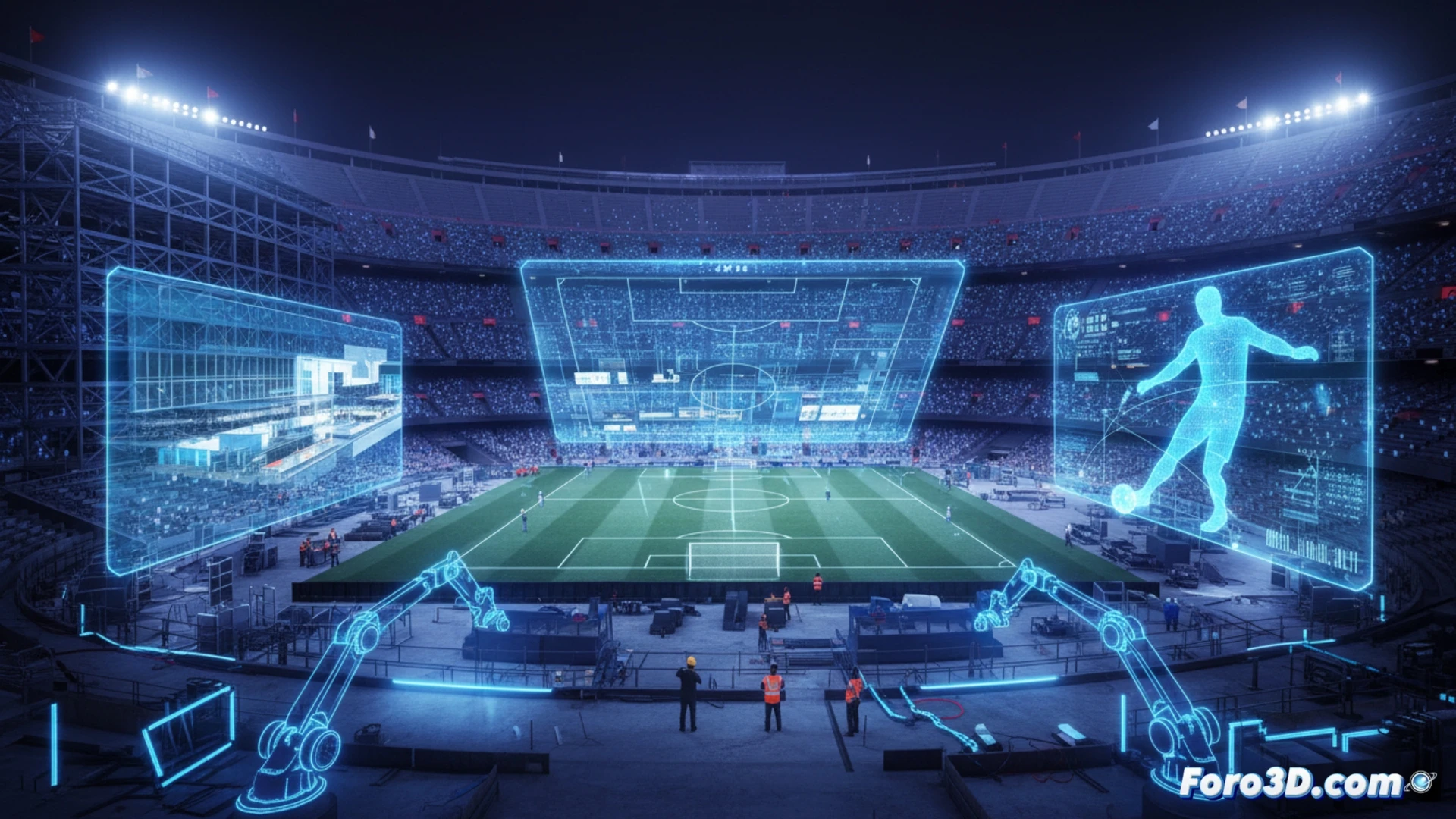
3D Scanning and Digital Twins: Revolutionizing the Stadium and Strategy 🤖
Projects like the remodeling of the Gol Nord stand greatly benefit from 3D laser scanning, which allows creating precise models of the existing stadium to integrate new structures efficiently. Additionally, these models evolve into digital twins of the playing field. Technical staff can use these virtual replicas to simulate plays, analyze opponent movements, and test strategies virtually before applying them in reality. Even key plays, such as the goals from the previous 4-1 defeat, can be reconstructed in 3D for detailed and educational tactical analysis.
The Fan Experience, the Next Immersive Challenge 🥽
The near future points toward a fan experience deeply enriched by 3D technology. Imagine being able to access, from home, an interactive model of Camp Nou that allows touring the new stand or changing the perspective to view a play from any angle. Integrating this 3D data with live broadcasts could offer real-time analysis, fusing the sports spectacle with an unprecedented layer of strategic information. The technology is already on the field, and its most impactful goal is yet to come.
How is 3D technology revolutionizing stadium design and the fan experience, as demonstrated by the new Gol stand at Camp Nou? ⚽
(P.S.: Reconstructing a goal in 3D is easy, the hard part is making it not look like it was scored with the leg of a Lego doll)