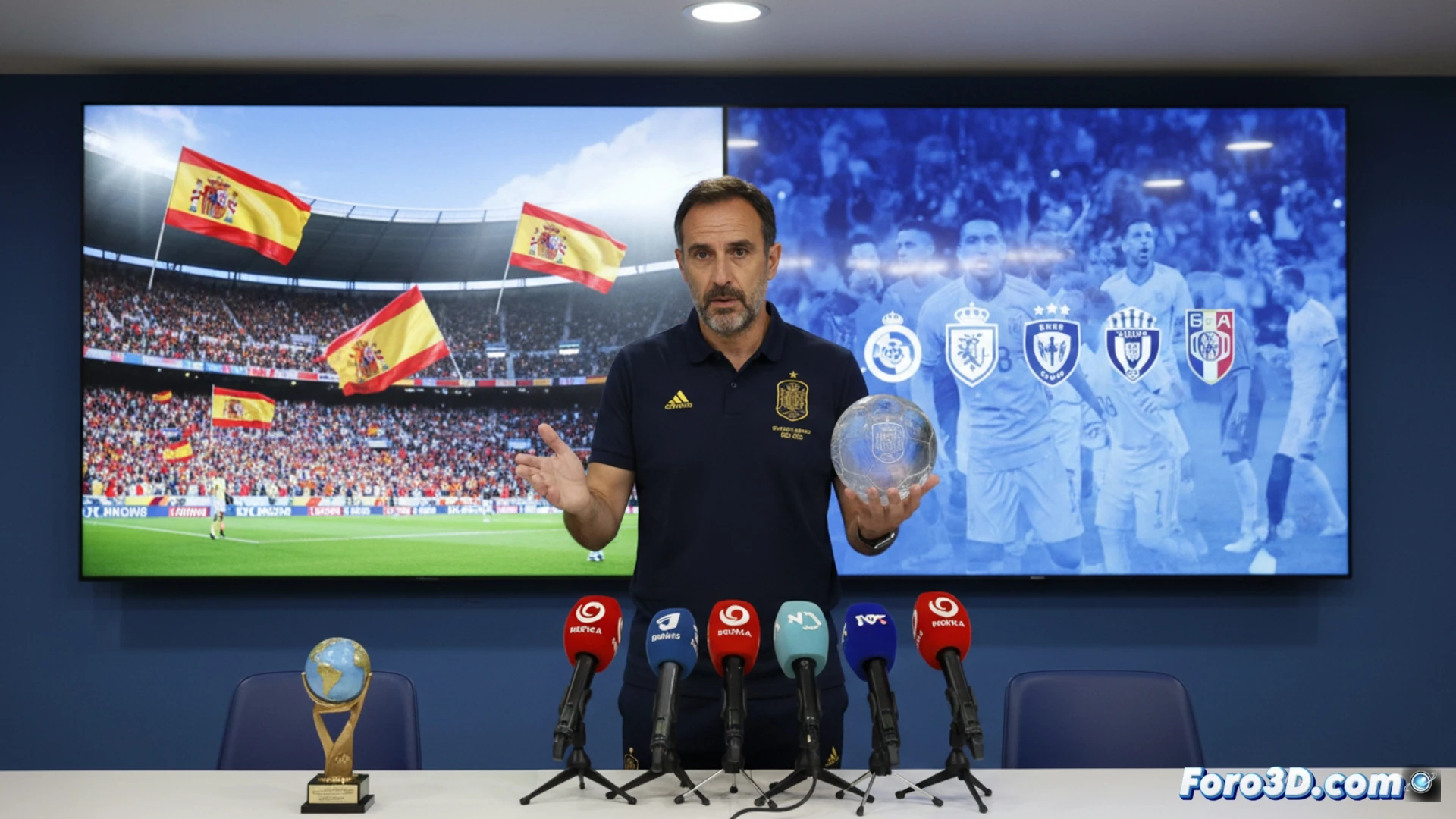
Luis de la Fuente's statements, calling for mutual respect and empathy between the national team and the clubs, highlight a constant challenge in elite football: comprehensive player management. In this context, 3D technologies emerge as a neutral and valuable tool to objectify decisions, from lineup rotations to goalkeeper analysis, facilitating data-based communication among all stakeholders.
3D Simulation for Tactical Decisions and Injury Prevention 🤖
3D biomechanics and movement recreation allow for a deep analysis of a goalkeeper's performance, evaluating their exit technique or positioning with millimeter precision, something De la Fuente could use to justify his choice. Similarly, different refreshed lineups can be simulated to predict their tactical performance without physical wear. Additionally, 3D modeling of the sports gesture and muscle load helps identify specific injury risk patterns for each footballer, creating objective reports that clubs and the federation can share to optimize workloads.
Towards a Culture of Shared Data 🤝
The implementation of these 3D tools is not just a technical advantage, but a bridge for cooperation. By basing conversations on visualizations and concrete analytical data, subjectivity is transcended and a relationship of transparency is built. Thus, technology becomes the common language that can align the interests of clubs and the national team, ensuring player care and the competitiveness of both teams.
How can 3D motion capture and biomechanical analysis technology optimize workload management and prevent injuries in players who alternate commitments with clubs and national teams?
(P.S.: at Foro3D we know that a penalty simulated in 3D always goes in... unlike in real life) ⚽