The Brazilian Grand Prix of MotoGP was interrupted by a large sinkhole on the main straight of the Goiânia circuit, caused by intense rains. This incident forced a modification of the event's program and highlighted the vulnerability of sports infrastructure. In this context, 3D digitization technologies emerge as fundamental tools for a quick and effective response to this type of unforeseen events, minimizing the impact on the competition.
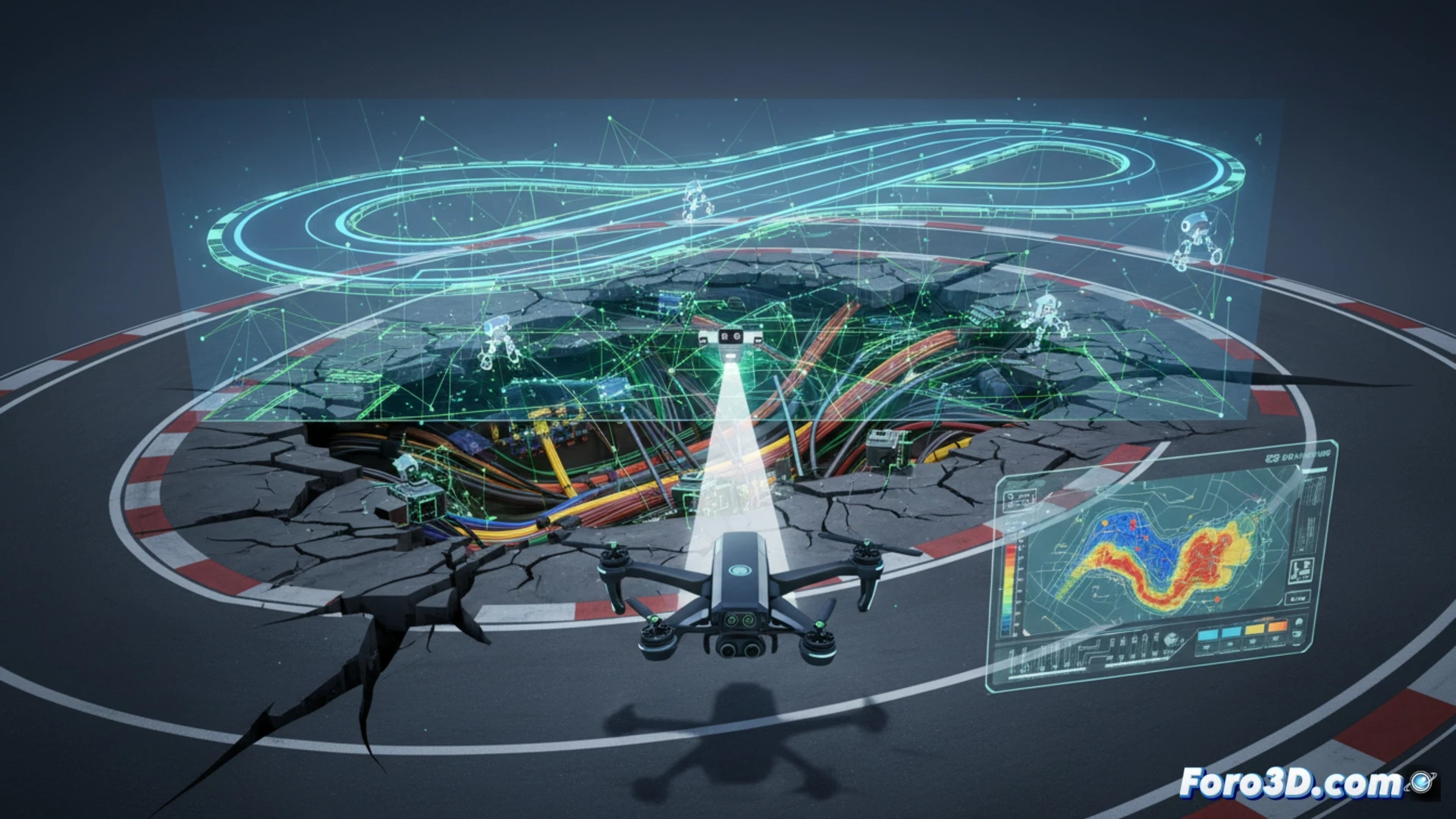
Laser scanning and digital twins for diagnosis and repair 🔍
In the face of a structural failure like a sinkhole, time is critical. Techniques such as 3D laser scanning or photogrammetry allow capturing the exact geometry of the damage in minutes with millimeter precision, creating a faithful digital model. This model is integrated into a digital twin of the circuit, where engineers can analyze the causes, simulate repair solutions, and plan logistics virtually. This methodology not only accelerates intervention but also allows evaluating the stability of the surrounding terrain to prevent new sinkholes, ensuring a durable and safe solution.
Beyond the emergency: prevention and simulation 🛡️
The true potential of 3D technology goes beyond crisis management. Its implementation in periodic circuit inspections would allow detecting structural or drainage weaknesses before they fail. Additionally, these digital models can be used in motorcycle dynamics simulators to study how asphalt irregularities affect safety and performance, optimizing both circuit design and motorcycle adjustments. Investing in these systems is betting on the continuity and integrity of the sport.
How can 3D scanning and printing technology revolutionize the repair and preventive maintenance of competition circuits after incidents like the Goiânia sinkhole? 🏍️
(P.S.: player tracking is like following your cat around the house: a lot of information and little control)